Is HGH Fragment 176-191 legal?
Not FDA approved- FDA status
- HGH Fragment 176-191 is not FDA approved and is not on FDA’s 503A bulks list.
- Compounding
- US compounding pharmacies cannot routinely prepare it.
- Prescription
- There is no approved US prescription product for HGH Fragment 176-191.
- Online market
- Products sold online are labelled “for research use only”: not made, tested or labelled for human use, and often mislabelled.
- Sport
- Prohibited in sport under the World Anti-Doping Agency list.
US status checked October 2026 against FDA’s compounding lists. Sources at the foot of the page.
What is HGH Fragment 176-191?
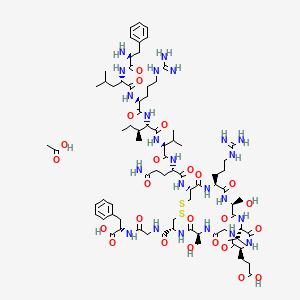
HGH Fragment 176-191 is a short piece of human growth hormone. Full growth hormone is a 191-amino-acid protein. This fragment is its last 16 amino acids, numbers 176 to 191. Researchers studied this tail end because it seemed to carry growth hormone's fat-burning effect without its effects on growth and blood sugar.
The fragment's best-known descendant is AOD-9604, a closely related version (amino acids 177 to 191 with an added tyrosine) that an Australian company, Metabolic Pharmaceuticals, developed as an obesity drug.2 In the mid-2000s, reviews of obesity drugs in development described AOD-9604 as a growth hormone fragment that increases the breakdown of fat tissue.5 It never reached approval. Today both the fragment and AOD-9604 are sold online as research chemicals and marketed for fat loss and body composition.
- Anecdotal only
- In vitro only
- Animal models only
- Preliminary human
- Clinical trials
- Regulator approved
How HGH Fragment 176-191 works
Growth hormone does many jobs. It helps children grow, raises IGF-1, affects blood sugar and helps release stored fat. Different parts of the molecule handle different jobs. The idea behind the fragment is to keep only the part linked to fat metabolism.
In lab and animal studies, the fragment and AOD-9604 increased fat breakdown (lipolysis) and reduced new fat formation (lipogenesis) in fat cells. They did not raise IGF-1 or cause the insulin resistance seen with full growth hormone. That is the theory. Whether it translates into meaningful fat loss in people is a separate question.
In more precise terms, the 176-191 sequence sits at the C-terminus of growth hormone, outside the main binding sites that let the full hormone activate the growth hormone receptor and drive IGF-1 production. The proposed fat-cell effects were described mainly in rodent tissue. How the fragment acts on fat cells without engaging the classic receptor has never been fully worked out. The fragment is also short-lived in the body, with a reported half-life of about half an hour.
IGF-1 analogues act at the end of the axis, directly on tissues, bypassing the pituitary and the liver.
What the research shows on HGH Fragment 176-191
There are no published controlled human trials of HGH Fragment 176-191 itself. Nearly all human data come from AOD-9604, the modified version.
AOD-9604 reached phase II testing. By early 2002, phase IIa trials were under way.2 Reviews from 2006 and 2007 listed it among obesity drugs in clinical development, alongside compounds that targeted fat tissue function or fatty acid metabolism.48 A 2012 review still mentioned it among patented approaches to reducing fat.6
The decisive result was a larger phase IIb trial, which did not show weight loss meaningfully better than placebo. After that, development of AOD-9604 as an obesity drug stopped. That outcome is the most important fact about this compound family. When it was tested properly in people, the fat-loss effect seen in animals did not hold up.
Recent reviews of peptides in sports medicine reach a similar view of the wider category. A 2026 review of approved and unapproved peptides, including AOD-9604, found that many show good results in animal models but that rigorous human safety data are scarce.3 Another 2026 review of peptides in orthopedics noted a general lack of clinical trials.1
The limits here are simple. Animal and cell data exist. Human data on the fragment itself do not. Human data on its closest relative were negative for the main goal.
Studied for: Fat loss research, Body composition.
HGH Fragment 176-191 reference data
| Molecular weight | 1,817.1 Da |
|---|---|
| CAS number | 66004-57-7 |
| FDA status | Not approved for any indication. |
| Prohibited in sport | Yes, under the WADA prohibited list |
HGH Fragment 176-191 dosage in published research
1-2x daily, fasted · usually run for about 12 weeks. A reference pattern, not a prescription.
Open this in the dosage calculator ↗
How HGH Fragment 176-191 is used in practice
HGH Fragment 176-191 is not an approved drug and has no established clinical use. It is mainly sold online as a "research use only" powder. Buyers reconstitute it and inject it under the skin, often once or twice a day before eating, hoping to boost fat loss. Some anti-aging and wellness clinics have offered it or AOD-9604, but this is not mainstream practice, and compounding of these peptides is restricted.
Quality is a real problem. Research-chemical products are not made under pharmaceutical standards. Purity, sterility and dose are unverified, and the names are used loosely, so a vial labeled as the fragment may contain AOD-9604, a different peptide or very little active material. A 2026 review described this as a "gray market" operating largely outside regulatory oversight.3
Anti-doping laboratories have developed tests for AOD-9604 and related modified growth hormone peptides.7 Athletes subject to testing should treat these products as a doping risk.
HGH Fragment 176-191 risks and side effects
Reported side effects are mostly mild: injection-site reactions, headache and short-lived tiredness. In AOD-9604 trials the compound was generally well tolerated. That is reassuring but limited, because the trials were short and the fragment itself has not been studied the same way.
The larger risks are unknowns and product quality. No one has tracked long-term outcomes in people injecting the fragment for months. Interactions with other drugs are poorly characterized. Injecting non-sterile products can cause abscesses and infections. Allergic reactions are possible with any injected peptide.
It should not be used in pregnancy or by anyone with a known allergy to it. People with diabetes, cancer or other serious conditions should be cautious with any unapproved product that claims to act on metabolism. There is also an opportunity cost: time spent on a compound that failed its key trial is time not spent on treatments that work.
Reported side effects
Alternatives to HGH Fragment 176-191
For fat loss, the best-evidenced options are FDA-approved medicines. Semaglutide (Wegovy) and tirzepatide (Zepbound) produce substantial average weight loss in large trials. Liraglutide (Saxenda) is an older daily option. Other approved choices include phentermine-topiramate, naltrexone-bupropion and orlistat. Each has known side effects, but each also has trial data showing it beats placebo. For people with excess abdominal fat linked to HIV, tesamorelin is FDA approved.
Diet, resistance training, sleep and treating conditions that drive weight gain remain the foundation. For people with very high BMI, bariatric surgery has the strongest long-term results.
The bottom line on HGH Fragment 176-191
HGH Fragment 176-191 is based on a reasonable idea: keep growth hormone's fat-burning effect and drop the rest. But there are no controlled human trials of the fragment, and its closest relative, AOD-9604, failed to beat placebo for weight loss. With unverified product quality and approved drugs that clearly work, it is hard to justify.
Questions for a clinician
- What evidence applies to my situation, and at what level?
- What established alternatives should I consider first?
- What monitoring would be necessary, and how often?
- Can this be prescribed at all where I live, or only sold for research?
HGH Fragment 176-191 FAQ
What is HGH Fragment 176-191?
The C-terminal fragment of human growth hormone that carries its fat-metabolising activity without the growth-promoting portion. It is classed as IGF & growth factors.
Is HGH Fragment 176-191 FDA approved?
No. HGH Fragment 176-191 is not approved by the FDA for any indication. Material sold online is labelled for research use only.
Is HGH Fragment 176-191 legal in the US?
HGH Fragment 176-191 is not FDA approved and is not on FDA’s 503A bulks list. US compounding pharmacies cannot routinely prepare it.
What dose of HGH Fragment 176-191 is used in research?
Published research and practitioner protocols report 250-500 mcg, 1-2x daily, fasted, typically for 12 weeks. This is a reference range, not a recommendation; dosing should be set by a licensed clinician.
How is HGH Fragment 176-191 reconstituted?
A 5 mg vial mixed with 2 mL of bacteriostatic water gives 2.5 mg/mL. At that concentration 250 mcg is 10.0 units on a 100-unit insulin syringe.
What are the side effects of HGH Fragment 176-191?
Reported side effects include injection-site reactions, headache, transient fatigue. Contraindications: pregnancy, known hypersensitivity.
What is the half-life of HGH Fragment 176-191?
The reported half-life of HGH Fragment 176-191 is ~30 minutes.
Is HGH Fragment 176-191 banned in sport?
Yes. HGH Fragment 176-191 falls under the World Anti-Doping Agency prohibited list.
References
Regulatory and primary sources
- FDA: Bulk drug substances that may present significant safety risks (Category 2 and withdrawn nominations) ↗ · content current as of April 22, 2026; checked October 18, 2026
- FDA: Bulk drug substances used in compounding under section 503A ↗ · how the 503A categories work
- PubChem compound record (CID 172966176) ↗ · structure, identifiers, synonyms
- WADA Prohibited List ↗ · current year
- FDA: Unapproved drugs and "research use only" products ↗ · regulatory status of non-approved products
- CAS Registry Number 66004-57-7 ↗ · chemical identity
Published literature
- Therapeutic Peptides in Orthopaedics: Applications, Challenges, and Future Directions.J Am Acad Orthop Surg Glob Res Rev 2026.PubMed 41490200 · doi:10.5435/JAAOSGlobal-D-25-00236
- AOD-9604 Metabolic.Curr Opin Investig Drugs 2004.PubMed 15134286
- Safety and Efficacy of Approved and Unapproved Peptide Therapies for Musculoskeletal Injuries and Athletic Performance.Sports Med 2026.PubMed 41966639 · doi:10.1007/s40279-026-02437-0
- Potential role of new therapies in modifying cardiovascular risk in overweight patients with metabolic risk factors.Obesity (Silver Spring) 2006.PubMed 16931496 · doi:10.1038/oby.2006.294
- Obesity drugs in clinical development.Curr Opin Investig Drugs 2006.PubMed 16625817
- Current updates in the medical management of obesity.Recent Pat Endocr Metab Immune Drug Discov 2012.PubMed 22435392 · doi:10.2174/187221412800604644
- Analytical approaches for the detection of emerging therapeutics and non-approved drugs in human doping controls.J Pharm Biomed Anal 2014.PubMed 24906629 · doi:10.1016/j.jpba.2014.05.020
- [Obesity: a review of currently used antiobesity drugs and new compounds in clinical development].Postepy Hig Med Dosw (Online) 2007.PubMed 17971763
Literature retrieved from PubMed on October 16, 2026, favouring human studies and reviews. Numbered markers in the text show which paper supports which statement; uncited entries are background reading.