Is VIP legal?
Not FDA approved- FDA status
- VIP is not FDA approved and is not on FDA’s 503A bulks list.
- Compounding
- US compounding pharmacies cannot routinely prepare it.
- Prescription
- There is no approved US prescription product for VIP.
- Online market
- Products sold online are labelled “for research use only”: not made, tested or labelled for human use, and often mislabelled.
US status checked October 2026 against FDA’s compounding lists. Sources at the foot of the page.
What is VIP?
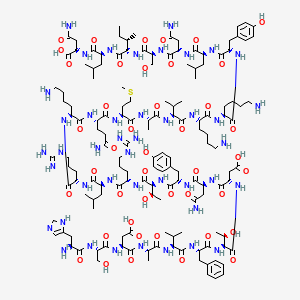
Vasoactive intestinal peptide (VIP) is a 28-amino-acid peptide made by nerve cells throughout the body. It was discovered in 1970 by Sami Said and Viktor Mutt, who isolated it from pig intestine and named it for its ability to widen blood vessels. It was later found in the brain, lungs, eyes, heart and immune tissue, where it acts mainly as a nerve signal rather than a circulating hormone.6
A synthetic version, aviptadil, has been tested as an intravenous or inhaled drug for lung diseases, most prominently in critical COVID-19 respiratory failure. It is not FDA approved for any use. In some European countries, aviptadil combined with phentolamine is licensed as an injection for erectile dysfunction.
In US integrative and functional medicine, compounded intranasal VIP has been promoted for chronic inflammatory response syndrome (CIRS), a condition some practitioners attribute to mold exposure. That diagnosis is not widely accepted, and the evidence for VIP in it is limited to small studies from a few clinicians.
- Anecdotal only
- In vitro only
- Animal models only
- Preliminary human
- Clinical trials
- Regulator approved
How VIP works
VIP is a relaxing signal. Released from nerve endings, it tells smooth muscle to loosen. In blood vessels that means wider vessels and lower blood pressure. In the airways it means easier breathing, since VIP is one of the most potent natural bronchodilators known.8 In the gut it prompts the intestine to secrete water and salts. It also tends to calm immune cells, shifting them away from inflammatory signaling.
These effects explain both its therapeutic appeal and its side effects. A tumor that releases large amounts of VIP, called a VIPoma, causes severe watery diarrhea, dehydration and low potassium.6
In more precise terms, VIP belongs to the secretin-glucagon family and acts through two G protein-coupled receptors, VPAC1 and VPAC2, which raise intracellular cyclic AMP. It is processed from a 170-amino-acid precursor that also yields a related peptide, PHI, released in roughly equal amounts.1 In the gut, VIP is the primary transmitter of non-cholinergic secretomotor neurons and a secondary transmitter of inhibitory motor neurons.5 In the eye it is found in nerves supplying the choroid, where it likely regulates blood flow.4 It is also among the parasympathetic neuropeptides implicated in migraine.3 Circulating VIP is cleared within a minute or two, which limits its use as a drug.
What the research shows on VIP
The largest controlled trial tested intravenous aviptadil in 196 patients with critical COVID-19 respiratory failure at ten US hospitals, randomized two to one against placebo for three days of infusion. The primary endpoint, being alive and free of respiratory failure at day 60, was not met. The authors reported better 60-day survival as a secondary result, along with lower interleukin-6 levels and benefit in some subgroups.7 Because the main endpoint failed, those secondary findings are hypothesis-generating rather than proof. The FDA did not authorize aviptadil for COVID-19.
Earlier work in lung disease was smaller. VIP's ability to relax airway muscle and its reduced activity in inflamed airways made it a candidate in asthma research, but that did not translate into an approved treatment.8 Small pilot studies of inhaled aviptadil have been reported in sarcoidosis and pulmonary hypertension, without confirmatory trials.
VIP has also been studied as one of several brain peptides that influence sleep, mostly in animals.2 Its role in migraine is an area of active research, but the interest there is in blocking VIP-related signaling, not adding more of it.3
For CIRS, published support consists of small, uncontrolled studies from practitioners who promote the diagnosis. No large randomized trial has tested intranasal VIP for this or any other chronic condition.
Studied for: Respiratory failure research, Chronic inflammatory response syndrome, Sarcoidosis research.
VIP reference data
| Molecular weight | 3,325.8 Da |
|---|---|
| CAS number | 37221-79-7 |
| FDA status | Not approved for any indication. |
| Prohibited in sport | Not listed |
VIP dosage in published research
Up to 4x daily intranasal in research protocols · usually run for about 12 weeks. A reference pattern, not a prescription.
Open this in the dosage calculator ↗
How VIP is used in practice
In the US, VIP is used mainly in two settings. In hospitals, aviptadil has been given only within clinical trials or expanded access programs. In outpatient functional medicine, VIP is compounded as a nasal spray and prescribed in courses lasting weeks to months, usually for CIRS or mold-related illness, often after other steps such as removing mold exposure.
Online research-chemical vendors also sell VIP as a powder, often alongside instructions for making nasal sprays. Buyers cannot verify purity, and a peptide this short-lived is easily degraded by poor storage. Nasal sprays made at home from such powder add risks of contamination and wrong dosing.
Dosing in CIRS protocols comes from the clinicians who developed them, not from dose-finding trials. Some protocols require specific lab results before starting, but those requirements are not standardized, and many patients obtain VIP without that workup.
VIP risks and side effects
Because VIP relaxes blood vessels, the most common side effects are flushing, a drop in blood pressure, lightheadedness and a fast heart rate. Diarrhea is also common, reflecting VIP's effect on gut secretion. Intranasal use can irritate the nose. In the COVID-19 trial, the authors reported no drug-related serious adverse events.7
People with low blood pressure, or who take drugs that lower it, should be cautious. That includes nitrates, other vasodilators and PDE5 inhibitors such as sildenafil and tadalafil, which could add to the drop. There is no safety data in pregnancy. Long-term effects of daily intranasal use over months are unknown. Children and people with heart rhythm problems were not well represented in the trials that exist.
As with other gray-market peptides, product quality is a real risk: wrong dose, degraded peptide, bacterial contamination and mislabeling.
Reported side effects
Alternatives to VIP
For acute respiratory failure, supportive care such as oxygen, high-flow nasal oxygen and ventilation remains the standard. For COVID-19 specifically, approved treatments include antivirals and, in severe cases, dexamethasone and other immune-modulating drugs.
For sarcoidosis, corticosteroids are first line, with methotrexate and other immunosuppressants as steroid-sparing options. For symptoms attributed to mold exposure, removing the exposure and evaluating for asthma, allergy and other diagnoses has better evidence than peptide therapy. For erectile dysfunction, PDE5 inhibitors are first line.
The bottom line on VIP
VIP is a genuine and important signaling peptide with well-understood effects on blood vessels, airways and the gut. As a drug, its record is thin: the largest trial missed its main goal, and use for CIRS rests on small uncontrolled reports. It is not approved in the US, and gray-market products add avoidable risk.
Questions for a clinician
- What evidence applies to my situation, and at what level?
- What established alternatives should I consider first?
- What monitoring would be necessary, and how often?
- Can this be prescribed at all where I live, or only sold for research?
VIP FAQ
What is VIP?
A 28-residue neuropeptide with broad vasodilatory and immunomodulatory activity, trialled as aviptadil in acute respiratory failure. It is classed as other.
Is VIP FDA approved?
No. VIP is not approved by the FDA for any indication. Material sold online is labelled for research use only.
Is VIP legal in the US?
VIP is not FDA approved and is not on FDA’s 503A bulks list. US compounding pharmacies cannot routinely prepare it.
What dose of VIP is used in research?
Published research and practitioner protocols report 50-150 mcg, up to 4x daily intranasal in research protocols, typically for 12 weeks. This is a reference range, not a recommendation; dosing should be set by a licensed clinician.
How is VIP reconstituted?
A 5 mg vial mixed with 2 mL of bacteriostatic water gives 2.5 mg/mL. At that concentration 50 mcg is 2.0 units on a 100-unit insulin syringe.
What are the side effects of VIP?
Reported side effects include flushing, hypotension, diarrhoea, nasal irritation. Contraindications: hypotension, pregnancy, known hypersensitivity.
What is the half-life of VIP?
The reported half-life of VIP is ~1-2 minutes.
Is VIP banned in sport?
VIP is not specifically named on the WADA prohibited list, but athletes should check the current list and their federation's rules.
References
Regulatory and primary sources
- FDA: Bulk drug substances that may present significant safety risks (Category 2 and withdrawn nominations) ↗ · content current as of April 22, 2026; checked October 18, 2026
- FDA: Bulk drug substances used in compounding under section 503A ↗ · how the 503A categories work
- PubChem compound record (CID 16132300) ↗ · structure, identifiers, synonyms
- FDA: Unapproved drugs and "research use only" products ↗ · regulatory status of non-approved products
- CAS Registry Number 37221-79-7 ↗ · chemical identity
Published literature
- VIP and PACAP.Results Probl Cell Differ 2010.PubMed 19859678 · doi:10.1007/400_2009_24
- Sleep-inducing factors.CNS Neurol Disord Drug Targets 2009.PubMed 19689305 · doi:10.2174/187152709788921672
- Migraine and neuropeptides.Neuropeptides 2015.PubMed 26094101 · doi:10.1016/j.npep.2015.03.006
- Ocular neuropeptides.Med Biol 1982.PubMed 6178909
- Gastrointestinal neurotransmitters.Baillieres Clin Endocrinol Metab 1994.PubMed 7907863 · doi:10.1016/s0950-351x(05)80226-5
- VIPoma syndrome.Am J Med 1987.PubMed 3035922 · doi:10.1016/0002-9343(87)90425-6
- The Use of IV Vasoactive Intestinal Peptide (Aviptadil) in Patients With Critical COVID-19 Respiratory Failure: Results of a 60-Day Randomized Controlled Trial.Crit Care Med 2022.PubMed 36044317 · doi:10.1097/CCM.0000000000005660
- Neuropeptides and asthma.Am Rev Respir Dis 1991.PubMed 1706152 · doi:10.1164/ajrccm/143.3_Pt_2.S28
Literature retrieved from PubMed on October 16, 2026, favouring human studies and reviews. Numbered markers in the text show which paper supports which statement; uncited entries are background reading.