Is YK-11 legal?
Not FDA approved- FDA status
- YK-11 is not FDA approved and is not on FDA’s 503A bulks list.
- Compounding
- US compounding pharmacies cannot routinely prepare it.
- Prescription
- There is no approved US prescription product for YK-11.
- Online market
- Products sold online are labelled “for research use only”: not made, tested or labelled for human use, and often mislabelled.
- Sport
- Prohibited in sport under the World Anti-Doping Agency list.
US status checked October 2026 against FDA’s compounding lists. Sources at the foot of the page.
What is YK-11?
YK-11 is a synthetic steroid that is sold online as a muscle-building compound. It is not a peptide. It is listed in this directory because it is marketed alongside peptides as a "myostatin inhibitor," and buyers often encounter it in the same stores.
It was first described in the early 2010s by researchers in Japan as a steroidal selective androgen receptor modulator, or SARM. Most SARMs, such as ostarine and RAD-140, are non-steroidal molecules designed to build muscle with fewer effects elsewhere in the body. YK-11 is different: it is a steroid, closely related in structure to the androgens testosterone and dihydrotestosterone (DHT), and is commonly described as a DHT derivative. Anti-doping scientists classify it among the steroidal SARMs.1
YK-11 has never been tested in a human clinical trial and has no approved medical use anywhere. It is widely sold through internet supplement vendors, which is why anti-doping and food safety laboratories have developed methods to detect it.2
- Anecdotal only
- In vitro only
- Animal models only
- Preliminary human
- Clinical trials
- Regulator approved
How YK-11 works
Testosterone and related hormones build muscle by binding the androgen receptor inside cells, which switches on muscle-building genes. YK-11 binds the same receptor, but only partly activates it. Its marketing rests on a second claim: in laboratory dishes, YK-11 made mouse muscle cells produce more follistatin, a protein that blocks myostatin. Myostatin normally limits how large muscles can grow, so blocking it could, in theory, allow more growth.
That is the basis of the "myostatin inhibitor" label. But YK-11 does not block myostatin directly, and the follistatin finding comes from cell culture. Whether it happens in a living person at doses people actually take is unknown.
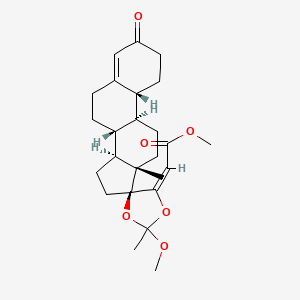
In more precise terms, YK-11 is a synthetic steroid carrying an unusual orthoester and methyl ester structure at carbon 17, which sets it apart from classic anabolic steroids. It is described as a partial androgen receptor agonist that does not trigger the full set of receptor interactions that testosterone does. It is chemically unstable. Analysts found that it breaks down within hours under some conditions, which made it hard to detect intact in supplement samples.5 In horses given YK-11 by mouth, researchers identified seven metabolites in plasma and eleven in urine, with breakdown products providing the longest detection window.2 There are no published human pharmacokinetic studies.
Myostatin limits muscle growth through the activin type II receptor. Follistatin binds myostatin; ACE-031 is a decoy receptor that soaks it up.
What the research shows on YK-11
The research on YK-11 falls into two groups, and neither shows benefit in people.
The first is laboratory work. Studies in cultured mouse muscle cells and bone cells reported that YK-11 increased markers of muscle cell development and bone formation, and raised follistatin expression. Animal data are very limited. These results show biological activity, not safety or real-world effect.
The second, and larger, group is detection research. Anti-doping scientists have reviewed methods for catching SARMs, including YK-11, in athletes' urine.1 A 2023 study mapped how horses metabolize YK-11 so racing laboratories could test for it, noting how easily it can be bought online.2 YK-11 has been found in an athlete's doping control sample.3
Food safety testing adds a consumer warning. Korean regulators analyzed 60 dietary supplements bought online and from international vendors in 2020. They found SARMs at high concentrations in 20 products, and found YK-11 in some products where it was not listed on the label.5 In other words, some people may be taking YK-11 without knowing it.
There are no human trials, no dose-finding studies and no long-term safety data.
Studied for: Muscle growth research.
YK-11 reference data
| Molecular weight | 430.5 Da |
|---|---|
| CAS number | 431579-34-9 |
| FDA status | Not approved for any indication. |
| Prohibited in sport | Yes, under the WADA prohibited list |
YK-11 dosage in published research
Once daily · usually run for about 8 weeks. A reference pattern, not a prescription.
How YK-11 is used in practice
YK-11 is sold as capsules or liquid labeled "for research only" or, illegally, as a dietary supplement. Users take it by mouth, usually daily for cycles of several weeks, often stacked with other SARMs. Doses circulating online come from forums and vendors, not from studies.
Product quality is poor across the SARM market. Products may contain a different compound, more or less than the labeled amount, or several undeclared drugs.5 YK-11's instability adds another question: what is in the bottle may have partly broken down before it is taken.
No legitimate telehealth service prescribes YK-11. It is prohibited in sport at all times, and athletes have tested positive for it.3
YK-11 risks and side effects
Because YK-11 has never been studied in people, its risks are inferred from its structure, from user reports and from the wider SARM class. As a steroid acting on the androgen receptor, it would be expected to suppress the body's own testosterone production, lower HDL cholesterol and cause androgenic effects such as acne and hair loss in susceptible people. Users also report joint and tendon discomfort and mood changes, including irritability.
SARMs as a class have been linked to cases of drug-induced liver injury, and several have shown cholesterol changes and hormone suppression in human trials. There is no reason to assume YK-11 is safer, and its steroidal structure may make it riskier.
It should be avoided by anyone with liver disease, heart disease, a history of hormone-sensitive cancer, or who is pregnant or under 18. Alcohol and other liver-stressing drugs, including oral anabolic steroids, may add to liver risk. Undeclared contents and contamination are additional, unpredictable hazards.
Reported side effects
Alternatives to YK-11
For building muscle, the proven approach is progressive resistance training with adequate protein and calories. Creatine monohydrate is the best-studied supplement for strength and lean mass, with a strong safety record.
For men with diagnosed hypogonadism, testosterone therapy prescribed and monitored by a clinician is an approved option. For medical muscle wasting, treatment targets the underlying disease. No myostatin-blocking drug is approved, and experimental options such as ACE-031 and follistatin gene therapies remain investigational.
For people worried about age-related muscle loss, regular strength training, enough protein spread across meals, and screening for conditions that cause weakness, such as thyroid disease or vitamin D deficiency, are the evidence-based first steps.
The bottom line on YK-11
YK-11 is an untested synthetic steroid sold under misleading labels. It has activity in cell culture and nothing more in terms of evidence. Its risks are likely those of an oral androgen, its products are unreliable, and it is banned in sport. There is no good reason to take it.
Questions for a clinician
- What evidence applies to my situation, and at what level?
- What established alternatives should I consider first?
- What monitoring would be necessary, and how often?
- Can this be prescribed at all where I live, or only sold for research?
YK-11 FAQ
What is YK-11?
A steroidal compound marketed as a SARM and a myostatin inhibitor. It is neither a peptide nor, strictly, a SARM. It is classed as myostatin inhibitors.
Is YK-11 FDA approved?
No. YK-11 is not approved by the FDA for any indication. Material sold online is labelled for research use only.
Is YK-11 legal in the US?
YK-11 is not FDA approved and is not on FDA’s 503A bulks list. US compounding pharmacies cannot routinely prepare it.
What dose of YK-11 is used in research?
Published research and practitioner protocols report 5-10 mg, once daily, typically for 8 weeks. This is a reference range, not a recommendation; dosing should be set by a licensed clinician.
What are the side effects of YK-11?
Reported side effects include hepatotoxicity, hpta suppression, lipid disruption, tendon discomfort, aggression. Contraindications: hepatic impairment, pregnancy, cardiovascular disease, under 18.
What is the half-life of YK-11?
The reported half-life of YK-11 is ~6-10 hours.
Is YK-11 banned in sport?
Yes. YK-11 falls under the World Anti-Doping Agency prohibited list.
References
Regulatory and primary sources
- FDA: Bulk drug substances that may present significant safety risks (Category 2 and withdrawn nominations) ↗ · content current as of April 22, 2026; checked October 18, 2026
- FDA: Bulk drug substances used in compounding under section 503A ↗ · how the 503A categories work
- PubChem compound record (CID 119058028) ↗ · structure, identifiers, synonyms
- WADA Prohibited List ↗ · current year
- FDA: Unapproved drugs and "research use only" products ↗ · regulatory status of non-approved products
- CAS Registry Number 431579-34-9 ↗ · chemical identity
Published literature
- Detection of SARMs in doping control analysis.Mol Cell Endocrinol 2018.PubMed 28137616 · doi:10.1016/j.mce.2017.01.040
- Equine metabolism of the selective androgen receptor modulator YK-11 in urine and plasma following oral administration.Drug Test Anal 2023.PubMed 36519889 · doi:10.1002/dta.3425
- Detection of selective androgen receptor modulator YK-11 in a doping control sample.Drug Test Anal 2024.PubMed 37946705 · doi:10.1002/dta.3604
- Discovery and optimization of novel indolecarboxylic acid derivative as potent glucagon-like peptide‑1 receptor agonists.Mol Divers 2026.PubMed 40366550 · doi:10.1007/s11030-025-11213-7
- Development and validation of liquid chromatography-tandem mass spectrometry method for screening six selective androgen receptor modulators in dietary supplements.Food Addit Contam Part A Chem Anal Control Expo Risk Assess 2021.PubMed 33934684 · doi:10.1080/19440049.2021.1906954
Literature retrieved from PubMed on October 16, 2026, favouring human studies and reviews. Numbered markers in the text show which paper supports which statement; uncited entries are background reading.