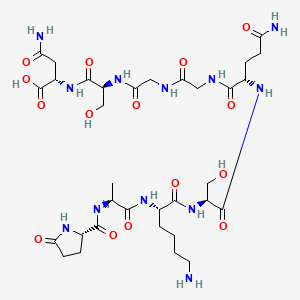
Is Thymalin legal?
Not FDA approved- FDA status
- Thymalin is not FDA approved and is not on FDA’s 503A bulks list.
- Compounding
- US compounding pharmacies cannot routinely prepare it.
- Prescription
- There is no approved US prescription product for Thymalin.
- Outside the US
- Registered in the Russian Federation
- Online market
- Products sold online are labelled “for research use only”: not made, tested or labelled for human use, and often mislabelled.
US status checked October 2026 against FDA’s compounding lists. Sources at the foot of the page.
What is Thymalin?
Thymalin is a mixture of small proteins extracted from the thymus glands of calves. It was developed in the Soviet Union in the 1970s by Vladimir Morozov and Vladimir Khavinson, the researchers who went on to build the wider family of so-called peptide bioregulators. It is registered as a medicine in Russia and used there as an immune stimulant.
Unlike thymosin alpha-1, Thymalin is not a single defined molecule. It is a fraction of many polypeptides, and its exact composition depends on the extraction process. That makes it harder to study, standardize and compare with other drugs.
Khavinson's group describes Thymalin as a preparation whose most prominent effect is stimulating immunity, and links that to claimed anticancer and anti-aging activity.1 In the West it is sold online as a longevity or immune-support peptide, usually citing a Russian study of elderly people that reported lower mortality. That study, and its limits, are the core of any honest assessment.
- Anecdotal only
- In vitro only
- Animal models only
- Preliminary human
- Clinical trials
- Regulator approved
How Thymalin works
The thymus is a gland behind the breastbone where immature immune cells learn to become T cells, the cells that coordinate much of the body's defense against infection. The thymus shrinks steadily from early adulthood, and T-cell output falls with it. The idea behind Thymalin is that supplying peptides from a young thymus can nudge an aging or stressed immune system back toward normal T-cell production and balance.
Its developers fold this into a broader "peptide theory of aging," which holds that aging involves declining production of tissue-specific regulatory peptides, and that replacing them can restore function.1 This is a hypothesis from one research school, not an accepted model of aging.
In more precise terms, Thymalin is reported to promote T-lymphocyte differentiation and to normalize the ratio of T-cell subsets in immunodeficient states, but the specific active components and receptors have not been clearly identified. Russian review papers describe two-way signaling between the thymus and the pineal gland during aging, and conclude that pineal peptides had a stronger effect on thymic involution than thymic peptides such as Thymalin had on the pineal gland.6 The proposed mechanism involves activating transcription of various proteins, which remains loosely defined.5
The thymus trains T cells and shrinks with age. Thymic peptides such as thymosin alpha-1 and thymalin are studied for their effects on T-cell maturation and immune signalling.
What the research shows on Thymalin
The study most often cited followed 266 elderly people for six to eight years. Participants received Thymalin, the pineal extract Epithalamin, both, or neither for the first two to three years. The authors reported a 2.0 to 2.4-fold drop in acute respiratory illness and a 2.0 to 2.1-fold lower mortality in the Thymalin group compared with controls. A small subgroup given both extracts every year for six years had 4.1-fold lower mortality.4 A Russian-language version of the same work reports the same figures.2
Those results would be remarkable if they held up. But the published reports give little detail on how participants were assigned to groups, whether anyone was blinded, or how the analysis handled dropouts. The work comes from the developers' own institute and has not been replicated by independent groups under modern trial standards. Effects of this size on all-cause mortality from short courses of an immune extract would normally prompt larger confirmatory trials, and none have been published.
Smaller studies have tested Thymalin in specific conditions. In 15 patients with early Parkinson's disease, an uncontrolled study reported improvements in symptoms and EEG measures after a course of Thymalin.7 In women with chronic pelvic inflammatory disease, researchers compared Thymalin with another immunomodulator and suggested that timing doses to lymphocyte responses improved results.3 Laboratory work on blood cells from healthy people found that Thymalin could either protect against or increase radiation-induced chromosome damage, depending on concentration and dose.8
Overall the evidence is preliminary. It is mostly small, uncontrolled or poorly reported, published in Russian or Ukrainian journals, and generated by a narrow circle of researchers.
Studied for: Immune restoration research, Geriatric immunity research.
Thymalin reference data
| FDA status | Not approved for any indication. |
|---|---|
| Prohibited in sport | Not listed |
Thymalin dosage in published research
Once daily for 5-10 days · usually run for about 2 weeks. A reference pattern, not a prescription.
Open this in the dosage calculator ↗
How Thymalin is used in practice
In Russia, Thymalin is given by intramuscular injection in short courses, typically daily for five to ten days, for conditions involving weakened cellular immunity, such as recovery from serious infection, after radiation or chemotherapy, and in some chronic inflammatory diseases. The geriatric study used repeated courses over several years.4
In the US it has no approved use and is not available through normal prescription channels. Supply comes mainly from online vendors selling vials labeled for research use, or from people importing Russian-made product. For an animal-derived extract this creates particular problems: buyers cannot verify the source tissue, the extraction process, sterility, or screening for infectious agents. Synthetic copies of a mixture this complex do not exist, so any vial sold as Thymalin is either a genuine extract of unknown provenance or something else.
Thymalin risks and side effects
Russian clinical reports describe Thymalin as well tolerated, with injection-site reactions and transient fatigue as the most commonly mentioned effects. Safety reporting in that literature is limited, so rarer or delayed problems may have been missed.
Because it is meant to stimulate the immune system, Thymalin is not appropriate for people with autoimmune disease or organ transplants, and it may work against immunosuppressive drugs. It has not been studied in pregnancy. Any bovine-derived injectable raises questions about allergic reactions to foreign proteins and about prion and other contamination if the source animals and processing are not controlled.
Gray-market product adds the risks of mislabeling, contamination and nonsterile injection. There are no formal drug interaction studies.
Reported side effects
Alternatives to Thymalin
For protecting older adults against infection, the interventions with strong evidence are vaccines: annual influenza vaccination, pneumococcal vaccines, the recombinant shingles vaccine, and RSV and COVID-19 vaccines for eligible people. Regular exercise, adequate sleep and protein intake, and correcting deficiencies such as vitamin D or zinc also support immune function.
For specific immune deficiencies, approved treatments include immunoglobulin replacement and, in some settings, growth factors such as filgrastim. Among thymic peptides, thymosin alpha-1 is a single defined molecule with a much larger body of controlled trials, though it is also unapproved in the US.
The bottom line on Thymalin
Thymalin is a calf thymus extract with a long history of use in Russia and striking reported results in one elderly cohort. Those results come from its developers, have not been independently replicated, and rest on poorly described methods. Until better trials exist, its anti-aging claims should be treated as unproven, and gray-market supply adds real product risks.
Questions for a clinician
- What evidence applies to my situation, and at what level?
- What established alternatives should I consider first?
- What monitoring would be necessary, and how often?
- Can this be prescribed at all where I live, or only sold for research?
Thymalin FAQ
What is Thymalin?
A polypeptide fraction extracted from calf thymus, used clinically in Russia and studied in long-term geriatric cohorts. It is classed as thymic & immune.
Is Thymalin FDA approved?
No. Thymalin is not approved by the FDA for any indication. Material sold online is labelled for research use only.
Is Thymalin legal in the US?
Thymalin is not FDA approved and is not on FDA’s 503A bulks list. US compounding pharmacies cannot routinely prepare it.
What dose of Thymalin is used in research?
Published research and practitioner protocols report 10-20 mg, once daily for 5-10 days, typically for 2 weeks. This is a reference range, not a recommendation; dosing should be set by a licensed clinician.
How is Thymalin reconstituted?
A 10 mg vial mixed with 2 mL of bacteriostatic water gives 5.0 mg/mL. At that concentration 10 mg is 200.0 units on a 100-unit insulin syringe.
What are the side effects of Thymalin?
Reported side effects include injection-site reactions, transient fatigue. Contraindications: autoimmune disease, pregnancy, organ transplant recipients.
What is the half-life of Thymalin?
The reported half-life of Thymalin is Not established.
Is Thymalin banned in sport?
Thymalin is not specifically named on the WADA prohibited list, but athletes should check the current list and their federation's rules.
References
Regulatory and primary sources
- FDA: Bulk drug substances that may present significant safety risks (Category 2 and withdrawn nominations) ↗ · content current as of April 22, 2026; checked October 18, 2026
- FDA: Bulk drug substances used in compounding under section 503A ↗ · how the 503A categories work
- PubChem compound record (CID 3085284) ↗ · structure, identifiers, synonyms
- FDA: Unapproved drugs and "research use only" products ↗ · regulatory status of non-approved products
Published literature
- Peptides and Ageing.Neuro Endocrinol Lett 2002.PubMed 12374906
- [Geroprotective effect of thymalin and epithalamin].Adv Gerontol 2002.PubMed 12577695
- Chrono- and Immunocorrection of Inflammatory Disorders of Internal Reproductive Organs in Women of Reproductive Age.Bull Exp Biol Med 2015.PubMed 26033592 · doi:10.1007/s10517-015-2890-0
- Peptides of pineal gland and thymus prolong human life.Neuro Endocrinol Lett 2003.PubMed 14523363
- [Characteristics of the pineal gland and thymus relationship in aging].Adv Gerontol 2011.PubMed 21809618
- [Influence of peptides from pineal gland on thymus function at aging].Adv Gerontol 2010.PubMed 21510076
- [Thymalin in the combined treatment of parkinsonism patients].Lik Sprava 1999.PubMed 10424021
- Chornobyl catastrophe: cytogenetic effects of low dose ionizing radiation and their modification.Exp Oncol 2016.PubMed 28230819
Literature retrieved from PubMed on October 16, 2026, favouring human studies and reviews. Numbered markers in the text show which paper supports which statement; uncited entries are background reading.