Is Thymosin Alpha-1 legal?
Not approved · not compoundable- FDA status
- Thymosin Alpha-1 is not FDA approved. It was moved off FDA’s Category 2 safety-risk list in 2026 after its nomination was withdrawn, but it was not added to the 503A bulks list.
- Compounding
- That leaves no routine legal path for a US compounding pharmacy to prepare it.
- Prescription
- There is no approved US prescription product for Thymosin Alpha-1.
- Outside the US
- Approved in over 30 countries for chronic hepatitis B and C (Zadaxin). Not FDA approved.
- Online market
- Products sold online are labelled “for research use only”: not made, tested or labelled for human use, and often mislabelled.
US status checked October 2026 against FDA’s compounding lists. Sources at the foot of the page.
What is thymosin alpha-1?
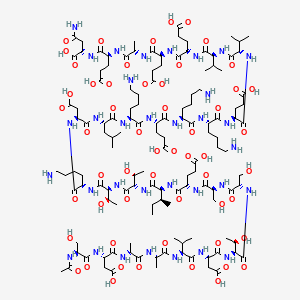
Thymosin alpha-1 (Tα1) is a 28-amino-acid peptide that helps regulate the immune system. It was first isolated in the 1970s from thymosin fraction 5, a calf thymus extract studied for its effects on immunity, by the laboratory of Allan Goldstein. Later work showed that the peptides purified from that extract were not true thymic hormones in the classic sense, but they did have real biological activity.1
A synthetic version, thymalfasin, was developed under the brand name Zadaxin. It is approved in more than 30 countries, mainly in Asia, Latin America and parts of Europe and the Middle East, chiefly for chronic hepatitis B and as an add-on in hepatitis C. It is not approved in the United States.
In US telehealth and longevity clinics, thymosin alpha-1 is promoted for immune support, recovery from chronic infections, long COVID, and as an anti-aging immune booster. It has a far larger clinical trial record than most peptides sold this way, but that record is mostly in specific diseases, not in healthy people.
- Anecdotal only
- In vitro only
- Animal models only
- Preliminary human
- Clinical trials
- Regulator approved
How thymosin alpha-1 works
Your immune system has two broad modes. One focuses on viruses and abnormal cells, led by T cells and natural killer cells. Thymosin alpha-1 nudges the immune system toward that mode. It helps immature T cells mature, makes antigen-presenting cells better at showing threats to T cells, and supports the activity of natural killer cells. It is an immune modulator rather than a direct antiviral.
Researchers have long grouped it with other "thymomimetic" agents that may boost Th1-type responses and delayed-type hypersensitivity, the arm of immunity most relevant to viral infections and tumors.3 It is one of several signals, along with interleukins and zinc-thymulin, that the thymus uses to support T-cell development.4
In more precise terms, Tα1 is an acetylated, highly charged peptide that is intrinsically unstructured in water and adopts a defined structure only under certain conditions, such as in some solvents or when bound to partner proteins.6 It acts in part through Toll-like receptor signaling on dendritic cells, promoting their maturation and the production of cytokines such as interleukin-2 and interferon-gamma. After subcutaneous injection it peaks in the blood within about two hours, has a serum half-life of about two hours, and returns to baseline within a day.2
The thymus trains T cells and shrinks with age. Thymic peptides such as thymosin alpha-1 and thymalin are studied for their effects on T-cell maturation and immune signalling.
What the research shows on thymosin alpha-1
The hepatitis data are the oldest. A 2001 review summarized trials in about 195 patients with hepatitis B and 162 with hepatitis C. In one randomized hepatitis B trial, viral DNA cleared in about 41% of patients after six months of treatment, compared with 9% of untreated controls. In hepatitis C, Tα1 alone did not beat placebo, but combined with interferon it improved liver enzyme normalization and viral clearance in two trials. The authors called the results mixed.2 Modern direct-acting antivirals have since transformed hepatitis treatment, so these older results matter less now.
Sepsis is the most active area. A 2025 meta-analysis of 11 randomized trials with about 1,900 patients found lower 28-day mortality with Tα1 overall. However, when the analysis was limited to high-quality or multicenter trials, the benefit was no longer statistically significant, and the authors judged the total sample size inadequate. Possible benefit was concentrated in subgroups such as patients with cancer.7
Aging and vaccine response are newer interests. A 2025 review reported that preclinical and clinical studies suggest Tα1 can improve vaccine responses in older adults and counter aspects of immune aging, while stressing that long-term efficacy and safety in older people still need confirmation.8 Laboratory work has also tested Tα1, alone and with other agents, for reversing thymic shrinkage in aged, stressed mice.4
Some research is still at the cell-culture stage. In airway cells from people with cystic fibrosis, Tα1 reduced inflammation and improved processing of the defective CFTR protein, but this has not been shown in patients.5
Studied for: Chronic hepatitis B and C, Immune modulation, Vaccine adjuvant research, Sepsis research.
Thymosin Alpha-1 reference data
| Sequence | SDAAVDTSSEITTKDLKEKKEVVEEAEN |
|---|---|
| Molecular weight | 3,108.3 Da |
| CAS number | 62304-98-7 |
| FDA status | Not approved for any indication. |
| Prohibited in sport | Not listed |
Thymosin Alpha-1 dosage in published research
2x weekly · usually run for about 26 weeks. A reference pattern, not a prescription.
Open this in the dosage calculator ↗
How thymosin alpha-1 is used in practice
Where it is approved, thymalfasin is given by subcutaneous injection, typically twice weekly for six to twelve months in hepatitis B. Trials commonly used 1.6 mg per dose.2 In China it is also widely used in intensive care and as an add-on in cancer treatment.
In the US, thymosin alpha-1 became a popular compounded peptide through functional medicine and telehealth clinics. The FDA later placed it in Category 2 of its review of bulk substances for compounding, which restricts compounding pharmacies from using it. Much current supply comes from research-chemical vendors instead, with the familiar problems of uncertain purity, sterility and dose. Some patients import branded Zadaxin from abroad.
Thymosin alpha-1 risks and side effects
Across decades of trials, thymosin alpha-1 has been well tolerated. Most studies reported little beyond local irritation at the injection site.2 Other reported effects include mild redness, transient fatigue and flu-like symptoms.
Because it is meant to enhance immune activity, it may work against immunosuppressive drugs and is generally avoided in organ transplant recipients. People with autoimmune disease should be cautious. There is little safety data in pregnancy or breastfeeding.
The bigger risks in the US come from the supply chain. A peptide made by an unregulated supplier may contain the wrong amount, synthesis byproducts, endotoxin or bacterial contamination. Using it in place of proven treatment for a serious infection or cancer is a further risk.
Reported side effects
Alternatives to thymosin alpha-1
For chronic hepatitis B, approved antivirals such as tenofovir and entecavir suppress the virus in most patients. Hepatitis C is now curable in most people with direct-acting antivirals such as sofosbuvir-velpatasvir or glecaprevir-pibrentasvir.
For sepsis, standard care remains early antibiotics, fluids, source control and organ support. For general immune resilience in older adults, vaccination against influenza, pneumococcus, shingles, RSV and COVID-19 has much stronger evidence than any peptide. Other thymic products, such as Thymalin and Thymogen, have weaker evidence than thymosin alpha-1.
The bottom line on thymosin alpha-1
Thymosin alpha-1 is one of the better-studied peptides sold through US clinics, with decades of use abroad and a clean safety record. Its benefits in hepatitis are modest and largely superseded, and its sepsis results weaken when only the strongest trials are counted. For healthy people seeking an immune boost, the evidence is thin.
Questions for a clinician
- What evidence applies to my situation, and at what level?
- What established alternatives should I consider first?
- What monitoring would be necessary, and how often?
- Can this be prescribed at all where I live, or only sold for research?
Thymosin Alpha-1 FAQ
What is Thymosin Alpha-1?
A thymic immunomodulatory peptide approved in more than 30 countries for hepatitis B and C, though not in the United States. It is classed as thymic & immune.
Is Thymosin Alpha-1 FDA approved?
No. Thymosin Alpha-1 is not approved by the FDA for any indication. Material sold online is labelled for research use only.
Is Thymosin Alpha-1 legal in the US?
Thymosin Alpha-1 is not FDA approved. It was moved off FDA’s Category 2 safety-risk list in 2026 after its nomination was withdrawn, but it was not added to the 503A bulks list. That leaves no routine legal path for a US compounding pharmacy to prepare it.
What dose of Thymosin Alpha-1 is used in research?
Published research and practitioner protocols report 1.6-3.2 mg, 2x weekly, typically for 26 weeks. This is a reference range, not a recommendation; dosing should be set by a licensed clinician.
How is Thymosin Alpha-1 reconstituted?
A 5 mg vial mixed with 2 mL of bacteriostatic water gives 2.5 mg/mL. At that concentration 1.6 mg is 64.0 units on a 100-unit insulin syringe.
What are the side effects of Thymosin Alpha-1?
Reported side effects include injection-site erythema, transient fatigue, mild flu-like symptoms. Contraindications: immunosuppressive therapy, organ transplant recipients, pregnancy.
What is the half-life of Thymosin Alpha-1?
The reported half-life of Thymosin Alpha-1 is ~2 hours.
Is Thymosin Alpha-1 banned in sport?
Thymosin Alpha-1 is not specifically named on the WADA prohibited list, but athletes should check the current list and their federation's rules.
References
Regulatory and primary sources
- FDA: Bulk drug substances that may present significant safety risks (Category 2 and withdrawn nominations) ↗ · content current as of April 22, 2026; checked October 18, 2026
- FDA: Bulk drug substances used in compounding under section 503A ↗ · how the 503A categories work
- PubChem compound record (CID 16130571) ↗ · structure, identifiers, synonyms
- FDA: Unapproved drugs and "research use only" products ↗ · regulatory status of non-approved products
- CAS Registry Number 62304-98-7 ↗ · chemical identity
Published literature
- beta-Thymosins.Ann N Y Acad Sci 2007.PubMed 17468232 · doi:10.1196/annals.1415.018
- Thymosin alpha-1.Am J Health Syst Pharm 2001.PubMed 11381492 · doi:10.1093/ajhp/58.10.886
- T-cell adjuvants.Int J Immunopharmacol 1994.PubMed 7806429 · doi:10.1016/0192-0561(94)90090-6
- Thymic endocrinology.Ann N Y Acad Sci 1998.PubMed 9629262 · doi:10.1111/j.1749-6632.1998.tb09574.x
- Unmet needs in cystic fibrosis.Expert Opin Biol Ther 2018.PubMed 30063865 · doi:10.1080/14712598.2018.1484101
- Structures of Thymosin Proteins.Vitam Horm 2016.PubMed 27450728 · doi:10.1016/bs.vh.2016.04.009
- Efficacy of thymosin α1 for sepsis: a systematic review and meta-analysis of randomized controlled trials.Front Cell Infect Microbiol 2025.PubMed 40969554 · doi:10.3389/fcimb.2025.1673959
- Aging and Thymosin Alpha-1.Int J Mol Sci 2025.PubMed 41373628 · doi:10.3390/ijms262311470
Literature retrieved from PubMed on October 16, 2026, favouring human studies and reviews. Numbered markers in the text show which paper supports which statement; uncited entries are background reading.