Is Thymogen legal?
Not FDA approved- FDA status
- Thymogen is not FDA approved and is not on FDA’s 503A bulks list.
- Compounding
- US compounding pharmacies cannot routinely prepare it.
- Prescription
- There is no approved US prescription product for Thymogen.
- Outside the US
- Several are registered as medicines or supplements in the Russian Federation
- Online market
- Products sold online are labelled “for research use only”: not made, tested or labelled for human use, and often mislabelled.
US status checked October 2026 against FDA’s compounding lists. Sources at the foot of the page.
What is Thymogen?
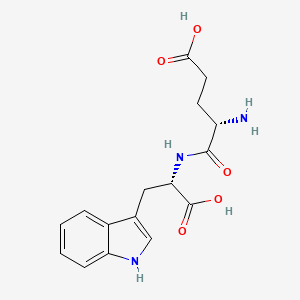
Thymogen is a synthetic dipeptide made of two amino acids, glutamic acid and tryptophan, written as Glu-Trp or EW. It was developed in the Soviet Union by the group led by Vladimir Morozov and Vladimir Khavinson, who identified it as an active component of Thymalin, their calf thymus extract. It is registered in Russia as an immunostimulant and its international nonproprietary name is oglufanide.
Thymogen belongs to the family of short peptide bioregulators associated with Khavinson's institute in St. Petersburg. Each of these di- to tetrapeptides is claimed to act on a specific tissue. Thymogen is the one aimed at the thymus and immune system.
It is one of a group of immune drugs that were widely used in the former Soviet bloc but remain almost unknown in Western medicine. A review of such drugs lists Thymogen among the immunomodulators thought to work partly by inducing interferon.1 In the US, it is sold online as a research peptide for immune support and recovery from infection.
One important caution: nearly all supporting research comes from a single research network in Russia and has not been independently replicated under current trial standards. That limitation applies to the whole bioregulator class.
- Anecdotal only
- In vitro only
- Animal models only
- Preliminary human
- Clinical trials
- Regulator approved
How Thymogen works
The thymus trains immature immune cells to become T cells. When the immune system is weakened by illness, injury, stress or age, T-cell numbers and function can fall. Thymogen is meant to act as a small signal that helps restore normal T-cell development and activity, without strongly stimulating an immune system that is already working normally.
Its developers propose that short peptides such as Thymogen enter cells and interact directly with DNA to switch tissue-specific genes on or off. This idea is central to the bioregulator theory, but it has not been confirmed by independent laboratories and is not an accepted mechanism in mainstream pharmacology.
In more precise terms, Thymogen is L-glutamyl-L-tryptophan. A 2024 review describes it alongside Thymodepressin, a drug built from the mirror-image D-forms of the same two amino acids, which acts as an immune suppressant instead. The authors present this pair as the first example of mirror-image peptide drugs with opposite effects on immune balance.2 Russian reviews of thymus and pineal aging also include Thymogen among the thymic peptides studied for effects on age-related involution.3 The specific receptors and pathways involved have not been clearly defined.
What the research shows on Thymogen
Most clinical reports are small and were published in Russian journals. In one, Thymogen was added to standard treatment in 46 women with acute or chronic inflammatory disease of the uterus and fallopian tubes. The authors reported normalization of lymphocyte counts, higher T- and B-cell numbers, better T-cell function, and no complications.7 The report does not describe a randomized control group, so the effect of Thymogen cannot be separated from the effect of the rest of the treatment or the natural course of the illness.
Reviews describe Thymogen as an interferon inducer used for decades in the former Soviet bloc for indications similar to those of interferons, such as viral infections.1 That gives a picture of long clinical use, but long use is not the same as proven benefit. The underlying trials are rarely available in English, often lack placebo controls, and seldom report enough detail to judge their quality.
Laboratory work on the mirror-image pair Thymogen and Thymodepressin is more recent and of chemical interest, but it does not show clinical benefit in people.2
There are no large, randomized, blinded trials of Thymogen in any condition, and none in healthy people using it for prevention or longevity.
Studied for: Immune function research, Infection recovery research.
Thymogen reference data
| Sequence | EW |
|---|---|
| FDA status | Not approved for any indication. |
| Prohibited in sport | Not listed |
Thymogen dosage in published research
Once daily for 10-20 day courses, 2-3 courses per year · usually run for about 3 weeks. A reference pattern, not a prescription.
Open this in the dosage calculator ↗
How Thymogen is used in practice
In Russia, Thymogen has been available as an injection and as a nasal spray. It is used in short courses, often 10 days or so, alongside standard treatment for infections, wound healing and states of weakened immunity. Bioregulator clinics sometimes recommend repeating courses several times a year.
In the US, it is not an approved drug. It is bought from online peptide vendors labeled for research use, or as imported product. Quality is unverified. A dipeptide is simple to make, but purity, sterility and accurate dosing still depend on the manufacturer. Doses and schedules circulating online are borrowed from Russian product information and bioregulator clinics rather than from dose-finding trials.
Some sellers list Glutoxim as a synonym for Thymogen. That is wrong. Glutoxim is a different Russian drug, from a class called thiopoietins, used mainly in tuberculosis.4 Research on Glutoxim does not apply to Thymogen.
Thymogen risks and side effects
Russian clinical reports describe Thymogen as well tolerated, and its chemistry, two common amino acids, is not inherently alarming. The most commonly reported effects are injection-site reactions and mild fatigue. However, safety monitoring in the published studies was limited, and rare or delayed effects would likely have been missed. The effects of repeating courses several times a year over many years have not been studied at all.
Because it is designed to stimulate immunity, caution is reasonable in people with autoimmune disease, organ transplants or treatment with immunosuppressive drugs. It has not been studied in pregnancy, and there is no meaningful data on use in people with active cancer. Drug interactions are essentially uncharacterized.
The largest practical risk for US buyers is the product itself: mislabeled or contaminated vials, nonsterile solutions and inaccurate doses from unregulated suppliers.
Reported side effects
Alternatives to Thymogen
For preventing infection, especially in older adults, vaccination has strong evidence: influenza, pneumococcal, shingles, RSV and COVID-19 vaccines where eligible. Sleep, physical activity, adequate protein and correction of zinc or vitamin D deficiency support immune function.
For diagnosed immune deficiencies, specialists use approved treatments such as immunoglobulin replacement. For active infections, antivirals and antibiotics matched to the cause remain the standard. Among thymic peptides, thymosin alpha-1 is better studied, with randomized trials in hepatitis and sepsis.
The bottom line on Thymogen
Thymogen is a simple dipeptide with a long record of use in Russia and a plausible but unproven immune rationale. The supporting studies are small, mostly uncontrolled and come from one research school. It may be harmless, but there is no strong evidence it helps, and US supply is unregulated.
Questions for a clinician
- What evidence applies to my situation, and at what level?
- What established alternatives should I consider first?
- What monitoring would be necessary, and how often?
- Can this be prescribed at all where I live, or only sold for research?
Thymogen FAQ
What is Thymogen?
A short peptide bioregulator directed at the thymus, from the Khavinson series developed at the St. Petersburg Institute of Bioregulation and Gerontology. It is classed as bioregulators.
Is Thymogen FDA approved?
No. Thymogen is not approved by the FDA for any indication. Material sold online is labelled for research use only.
Is Thymogen legal in the US?
Thymogen is not FDA approved and is not on FDA’s 503A bulks list. US compounding pharmacies cannot routinely prepare it.
What dose of Thymogen is used in research?
Published research and practitioner protocols report 100-200 mcg, once daily for 10-20 day courses, 2-3 courses per year, typically for 3 weeks. This is a reference range, not a recommendation; dosing should be set by a licensed clinician.
How is Thymogen reconstituted?
A 10 mg vial mixed with 2 mL of bacteriostatic water gives 5.0 mg/mL. At that concentration 100 mcg is 2.0 units on a 100-unit insulin syringe.
What are the side effects of Thymogen?
Reported side effects include injection-site reactions, transient fatigue. Contraindications: pregnancy, active malignancy, known hypersensitivity.
What is the half-life of Thymogen?
The reported half-life of Thymogen is Not established.
Is Thymogen banned in sport?
Thymogen is not specifically named on the WADA prohibited list, but athletes should check the current list and their federation's rules.
References
Regulatory and primary sources
- FDA: Bulk drug substances that may present significant safety risks (Category 2 and withdrawn nominations) ↗ · content current as of April 22, 2026; checked October 18, 2026
- FDA: Bulk drug substances used in compounding under section 503A ↗ · how the 503A categories work
- PubChem compound record (CID 100094) ↗ · structure, identifiers, synonyms
- FDA: Unapproved drugs and "research use only" products ↗ · regulatory status of non-approved products
Published literature
- Synthetic and natural immunomodulators acting as interferon inducers.Curr Pharm Des 2009.PubMed 19355963 · doi:10.2174/138161209787846847
- The First Reciprocal Activities of Chiral Peptide Pharmaceuticals: Thymogen and Thymodepressin, as Examples.Int J Mol Sci 2024.PubMed 38732260 · doi:10.3390/ijms25095042
- [Influence of peptides from pineal gland on thymus function at aging].Adv Gerontol 2010.PubMed 21510076
- [Glutoxim in the complex treatment of tuberculosis].Antibiot Khimioter 2002.PubMed 12087719
- [Current aspects of pathogenetic therapy in tuberculosis].Ter Arkh 2011.PubMed 21961327
- [Thiopoeitins in the treatment of tuberculosis].Probl Tuberk Bolezn Legk 2007.PubMed 17657963
- [Thymogen in the complex treatment of inflammatory diseases of the female genital system].Akush Ginekol (Mosk) 1992.PubMed 1476231
- [Application of ozonated perftoran in the treatment of spreaded peritonitis].Klin Khir 2014.PubMed 24923143
Literature retrieved from PubMed on October 16, 2026, favouring human studies and reviews. Numbered markers in the text show which paper supports which statement; uncited entries are background reading.