Is Epitalon legal?
Not approved · not compoundable- FDA status
- Epitalon is not FDA approved. It was moved off FDA’s Category 2 safety-risk list in 2026 after its nomination was withdrawn, but it was not added to the 503A bulks list.
- Compounding
- That leaves no routine legal path for a US compounding pharmacy to prepare it.
- Prescription
- There is no approved US prescription product for Epitalon.
- Outside the US
- Several are registered as medicines or supplements in the Russian Federation
- Online market
- Products sold online are labelled “for research use only”: not made, tested or labelled for human use, and often mislabelled.
US status checked October 2026 against FDA’s compounding lists. Sources at the foot of the page.
What is Epitalon?
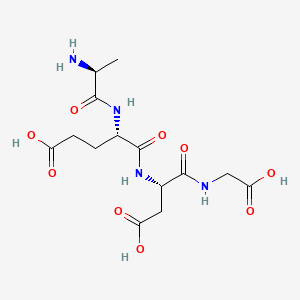
Epitalon, also spelled Epithalon, is a synthetic tetrapeptide made of four amino acids: alanine, glutamic acid, aspartic acid and glycine (AEDG). It was designed from the amino acid makeup of Epithalamin, an extract of cattle pineal glands.3 Epithalamin itself traces back to pineal extracts studied by Dilman and colleagues in the Soviet Union from 1979.7 Researchers later reported that the same tetrapeptide is present in the pineal extract itself.3
Epitalon was developed by Vladimir Khavinson and colleagues at the St. Petersburg Institute of Bioregulation and Gerontology as part of a series of short peptides, each claimed to act on a specific tissue.1 Some products in this series are registered in Russia.
Elsewhere, Epitalon is sold online and through longevity clinics for anti-aging, telomere support, sleep and melatonin rhythm. It is not approved as a medicine in the US.
- Anecdotal only
- In vitro only
- Animal models only
- Preliminary human
- Clinical trials
- Regulator approved
How Epitalon works
The pineal gland in the brain makes melatonin, which helps set the body's daily rhythm, and melatonin output falls with age. Khavinson's group proposed a peptide theory of aging: that aging involves gene expression changes that reduce the body's production of small regulatory peptides, and that giving those peptides back can restore normal function in the matching tissue.1 Epitalon is presented as the peptide for the pineal gland and the retina.
The proposed mechanism is unusual. The group argues that short peptides pass through cell and nuclear membranes, interact with histones and DNA, and switch genes on or off.4 A 2025 independent review found that Epitalon has been reported to influence melatonin synthesis, interleukin-2 gene activity, immune cell activity and enzyme activity, including telomerase. It also concluded that it is uncertain whether these are its main mechanisms and that basic structural and chemical studies of the peptide remain limited.3 A 2024 review from the same St. Petersburg institute reports effects on circadian rhythm genes and on aging marker proteins in cheek cells.6
What the research shows on Epitalon
In animals, the Khavinson group reports that Epitalon lengthened the lifespan of mice and fruit flies, restored daily rhythms of melatonin and cortisol in old rhesus monkeys and protected the retina in rats with inherited retinal degeneration.1 Related work found that Epithalamin reduced markers of oxidative damage in rats and fruit flies.8
In humans, the same group reports that clinical studies of Epithalamin showed anti-aging effects, and that Epitalon improved vision in patients with pigmentary retinal degeneration.1 They also report that Epithalamin corrected the balance between oxidant and antioxidant systems in patients with age-related disease.8
The limits are serious. Almost all of this work comes from one research group and its collaborators, much of it in journals with limited peer scrutiny, and it has not been independently replicated in modern, preregistered, randomized trials. Many human studies used the pineal extract rather than synthetic Epitalon, so results cannot be assumed to transfer. Telomerase activation has been reported in cell culture, not shown to extend human life. The breadth of the claims is also a warning sign; the same group has proposed AEDG and related peptides as treatments for COVID-19 on theoretical grounds.5 Even the case for melatonin itself as an anti-aging hormone in humans was described as unproven in a 1994 review.7
What would settle the question is straightforward to describe: an independent, randomized, placebo-controlled trial of synthetic Epitalon in older adults, with outcomes chosen in advance, such as melatonin levels, sleep quality or validated aging biomarkers, and with careful safety tracking. No trial of that kind appears in the published research cited here.
Studied for: Longevity research, Melatonin rhythm, Telomere research.
Epitalon reference data
| Sequence | AEDG |
|---|---|
| FDA status | Not approved for any indication. |
| Prohibited in sport | Not listed |
Epitalon dosage in published research
Once daily for 10-20 day courses, 2-3 courses per year · usually run for about 3 weeks. A reference pattern, not a prescription.
Open this in the dosage calculator ↗
How Epitalon is used in practice
In the US, Epitalon is bought mostly from research-chemical vendors as freeze-dried powder, along with nasal sprays and oral products. Some longevity and anti-aging clinics, including telehealth services, have offered it, but FDA has restricted it from use in compounding. The legal status box on this page has the details.
Typical use follows the Russian pattern of short courses of daily injections for 10 to 20 days, repeated two or three times a year. That schedule comes from the developer's tradition rather than from trials that compared regimens.
Product quality is unverified. Research-chemical vials are not tested for identity, purity, dose or sterility by any regulator, and a short, cheap peptide is easy to sell under the right label whatever the vial holds.
Longevity clinics often sell Epitalon alongside other bioregulator peptides as part of anti-aging packages, sometimes with telomere-length tests before and after. Commercial telomere tests vary between labs and from one test to the next, so a change in a single result says little about whether the peptide did anything.
Epitalon risks and side effects
Reported side effects are mild, such as injection-site reactions and temporary tiredness. However, the published studies were not designed to detect uncommon or long-term harms, so a short side effect list mostly reflects limited monitoring.
The main theoretical concern is telomerase. Most cancers reactivate telomerase to keep dividing, so a compound promoted for switching it on deserves caution in anyone with active or past cancer. The developers also report anticancer effects in animals,1 but neither claim has been tested in people. Other unknowns include effects during pregnancy, interactions with other drugs and the consequences of shifting melatonin and cortisol rhythms. Unregulated injectables add risks of infection and contamination.
Reported side effects
Alternatives to Epitalon
No drug is approved to slow aging. For the goals Epitalon is marketed for, better-supported options exist. For sleep and circadian rhythm, low-dose melatonin, morning daylight, consistent sleep times and cognitive behavioral therapy for insomnia all have human trial evidence.
For healthy aging, the strongest evidence still supports regular exercise including strength training, not smoking, controlling blood pressure, cholesterol and blood sugar, maintaining a healthy weight and getting recommended cancer screenings. Drugs such as metformin and rapamycin are being studied for aging, but they remain investigational for that purpose.
The bottom line on Epitalon
Epitalon comes with decades of striking claims, from longer-lived mice to restored melatonin rhythms, but nearly all of it rests on one research group's work that has not been independently confirmed in modern trials. It is not dangerous on current evidence so much as unproven, with unanswered questions about telomerase and product quality. Treat it as an experiment, not a longevity therapy.
Questions for a clinician
- What evidence applies to my situation, and at what level?
- What established alternatives should I consider first?
- What monitoring would be necessary, and how often?
- Can this be prescribed at all where I live, or only sold for research?
Epitalon FAQ
What is Epitalon?
A short peptide bioregulator directed at the pineal gland, from the Khavinson series developed at the St. Petersburg Institute of Bioregulation and Gerontology. It is classed as bioregulators.
Is Epitalon FDA approved?
No. Epitalon is not approved by the FDA for any indication. Material sold online is labelled for research use only.
Is Epitalon legal in the US?
Epitalon is not FDA approved. It was moved off FDA’s Category 2 safety-risk list in 2026 after its nomination was withdrawn, but it was not added to the 503A bulks list. That leaves no routine legal path for a US compounding pharmacy to prepare it.
What dose of Epitalon is used in research?
Published research and practitioner protocols report 100-200 mcg, once daily for 10-20 day courses, 2-3 courses per year, typically for 3 weeks. This is a reference range, not a recommendation; dosing should be set by a licensed clinician.
How is Epitalon reconstituted?
A 10 mg vial mixed with 2 mL of bacteriostatic water gives 5.0 mg/mL. At that concentration 100 mcg is 2.0 units on a 100-unit insulin syringe.
What are the side effects of Epitalon?
Reported side effects include injection-site reactions, transient fatigue. Contraindications: pregnancy, active malignancy, known hypersensitivity.
What is the half-life of Epitalon?
The reported half-life of Epitalon is Not established.
Is Epitalon banned in sport?
Epitalon is not specifically named on the WADA prohibited list, but athletes should check the current list and their federation's rules.
References
Regulatory and primary sources
- FDA: Bulk drug substances that may present significant safety risks (Category 2 and withdrawn nominations) ↗ · content current as of April 22, 2026; checked October 18, 2026
- FDA: Bulk drug substances used in compounding under section 503A ↗ · how the 503A categories work
- PubChem compound record (CID 219042) ↗ · structure, identifiers, synonyms
- FDA: Unapproved drugs and "research use only" products ↗ · regulatory status of non-approved products
Published literature
- Peptides and Ageing.Neuro Endocrinol Lett 2002.PubMed 12374906
- Therapeutic Peptides in Orthopaedics: Applications, Challenges, and Future Directions.J Am Acad Orthop Surg Glob Res Rev 2026.PubMed 41490200 · doi:10.5435/JAAOSGlobal-D-25-00236
- Overview of Epitalon-Highly Bioactive Pineal Tetrapeptide with Promising Properties.Int J Mol Sci 2025.PubMed 40141333 · doi:10.3390/ijms26062691
- Peptide Regulation of Cell Differentiation.Stem Cell Rev Rep 2020.PubMed 31808038 · doi:10.1007/s12015-019-09938-8
- Peptides: Prospects for Use in the Treatment of COVID-19.Molecules 2020.PubMed 32987757 · doi:10.3390/molecules25194389
- [Peptidergic regulation of expression of cellular aging marker proteins in buccal epithelium.].Adv Gerontol 2024.PubMed 39742404
- Artificial life extension. The epigenetic approach.Ann N Y Acad Sci 1994.PubMed 8010616 · doi:10.1111/j.1749-6632.1994.tb56852.x
- Effects of pineal peptide preparation Epithalamin on free-radical processes in humans and animals.Neuro Endocrinol Lett 2001.PubMed 11335874
Literature retrieved from PubMed on October 16, 2026, favouring human studies and reviews. Numbered markers in the text show which paper supports which statement; uncited entries are background reading.