Is AOD-9604 legal?
Not approved · not compoundable- FDA status
- AOD-9604 is not FDA approved. It was moved off FDA’s Category 2 safety-risk list in 2026 after its nomination was withdrawn, but it was not added to the 503A bulks list.
- Compounding
- That leaves no routine legal path for a US compounding pharmacy to prepare it.
- Prescription
- There is no approved US prescription product for AOD-9604.
- Online market
- Products sold online are labelled “for research use only”: not made, tested or labelled for human use, and often mislabelled.
- Sport
- Prohibited in sport under the World Anti-Doping Agency list.
US status checked October 2026 against FDA’s compounding lists. Sources at the foot of the page.
What is AOD-9604?
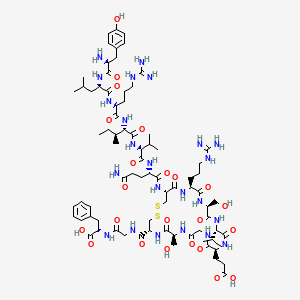
AOD-9604, short for Anti-Obesity Drug 9604, is a modified fragment of human growth hormone. It consists of amino acids 177 to 191 from the tail end of the growth hormone molecule, with an extra tyrosine added to make it more stable. It was developed in Australia as a fat-loss drug by Metabolic Pharmaceuticals, building on university research into which part of growth hormone drives fat breakdown.1
By the early 2000s it had reached human trials, with phase IIa studies underway by 2002.1 In a 2006 review of obesity drugs in development it sat alongside GLP-1 drugs and other candidates as a growth hormone fragment intended to increase fat breakdown.4
It did not succeed. A larger phase IIb trial in adults with obesity did not show weight loss beyond placebo, and development for obesity was dropped. Despite that, AOD-9604 is still widely marketed for fat loss and, more recently, for joint and cartilage repair, usually on the strength of animal studies.
- Anecdotal only
- In vitro only
- Animal models only
- Preliminary human
- Clinical trials
- Regulator approved
How AOD-9604 works
Growth hormone has many jobs. It helps build muscle and bone, raises blood sugar and promotes fat breakdown. Researchers hoped that a small piece of the hormone could keep only the fat-burning part, without growth hormone's effects on blood sugar or on IGF-1, the growth factor linked to many of growth hormone's other actions. AOD-9604 was designed as that piece.
In preclinical studies, AOD-9604 stimulated lipolysis and inhibited lipogenesis in fat tissue of rodents, and, according to the developer's studies, it did so without raising IGF-1 or impairing glucose tolerance. The exact receptor or pathway it acts through in fat cells has never been fully established. Its plasma half-life is short, roughly half an hour after injection. Some recent reviews group it with growth hormone secretagogues, but it does not stimulate growth hormone release and was specifically designed to avoid IGF-1 effects.
Fat cells release fatty acids when hormones such as adrenaline and growth hormone signal them. Several fat-loss peptides are claimed to mimic part of that signal; human evidence is weak.
What the research shows on AOD-9604
The human evidence is the most important part of this story, and it is negative for the main claim. AOD-9604 went through several human trials for obesity, including the phase IIa work noted above.1 The definitive test was a phase IIb trial in adults with obesity, which did not separate from placebo on weight loss. The developer ended the obesity program after that result. Full peer-reviewed publication of the human trial data has been limited, which makes independent assessment harder.
The positive evidence is almost entirely in animals. Rodent studies showed reduced body fat and increased fat burning. Later animal work explored cartilage repair after injection into joints, which underlies the current marketing for joint health. Reviews of peptides in orthopedics note that although preclinical findings are promising, there is a current lack of clinical trials to support use.2
A 2026 review of unapproved peptides used in sports medicine, which covered AOD-9604, found that many show favorable outcomes in animals but that rigorous human safety data are scarce and the potential for harm is real. The same review discussed how the placebo effect and social media amplify perceived benefits.3
Why might a compound that burned fat in rodents fail in people? Several explanations are possible. Rodents have proportionally more metabolically active fat and respond more strongly to many fat-burning signals. The short half-life may mean the drug is cleared before it has a lasting effect. And a modest increase in fat breakdown does not lead to weight loss if appetite and calorie intake adjust to compensate.
Put simply, the one question that was tested properly in humans, whether AOD-9604 causes weight loss, got a no.
Studied for: Fat loss research, Investigated for osteoarthritis.
AOD-9604 reference data
| Molecular weight | 1,815.1 Da |
|---|---|
| CAS number | 221231-10-3 |
| FDA status | Not approved for any indication. |
| Prohibited in sport | Yes, under the WADA prohibited list |
AOD-9604 dosage in published research
Once daily, fasted · usually run for about 12 weeks. A reference pattern, not a prescription.
Open this in the dosage calculator ↗
How AOD-9604 is used in practice
AOD-9604 is sold online as a research peptide, usually as powder in vials for injection, and sometimes as oral or nasal products. It has been offered by some anti-aging and weight-loss clinics in the US, typically as a daily injection taken on an empty stomach. It is not FDA approved, and US compounding pharmacies face restrictions on using it.
Products from research-chemical vendors have no regulatory oversight. Identity, purity and sterility are not verified, and peptide fragments are easy to mislabel or substitute. Oral products face an additional problem. Peptides are largely broken down in the gut, and no human evidence shows that oral AOD-9604 reaches meaningful blood levels.
For athletes, AOD-9604 is a known target of anti-doping work. Laboratories have developed detection methods for it alongside other non-approved peptides classified as doping agents.5
AOD-9604 risks and side effects
In the human trials, AOD-9604 was generally reported as well tolerated, which is one consistent finding. Commonly reported side effects in use are injection-site reactions, headache and transient fatigue.
That trial experience has limits. The studies used pharmaceutical-grade product under controlled conditions, for months rather than years. Long-term safety, effects in pregnancy, effects on joints when injected locally, and interactions with other drugs are not well characterized. People using gray-market products also take on the risks of contamination, wrong dosing and nonsterile injection, including infection.
Sports medicine authors have warned that the lack of rigorous human data for unapproved peptides like AOD-9604 leaves real potential for harm.3 A further risk is indirect, and it is easy to overlook. Time and money spent on an ineffective product can delay treatments that work.
Reported side effects
Alternatives to AOD-9604
For weight loss, FDA-approved options with strong human evidence include semaglutide (Wegovy), tirzepatide (Zepbound) and liraglutide (Saxenda), along with phentermine-topiramate (Qsymia), naltrexone-bupropion (Contrave) and orlistat. Bariatric surgery is an option for severe obesity. Tesamorelin (Egrifta) is approved specifically to reduce excess abdominal fat in people with HIV-associated lipodystrophy.
For joint pain and osteoarthritis, evidence-based approaches include exercise therapy and physical therapy, weight loss, topical or oral NSAIDs used appropriately, corticosteroid injections for short-term relief and joint replacement for advanced disease. Other injectables such as hyaluronic acid and platelet-rich plasma have mixed evidence but more human data than AOD-9604.
The bottom line on AOD-9604
AOD-9604 was a serious attempt at an obesity drug, and it failed its key human trial. It appears reasonably well tolerated in short studies, but there is no good human evidence that it causes fat loss or repairs joints. Approved weight-loss medicines and standard joint care are better-supported choices.
Questions for a clinician
- What evidence applies to my situation, and at what level?
- What established alternatives should I consider first?
- What monitoring would be necessary, and how often?
- Can this be prescribed at all where I live, or only sold for research?
AOD-9604 FAQ
What is AOD-9604?
A modified growth hormone fragment developed specifically as an obesity drug, which failed to beat placebo in phase IIb. It is classed as fat loss.
Is AOD-9604 FDA approved?
No. AOD-9604 is not approved by the FDA for any indication. Material sold online is labelled for research use only.
Is AOD-9604 legal in the US?
AOD-9604 is not FDA approved. It was moved off FDA’s Category 2 safety-risk list in 2026 after its nomination was withdrawn, but it was not added to the 503A bulks list. That leaves no routine legal path for a US compounding pharmacy to prepare it.
What dose of AOD-9604 is used in research?
Published research and practitioner protocols report 300-600 mcg, once daily, fasted, typically for 12 weeks. This is a reference range, not a recommendation; dosing should be set by a licensed clinician.
How is AOD-9604 reconstituted?
A 5 mg vial mixed with 2 mL of bacteriostatic water gives 2.5 mg/mL. At that concentration 300 mcg is 12.0 units on a 100-unit insulin syringe.
What are the side effects of AOD-9604?
Reported side effects include injection-site reactions, headache, transient fatigue. Contraindications: pregnancy, known hypersensitivity.
What is the half-life of AOD-9604?
The reported half-life of AOD-9604 is ~30 minutes.
Is AOD-9604 banned in sport?
Yes. AOD-9604 falls under the World Anti-Doping Agency prohibited list.
References
Regulatory and primary sources
- FDA: Bulk drug substances that may present significant safety risks (Category 2 and withdrawn nominations) ↗ · content current as of April 22, 2026; checked October 18, 2026
- FDA: Bulk drug substances used in compounding under section 503A ↗ · how the 503A categories work
- PubChem compound record (CID 71300630) ↗ · structure, identifiers, synonyms
- WADA Prohibited List ↗ · current year
- FDA: Unapproved drugs and "research use only" products ↗ · regulatory status of non-approved products
- CAS Registry Number 221231-10-3 ↗ · chemical identity
Published literature
- AOD-9604 Metabolic.Curr Opin Investig Drugs 2004.PubMed 15134286
- Therapeutic Peptides in Orthopaedics: Applications, Challenges, and Future Directions.J Am Acad Orthop Surg Glob Res Rev 2026.PubMed 41490200 · doi:10.5435/JAAOSGlobal-D-25-00236
- Safety and Efficacy of Approved and Unapproved Peptide Therapies for Musculoskeletal Injuries and Athletic Performance.Sports Med 2026.PubMed 41966639 · doi:10.1007/s40279-026-02437-0
- Obesity drugs in clinical development.Curr Opin Investig Drugs 2006.PubMed 16625817
- Analytical approaches for the detection of emerging therapeutics and non-approved drugs in human doping controls.J Pharm Biomed Anal 2014.PubMed 24906629 · doi:10.1016/j.jpba.2014.05.020
Literature retrieved from PubMed on October 16, 2026, favouring human studies and reviews. Numbered markers in the text show which paper supports which statement; uncited entries are background reading.