The HOMA-IR blood test isn't just another line item on a lab report. It's a powerful calculation that uses your fasting insulin and fasting glucose levels to get a snapshot of how your body is handling sugar. Think of it as an early-warning system for insulin resistance, a metabolic traffic jam that often builds up long before type 2 diabetes or other health issues appear on the horizon.
Your Body's Key and Lock System
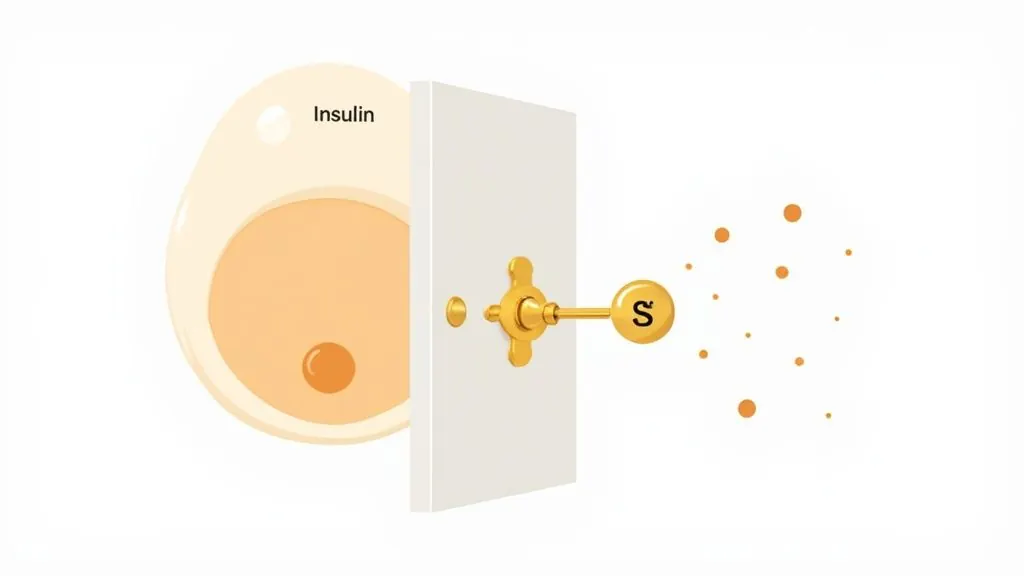
To really get what HOMA-IR is telling us, we first need to appreciate the delicate dance between insulin and glucose. Imagine your body's cells are like locked houses that need fuel to keep the lights on. Glucose, the sugar from your food, is that fuel.
But glucose can't just barge in. It needs a key to get through the front door. That key is insulin, a hormone your pancreas makes. After you eat, sugar enters your bloodstream, and your pancreas sends out insulin. Insulin travels to your cells, fits into their locks, and turns the key, opening the door for glucose to enter and be used for energy.
When this system runs smoothly, your body is insulin sensitive. Everything works as it should.
What Is Insulin Resistance?
Insulin resistance is what happens when those locks on your cells start to get rusty. The doors become stubborn. They don't respond as easily to the insulin key.
Your body is smart, though. It senses that all this glucose is still stuck outside in the bloodstream, so it panics a little. It shouts at the pancreas, "We need more keys! Make more insulin!" The pancreas complies, pumping out more and more insulin to brute-force those sticky doors open.
For a while, this works. Your blood sugar might even look normal on a standard test. But underneath the surface, your body is in a state of high insulin (hyperinsulinemia) just to keep things balanced. It’s like having to jiggle the key and slam your shoulder into a door that used to swing open with a gentle push.
The HOMA-IR test is so brilliant because it quantifies this struggle. It doesn't just look at your blood sugar; it measures how hard your body is working (i.e., how much insulin it's pumping out) to manage that blood sugar. It gives you a direct window into your metabolic efficiency.
Why the HOMA-IR Blood Test Is So Important
Most doctors only check fasting glucose or maybe HbA1c (a three-month average of blood sugar). While those are helpful, they are often lagging indicators. Your blood sugar can look perfectly fine for years while your pancreas is running a marathon in the background to keep it that way.
HOMA-IR, on the other hand, is a leading indicator.
Knowing your HOMA-IR score gives you a massive head start. It uncovers metabolic stress long before it ever shows up as high blood sugar. This early detection is critical because insulin resistance isn't just about diabetes; it's connected to a whole host of other health problems.
- Weight Management: High insulin is a fat-storage hormone. When it's chronically elevated, it makes losing weight—especially around the midsection—feel nearly impossible.
- Hormonal Health: It's a major player in conditions like Polycystic Ovary Syndrome (PCOS), driving many of its frustrating symptoms.
- Cardiovascular Risk: Insulin resistance is closely linked with high triglycerides, low "good" HDL cholesterol, and high blood pressure.
- Energy Levels: When glucose can't get into your cells efficiently, you're left feeling wiped out. This is where those afternoon slumps and constant feelings of fatigue often come from.
Getting a HOMA-IR blood test isn't just about checking a box. It's about assessing the very foundation of your metabolic health. It gives you a single, powerful number that can guide you and your doctor toward the right nutrition, exercise, and lifestyle changes to fix the problem before it becomes a crisis.
How to Interpret Your HOMA-IR Score
Getting a lab report back with just a bunch of numbers on it can feel a little abstract. What does that single HOMA-IR score actually mean? Think of it less as a static number and more as a direct report on how hard your pancreas is working to keep your blood sugar in check.
It’s calculated from two simple values from your blood test: fasting insulin and fasting glucose.
HOMA-IR = (Fasting Insulin (µU/mL) x Fasting Glucose (mg/dL)) / 405
You don’t need to be a math whiz to get the important part. The formula just shows the relationship between insulin and glucose. If your body needs to pump out a lot of insulin just to keep your blood sugar normal, it’s a sign your cells are starting to ignore insulin’s signal. That’s insulin resistance in a nutshell.
And this isn't some rare, obscure problem. Researchers estimate that insulin resistance affects around 26.53% of adults globally. It’s a massive, often silent, driver of chronic health issues. You can read more about the global impact of insulin resistance.
Understanding the HOMA-IR Ranges
So, where does your number fit in? While different labs might have slightly different cutoffs, there’s a general clinical agreement on what these scores suggest. A single test is just a snapshot, of course. The real story unfolds when you track your HOMA-IR over time.
To give you a clearer picture, here’s a guide to what your score likely means for your metabolic health.
HOMA-IR Score Interpretation Guide
This table breaks down the common HOMA-IR ranges, from optimal to significant resistance, helping you understand where you stand and what it might mean for your long-term health.
| HOMA-IR Score | Interpretation | Clinical Significance |
|---|---|---|
| < 1.0 | Optimal Sensitivity | Your body is responding beautifully to insulin. This is the goal—your metabolic machinery is efficient, and your risk for related conditions is very low. |
| 1.0 – 1.9 | Good Sensitivity | You're still in a healthy zone. A score creeping toward the top of this range, though, might be an early hint to keep an eye on your diet and activity levels. |
| 1.9 – 2.9 | Early Resistance | This is an important heads-up. Your cells are starting to resist insulin, making your pancreas work overtime. It's the perfect time to make lifestyle changes. |
| > 2.9 | Significant Resistance | A score this high is a strong indicator of insulin resistance. It puts you at a much higher risk for prediabetes, type 2 diabetes, PCOS, and cardiovascular problems. |
This breakdown helps contextualize your results, turning a simple number into actionable information you can discuss with your doctor.
Why Context Is Everything
Remember, your HOMA-IR score is just one piece of your health puzzle. A single high reading after a week of terrible sleep or high stress doesn't automatically mean you have a problem. The real value of the HOMA-IR blood test comes from seeing the trend.
For example, a score that creeps from 1.2 to 2.4 over a couple of years is a red flag, even if both numbers are technically "good." That upward trend points to a slow decline in insulin sensitivity that needs your attention.
On the flip side, seeing your score drop from 3.5 to 2.1 after a few months of cleaning up your diet and hitting the gym is powerful proof that what you’re doing is working.
Ultimately, your HOMA-IR score is a tool. It gives you an objective metric to track, moving you beyond guesswork and empowering you to have more informed conversations with your doctor about your metabolic health.
The Health Risks of an Elevated HOMA-IR Score
A high HOMA-IR score is much more than just a number on a lab report. It’s a red flag—a crucial signal that your body's metabolic engine is seriously sputtering. When your score starts to creep up, it means your cells are becoming deaf to insulin's message. This forces your pancreas to work dangerously hard, pumping out more and more insulin just to keep your blood sugar in check.
This isn't some isolated issue. It's a foundational problem that sends shockwaves through your entire system, dramatically increasing your risk for a whole host of chronic diseases.
This chart gives you a clear picture of what the numbers actually mean.
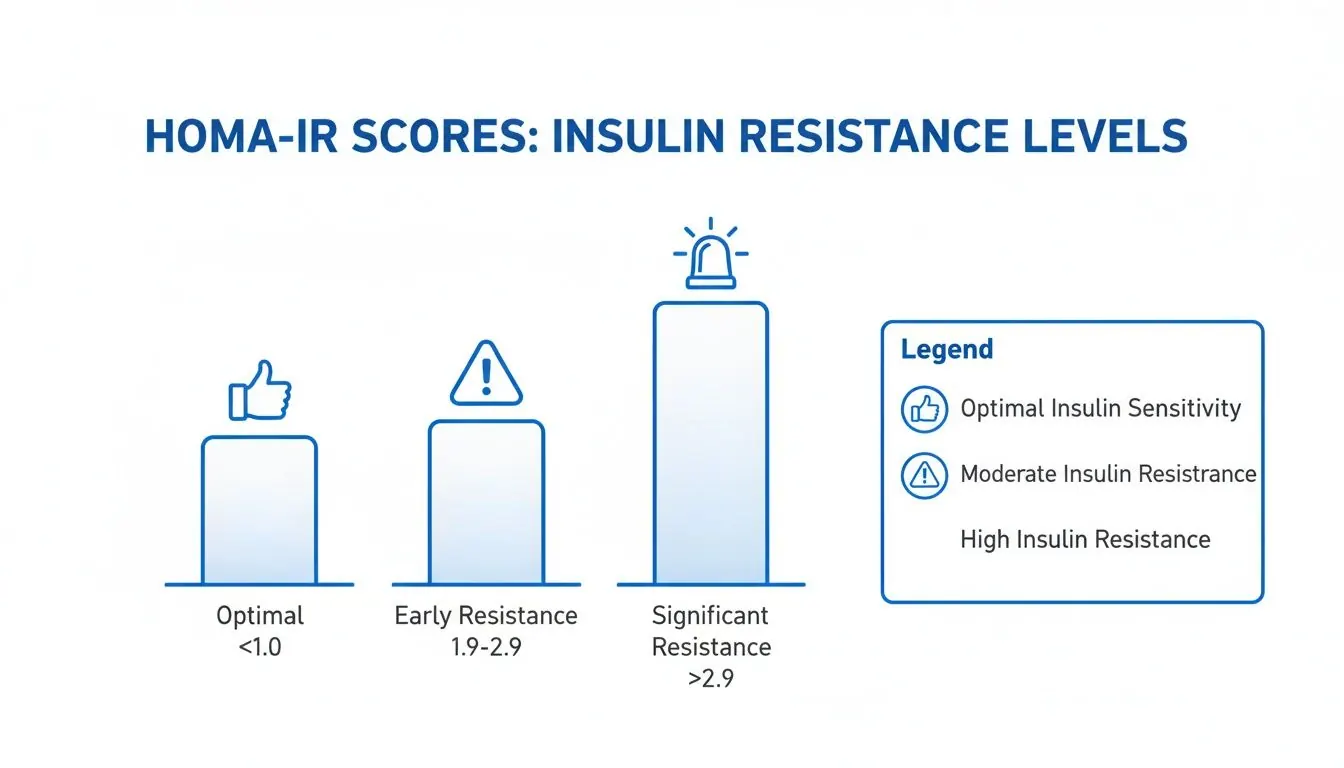
As you can see, a score creeping above 1.9 is an early warning sign. If it pushes past 2.9, you’re looking at a significant breakdown in your body’s ability to manage glucose.
The Slippery Slope to Prediabetes and Type 2 Diabetes
The most direct and well-known outcome of unchecked insulin resistance is the slow march toward type 2 diabetes. Think of your pancreas as a factory running on overtime. For years, it can manage the extra workload, but eventually, the machinery starts to break down. The beta cells inside your pancreas—the ones responsible for making insulin—simply get exhausted and begin to fail.
Once that happens, your body can no longer produce enough insulin to overpower your cells' resistance. Glucose gets locked out, building up in your bloodstream. This is the point where you cross the line into prediabetes and, eventually, full-blown type 2 diabetes.
This is why the HOMA-IR blood test is so powerful. It can spot this brewing storm years, sometimes even a decade, before a standard blood sugar test shows anything is wrong. Right now, over 468 million people worldwide have diabetes, with insulin resistance at the core of the problem. That number is projected to climb to a staggering 783 million by 2045, making early detection tools like HOMA-IR more critical than ever. You can explore these projections and the role of insulin resistance to understand the scale of the issue.
Beyond Diabetes: A Cascade of Other Health Concerns
While the link to diabetes is undeniable, the damage from constantly high insulin levels doesn't stop there. Insulin is a powerful hormone, and when it’s out of balance, it affects nearly every system in your body.
1. Polycystic Ovary Syndrome (PCOS)
For up to 70% of women with PCOS, insulin resistance is the primary driver of their condition. All that excess insulin signals the ovaries to produce more androgens (like testosterone), which wreaks havoc on the menstrual cycle, triggers acne and unwanted hair growth, and interferes with ovulation. For many women, getting insulin under control is the single most effective way to manage their PCOS symptoms.
2. Non-Alcoholic Fatty Liver Disease (NAFLD)
When your muscle and fat cells are full and refusing to take in more glucose, your liver is forced to pick up the slack. It takes the excess sugar from your blood and converts it into fat, specifically triglycerides. This newly created fat gets stored right there in the liver, leading to NAFLD. Over time, this can cause serious inflammation (NASH) and even permanent liver damage.
3. Cardiovascular Disease
Insulin resistance is a major player in heart disease, even in people who don't have diabetes. It contributes to a dangerous collection of risk factors known as metabolic syndrome:
- High Blood Pressure: Insulin can cause your kidneys to hold onto excess sodium and water.
- Poor Cholesterol Profile: It’s notorious for causing high triglycerides and tanking your levels of "good" HDL cholesterol.
- Inflammation: Chronically high insulin is pro-inflammatory, damaging the delicate lining of your arteries and setting the stage for plaque buildup.
The Connection to Weight Gain and Constant Fatigue
A high HOMA-IR score also helps explain two of the most frustrating symptoms people struggle with every day: stubborn weight gain and relentless fatigue.
Because insulin is your body's primary fat-storage hormone, having high levels circulating 24/7 puts your body in constant storage mode. This makes it incredibly difficult to lose weight, especially that stubborn fat around your midsection.
At the same time, since glucose isn't getting into your cells properly, your body is effectively being starved of its main fuel source. This is why you feel so tired. It leads to persistent fatigue, brain fog, and intense cravings for sugar and carbs—it's your body screaming for a quick, easy energy hit that it can't get any other way. Understanding your body composition is another key piece of this puzzle; you can read our guide on how to measure body fat percentage to learn more.
How to Get an Accurate HOMA-IR Blood Test
Getting a reliable HOMA-IR score is about more than just a quick trip to the lab. To get a number that truly reflects your underlying metabolic health, you need to control the variables beforehand. Think of it like taking a clear photograph—if the camera is shaking or the lighting is bad, you won't get an accurate picture of the subject.
The single most important step is the fast. You need to fast for a solid 10-12 hours before your blood is drawn. That means nothing but water—no food, no juice, no coffee.
Even a tiny splash of cream in your morning cup can trigger an insulin response, which will throw off your numbers and make your HOMA-IR score look much worse than it actually is.
Setting the Stage for an Accurate Result
Beyond just fasting, other factors can temporarily mess with your insulin and glucose levels. For the most accurate snapshot of your metabolic state, you'll want to schedule your homa-ir blood test for a time when your body is in a relatively normal, unstressed state.
Here are a few key things to keep in mind:
- Avoid Intense Exercise: A really tough workout can affect your insulin sensitivity for up to 48 hours. It's best to skip the heavy lifting or intense cardio for a day or two before your test.
- Be Well-Rested: Believe it or not, just one night of bad sleep can temporarily increase insulin resistance. Make a good night's rest a priority before you go in.
- Postpone if You're Sick or Stressed: Being ill or under a lot of psychological stress can raise cortisol and blood sugar, which will definitely skew your results. If you're not feeling well or are dealing with unusual pressure, just reschedule.
The goal is to capture your baseline metabolic state, not how your body responds to a temporary stressor. A clean test period ensures the data you get is actionable and not just noise.
How to Order the HOMA-IR Test
Getting the test done is pretty simple, and you've got a couple of options. Since HOMA-IR is a calculation and not a test in itself, you just need to make sure you order the two lab markers that go into it.
1. Through Your Doctor
The most common way is to ask your doctor to order the labs. You’ll need to specifically request both a "fasting insulin" test and a "fasting glucose" test. Many doctors order fasting glucose as part of a routine panel, but fasting insulin is less common, so you might have to be clear that you want both drawn.
To dive deeper into this specific marker, check out our detailed guide on the fasting insulin test.
2. Direct-to-Consumer (DTC) Labs
Another really convenient route is using a direct-to-consumer lab service. These companies let you order the tests you need online, without a doctor's order. You just pay online, visit a local partner lab for the blood draw, and get your results sent directly to you. This is a great option if you want more privacy or simply want to take charge of your own health tracking.
Proven Lifestyle Strategies to Lower Your HOMA-IR Score

Getting an elevated HOMA-IR score isn't a final verdict. Think of it as a wake-up call—a powerful signal that it's time to make some targeted changes to get your metabolic health back on track. The good news is that the most effective tools for improving your insulin sensitivity are entirely within your control.
The beauty of tackling insulin resistance is that it responds incredibly well to simple, sustainable habits. By focusing on your daily nutrition, movement, sleep, and stress, you can make a huge impact on your HOMA-IR score and slash your risk for chronic disease.
Master Your Nutrition
The food on your plate has the most direct and immediate effect on your blood sugar and insulin levels. The goal is to eat in a way that keeps your blood sugar stable, avoiding the dramatic spikes and crashes that force your pancreas into overdrive.
This means shifting away from processed carbs and sugary foods and moving toward whole, nutrient-dense options. Two key nutrients, in particular, are game-changers for insulin sensitivity: protein and fiber.
- Protein: Including a quality protein source in every meal slows down digestion and keeps you feeling full, which helps prevent that blood sugar rollercoaster.
- Fiber: Found in vegetables, fruits, and whole grains, fiber acts like a sponge in your digestive system, slowing down how quickly sugar enters your bloodstream.
A simple way to think about this is the "balanced plate" method. Imagine your plate divided into sections: fill half with non-starchy vegetables, a quarter with lean protein, and the final quarter with a high-fiber carb like quinoa or sweet potato. It's a visual trick that makes balanced eating almost automatic.
Understanding what your HOMA-IR score means is the first step, but putting dietary changes into practice is where the magic happens. For more practical advice, check out these tips for creating an effective healthy meal plan for weight loss.
Build Muscle as A Glucose Sponge
Movement is absolutely non-negotiable for improving your HOMA-IR score. While any exercise is good exercise, resistance training offers some unique metabolic superpowers.
When you lift weights, you build lean muscle. This is huge because muscle is your body's number one storage depot for glucose. The more muscle you have, the more "parking spots" you have to pull excess sugar out of your bloodstream. In essence, your muscles act like a giant glucose sponge.
Of course, that doesn't mean you should skip your cardio. Activities like brisk walking or cycling improve your heart health and train your body to become more "metabolically flexible"—meaning it gets better at switching between burning carbs and fat for energy.
- Resistance Training: Aim for 2-4 sessions a week, focusing on big, compound movements like squats, deadlifts, and push-ups.
- Cardiovascular Exercise: Get in about 150 minutes of moderate-intensity activity, like a brisk walk or bike ride, each week.
The real secret is consistency. If you need help building a routine you can actually stick with, take a look at our guide on movement, exercise, and how to make it stick.
Prioritize Restorative Sleep
Sleep isn't a luxury—it's a metabolic necessity. It’s shocking, but even a single night of bad sleep can temporarily make you more insulin resistant. That’s how powerful it is.
During deep sleep, your body is hard at work repairing tissues and regulating key hormones like cortisol and insulin. When you consistently shortchange yourself on sleep, this delicate balance gets thrown off, leading to higher stress hormones that directly interfere with how well your insulin works.
You need to aim for 7-9 hours of quality sleep per night. One of the best things you can do is establish a consistent sleep schedule by going to bed and waking up around the same time every day, even on weekends. This simple habit can dramatically improve your sleep quality and, by extension, your HOMA-IR score.
Manage Your Stress Levels
Chronic stress is a silent accomplice in the development of insulin resistance. When you’re constantly on edge, your body is flooded with cortisol, the "fight or flight" hormone. One of cortisol's main jobs is to dump sugar into your bloodstream to give you a quick burst of energy.
The problem is, our modern stressors are more likely to be work deadlines and traffic jams than a saber-toothed tiger. The result is chronically elevated cortisol and blood sugar, which puts a relentless strain on your entire insulin system.
Finding healthy ways to unwind is crucial. This could be anything that works for you:
- Mindfulness or meditation apps
- Spending time in nature
- Yoga or simple deep breathing exercises
- Making time for hobbies you genuinely enjoy
The table below summarizes these key lifestyle interventions and how they directly help lower your HOMA-IR score by improving your body's sensitivity to insulin.
Lifestyle Interventions to Improve HOMA-IR
| Intervention Area | Key Action | Mechanism of Impact |
|---|---|---|
| Nutrition | Focus on protein, fiber, and whole foods; limit processed carbs and sugar. | Slows glucose absorption, prevents blood sugar spikes, and reduces the insulin load on the pancreas. |
| Exercise | Combine resistance training (2-4x/week) with moderate cardio (150 mins/week). | Builds muscle (a "glucose sponge") and improves the body's ability to use sugar for energy. |
| Sleep | Aim for a consistent 7-9 hours of quality sleep per night. | Regulates key metabolic hormones like cortisol and insulin, reducing background inflammation and stress. |
| Stress Management | Incorporate daily practices like meditation, mindfulness, or hobbies. | Lowers cortisol levels, preventing stress-induced blood sugar elevations that strain the insulin system. |
Each of these areas builds on the others, creating a powerful, synergistic effect that can fundamentally improve your metabolic health and bring your HOMA-IR back into a healthy range.
Your Top Questions About HOMA-IR, Answered
Once you start digging into metabolic health, a lot of practical questions pop up. It's one thing to understand what HOMA-IR is, but it's another to know the ins and outs of testing, what to make of your results, and how it all fits into the bigger picture.
Let's clear up some of the most common questions I hear from people who are just getting started with this powerful test.
How Often Should I Get My HOMA-IR Score Tested?
This is a great question, and the answer really hinges on where you're starting from and what you're trying to achieve. There’s no single right answer for everyone, but we can look at a few common scenarios.
-
If Your Score Is Already Optimal: Let's say your HOMA-IR is well under 1.5, and you don't have any other red flags for metabolic issues. In that case, checking it every 2-3 years as part of your regular physical is probably enough. It just serves as a periodic check-in to make sure you're still on the right track.
-
If You're Working on Improvements: If your score is elevated, or if you're actively changing your diet and exercise habits, testing more often is incredibly useful. Re-testing every 3-6 months gives you fantastic feedback.
Seeing that number move in the right direction is a huge motivator. It's tangible proof that your hard work is paying off, which makes it so much easier to stick with those new, healthier habits. Of course, your doctor can give you the best advice based on your full health profile.
Is It Normal for My HOMA-IR Score to Fluctuate?
Yes, absolutely. It’s completely normal for your HOMA-IR score to bounce around a bit from day to day. Remember, it’s calculated from your fasting insulin and glucose levels, and both of those can be influenced by all sorts of short-term factors.
For instance, just one night of bad sleep can temporarily make you more insulin resistant and bump up your score.
Other common culprits include:
- A particularly stressful day
- Fighting off a cold or other illness
- An unusually tough workout in the last 48 hours
- Eating something out of the ordinary the day before your test
This is exactly why following the proper prep for the test is so important. It’s also why you should focus on the long-term trend instead of getting hung up on a single result. One slightly off reading isn’t cause for alarm; it’s a consistently high score over several tests that signals a real metabolic problem that needs your attention.
Think of the HOMA-IR test as a snapshot of your baseline metabolic health. A single photo can be a little blurry, but a series of them taken over time reveals the true, clear picture of where your health is headed.
Is the HOMA-IR Test Better Than an A1c Test?
I get this question all the time. The truth is, one isn't "better" than the other—they just tell you different, equally important parts of your metabolic story. When you use them together, you get a much richer, more complete picture.
Here's an analogy I like to use: The A1c test is like a quarterly report of your blood sugar. It gives you the average over the last 2-3 months, which is a great long-term view. It's the gold standard for diagnosing prediabetes and diabetes, but it doesn't tell you how much effort your body is putting in to maintain that average.
The HOMA-IR test, on the other hand, is like a real-time stress test on your system. It’s a snapshot showing how hard your pancreas is working right now to keep your blood sugar in check. It’s a leading indicator, revealing the strain on your body long before your average blood sugar (your A1c) starts to creep up.
You can have a perfect A1c for years while your HOMA-IR is slowly rising behind the scenes. That's your body screaming for help. This makes HOMA-IR an invaluable early warning system, giving you a chance to make changes before serious problems develop. For those looking into ways to support their metabolic health, some find it useful to read up on supplements; a deep dive into Amiclear might offer some insights.
What Other Tests Should I Look At?
To get a truly comprehensive view of your metabolic health and cardiovascular risk, it's smart to look at HOMA-IR in the context of a few other key lab markers. When you and your doctor can connect the dots between multiple data points, you can build a much more precise and effective health plan.
Here are a few other tests worth discussing with your provider:
- Lipid Panel: Specifically, you want to look at your triglycerides and HDL cholesterol. The triglyceride-to-HDL ratio is another powerful, independent marker for insulin resistance.
- High-Sensitivity C-Reactive Protein (hs-CRP): This test measures low-grade, chronic inflammation in your body. Inflammation and insulin resistance often go hand-in-hand and are major drivers of heart disease.
- Apolipoprotein B (ApoB): Many experts now consider ApoB to be a more accurate predictor of heart disease risk than traditional cholesterol numbers. It directly measures the number of plaque-forming particles in your bloodstream.
By combining the HOMA-IR blood test with these markers, you move from looking at a single number to seeing a whole constellation of data. This gives you a multi-dimensional view of your health, empowering you to make targeted changes that really move the needle.
At Lindy Health, we know that data is the first step to unlocking your health potential. Understanding markers like HOMA-IR is crucial, but turning that knowledge into a real-world, sustainable plan is where the magic happens. Our team of expert coaches—which includes a personal trainer, nutritionist, psychologist, and physical therapist—partners with you to design a protocol based on your unique biology and goals. We eliminate the guesswork, providing the daily accountability and science-backed strategies you need to see lasting results. If you're ready to take charge of your metabolic health, learn more about our coaching programs at https://lindyhealth.com.
Further reading
- Exercise and insulin resistance in type 2 diabetes mellitus: A systematic review and meta-analysis.Ann Phys Rehabil Med 2019.PubMed 30553010 · doi:10.1016/j.rehab.2018.11.001
- Insulin resistance in depression: A large meta-analysis of metabolic parameters and variation.Neurosci Biobehav Rev 2022.PubMed 35777578 · doi:10.1016/j.neubiorev.2022.104758
- Prolonged, Controlled Daytime versus Delayed Eating Impacts Weight and Metabolism.Curr Biol 2021.PubMed 33259790 · doi:10.1016/j.cub.2020.10.092
- Exercise and Insulin Resistance Markers in Children and Adolescents With Excess Weight: A Systematic Review and Network Meta-Analysis.JAMA Pediatr 2023.PubMed 37812414 · doi:10.1001/jamapediatrics.2023.4038
- Short-chain fatty acids and insulin sensitivity: a systematic review and meta-analysis.Nutr Rev 2024.PubMed 37290429 · doi:10.1093/nutrit/nuad042
- Comparison of two insulin sensitizers, metformin and myo-inositol, in women with polycystic ovary syndrome (PCOS).Gynecol Endocrinol 2017.PubMed 27808588 · doi:10.1080/09513590.2016.1236078
- Effect of Yoga and Walking on Glycemic Control for the Management of Type 2 Diabetes: A Systematic Review and Meta-analysis.J ASEAN Fed Endocr Soc 2023.PubMed 38045671 · doi:10.15605/jafes.038.02.20
- Effects of Intermittent Energy Restriction Compared with Those of Continuous Energy Restriction on Body Composition and Cardiometabolic Risk Markers - A Systematic Review and Meta-Analysis of Randomized Controlled Trials in Adults.Adv Nutr 2024.PubMed 37827491 · doi:10.1016/j.advnut.2023.10.003
Literature retrieved from PubMed on October 16, 2026, favouring human studies and reviews. Numbered markers in the text show which paper supports which statement; uncited entries are background reading.