Is Glutathione legal?
Not approved · 503A Category 1- FDA status
- Glutathione is not FDA approved as a drug. FDA lists it in Category 1 of its 503A bulk substances review: nominated substances that FDA is still evaluating.
- Compounding
- It can currently be compounded by 503A pharmacies, on a prescription, while FDA evaluates it (Category 1). That is an interim policy, not an approval, and it could change.
- Prescription
- There is no approved US prescription product for Glutathione.
US status checked October 2026 against FDA’s compounding lists. Sources at the foot of the page.
What is Glutathione?
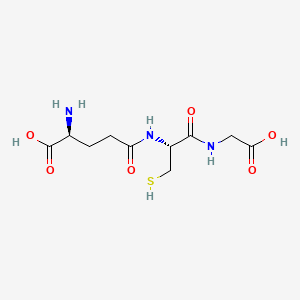
Glutathione is a small peptide made of three amino acids: glutamate, cysteine and glycine. Every cell in the body makes it, and it is the most important antioxidant and detoxifying molecule inside cells. A 2023 review described it as the central redox agent of most aerobic organisms.5 Glutathione levels tend to fall with age, while some studies find higher levels in older people in excellent health.5 The active form is called reduced glutathione (GSH). When it neutralizes an oxidant it becomes oxidized glutathione, and the ratio of the two forms is used in research as a marker of oxidative stress.4
Glutathione is sold as an oral supplement, in liposomal form, as intravenous drips at wellness clinics and med spas, and as injections offered by some telehealth services. It is marketed for antioxidant support, liver detox, immune health, healthy aging and skin lightening.
In the US it is available as a dietary supplement. Injectable glutathione is compounded and is not an FDA-approved drug.
- Anecdotal only
- In vitro only
- Animal models only
- Preliminary human
- Clinical trials
- Regulator approved
How Glutathione works
Normal metabolism produces reactive oxygen molecules that can damage cells. Glutathione neutralizes them, either directly or by helping enzymes that do the job. It also helps the liver package toxins and drugs so they can be removed in bile or urine. Cells constantly recycle glutathione, but they need a steady supply of cysteine to make new glutathione.
In more detail, glutathione is made inside cells in two steps. The first, catalyzed by glutamate cysteine ligase, is the rate-limiting one, and cysteine availability also limits production. Most of glutathione's antioxidant work happens through glutathione peroxidases, which remove hydrogen peroxide and lipid peroxides. Outside cells, glutathione is broken down by an enzyme on the cell surface.5 Glutathione S-transferases use it to tag toxic chemicals, including some carcinogens, for excretion.3 Mitochondria keep their own separate glutathione pool.6 Glutathione levels in immune cells also affect how they process threats and which immune signals they send.8 Because glutathione is broken down outside cells, swallowing or infusing it does not simply raise levels inside cells, which is why precursors such as N-acetylcysteine are often used instead.
These compounds target the cell’s energy machinery at different points: the inner mitochondrial membrane, the AMPK energy sensor, or NAD+ metabolism.
What the research shows on Glutathione
Oral glutathione was long assumed to be useless because it is broken down in the gut. A 2015 randomized, placebo-controlled trial challenged that. In 54 healthy adults taking 250 or 1,000 mg a day for six months, glutathione levels in blood rose, and in the high-dose group levels in red blood cells, plasma and immune cells rose 30% to 35%. Natural killer cell activity more than doubled in the high-dose group at three months, and levels returned to baseline after a one-month break.4 The trial measured levels and markers, not health outcomes.
Building glutathione from its parts has some of the most interesting data. N-acetylcysteine (NAC) works as an antioxidant mainly by supplying cysteine for glutathione production.2 In a 2023 randomized trial, 24 older adults took glycine plus NAC (GlyNAC) or placebo for 16 weeks. GlyNAC corrected glutathione deficiency and improved oxidative stress, mitochondrial function, inflammation, insulin resistance, gait speed, strength and exercise capacity.1 The trial was small and from a single research group, so the results need confirming.
For skin lightening, a 12-week randomized trial in 124 Asian women found that a daily combination of L-cystine and glutathione lightened skin and reduced the size of dark spots more than placebo, glutathione alone or L-cystine alone.7 High-quality trials of intravenous glutathione for skin lightening, detox or general wellness are lacking, and small trials of intravenous glutathione in Parkinson's disease did not show clear benefit.
Glutathione's role in immunity has also led researchers to explore it and related molecules as immune therapies, mostly in laboratory studies of viral and bacterial infection rather than clinical trials.8
Studied for: Antioxidant support, Hepatic detoxification, Skin brightening.
Glutathione reference data
| Sequence | ECG (γ-Glu-Cys-Gly) |
|---|---|
| Molecular weight | 307.32 Da |
| CAS number | 70-18-8 |
| FDA status | Not approved for any indication. |
| Prohibited in sport | Not listed |
Glutathione dosage in published research
1-3x weekly (intravenous or intramuscular). A reference pattern, not a prescription.
How Glutathione is used in practice
Most people encounter glutathione as an oral or liposomal supplement. Many wellness clinics and med spas offer intravenous glutathione, often added at the end of a vitamin drip, and some telehealth services ship compounded vials for intramuscular or subcutaneous injection at home. The main oral trial used 250 or 1,000 mg a day.4 Clinic drips typically use much larger single doses given once or several times a week, a schedule based on clinic practice rather than trials. Liposomal products cost more, and independent data showing they outperform standard oral glutathione are limited.
Intravenous glutathione for skin lightening is popular in parts of Asia, and regulators in several countries have warned against injectable skin-lightening products. Supplement quality varies, and reduced glutathione oxidizes over time, especially in solution. Compounded injectables depend on the pharmacy's sterility practices, and drips given outside medical settings carry the usual risks of any intravenous procedure.
Glutathione risks and side effects
Oral glutathione was well tolerated in the six-month trial,4 and GlyNAC was safe and well tolerated over 16 weeks.1 Injected or infused glutathione can cause injection-site pain, nausea, flushing and, rarely, allergic reactions. Any intravenous infusion carries risks of infection, vein irritation and fluid problems.
Inhaled glutathione can trigger airway narrowing in people with asthma. Glutathione and glutathione S-transferases help cells neutralize harmful electrophilic chemicals,3 and the same machinery may help some cancer cells resist certain chemotherapy drugs, so anyone in cancer treatment should check with their oncologist first. Safety of injectable glutathione in pregnancy has not been established, and the long-term effects of repeated high-dose intravenous use for skin lightening are unknown.
Reported side effects
Alternatives to Glutathione
To raise glutathione, supplying its building blocks is often more practical than taking glutathione itself. NAC is an established medicine, used as the antidote for acetaminophen overdose and as a mucus-thinning agent,2 and GlyNAC has promising early trial data in older adults.1 A diet with enough protein, including sulfur-rich foods, supports the body's own production.
For liver health, the best-supported steps are limiting alcohol, losing excess weight and treating the specific liver condition. For skin lightening, sunscreen, hydroquinone, azelaic acid and tranexamic acid have more evidence than intravenous glutathione.
The bottom line on Glutathione
Glutathione is essential to how cells handle oxidative stress and toxins, and that part is not in doubt. Whether taking it helps healthy people is a different question. Oral glutathione can modestly raise body stores, precursor approaches such as GlyNAC look promising in small trials, and the popular intravenous drips have the least evidence and the most procedural risk.
Questions for a clinician
- What evidence applies to my situation, and at what level?
- What established alternatives should I consider first?
- What monitoring would be necessary, and how often?
Glutathione FAQ
What is Glutathione?
The principal endogenous intracellular antioxidant, a tripeptide with poor oral bioavailability. It is classed as mitochondrial & longevity.
Is Glutathione FDA approved?
No. Glutathione is not approved by the FDA for any indication.
Is Glutathione legal in the US?
Glutathione is not FDA approved as a drug. FDA lists it in Category 1 of its 503A bulk substances review: nominated substances that FDA is still evaluating. It can currently be compounded by 503A pharmacies, on a prescription, while FDA evaluates it (Category 1). That is an interim policy, not an approval, and it could change.
What dose of Glutathione is used in research?
Published research and practitioner protocols report 200 mg - 2 g, 1-3x weekly (intravenous or intramuscular). This is a reference range, not a recommendation; dosing should be set by a licensed clinician.
What are the side effects of Glutathione?
Reported side effects include injection-site reactions, transient nausea, flushing. Contraindications: asthma (inhaled forms), pregnancy (injectable).
What is the half-life of Glutathione?
The reported half-life of Glutathione is ~10 minutes (intravenous).
Is Glutathione banned in sport?
Glutathione is not specifically named on the WADA prohibited list, but athletes should check the current list and their federation's rules.
References
Regulatory and primary sources
- FDA: Bulk drug substances that may present significant safety risks (Category 2 and withdrawn nominations) ↗ · content current as of April 22, 2026; checked October 18, 2026
- FDA: Bulk drug substances used in compounding under section 503A ↗ · how the 503A categories work
- PubChem compound record (CID 124886) ↗ · structure, identifiers, synonyms
- CAS Registry Number 70-18-8 ↗ · chemical identity
Published literature
- Supplementing Glycine and N-Acetylcysteine (GlyNAC) in Older Adults Improves Glutathione Deficiency, Oxidative Stress, Mitochondrial Dysfunction, Inflammation, Physical Function, and Aging Hallmarks: A Randomized Clinical Trial.J Gerontol A Biol Sci Med Sci 2023.PubMed 35975308 · doi:10.1093/gerona/glac135
- N-Acetylcysteine as an antioxidant and disulphide breaking agent: the reasons why.Free Radic Res 2018.PubMed 29742938 · doi:10.1080/10715762.2018.1468564
- Human glutathione S-transferases.Semin Liver Dis 1998.PubMed 9875553 · doi:10.1055/s-2007-1007169
- Randomized controlled trial of oral glutathione supplementation on body stores of glutathione.Eur J Nutr 2015.PubMed 24791752 · doi:10.1007/s00394-014-0706-z
- Glutathione and glutathione-dependent enzymes: From biochemistry to gerontology and successful aging.Ageing Res Rev 2023.PubMed 37683986 · doi:10.1016/j.arr.2023.102066
- Mitochondrial Glutathione: Regulation and Functions.Antioxid Redox Signal 2017.PubMed 28558477 · doi:10.1089/ars.2017.7121
- The effects of the oral supplementation of L-Cystine associated with reduced L-Glutathione-GSH on human skin pigmentation: a randomized, double-blinded, benchmark- and placebo-controlled clinical trial.J Cosmet Dermatol 2022.PubMed 33834608 · doi:10.1111/jocd.14137
- Glutathione and glutathione derivatives in immunotherapy.Biol Chem 2017.PubMed 27514076 · doi:10.1515/hsz-2016-0202
Literature retrieved from PubMed on October 16, 2026, favouring human studies and reviews. Numbered markers in the text show which paper supports which statement; uncited entries are background reading.