Is MOTS-c legal?
Not approved · not compoundable- FDA status
- MOTS-c is not FDA approved. It was moved off FDA’s Category 2 safety-risk list in 2026 after its nomination was withdrawn, but it was not added to the 503A bulks list.
- Compounding
- That leaves no routine legal path for a US compounding pharmacy to prepare it. FDA’s Pharmacy Compounding Advisory Committee discussed it in July 2026; FDA had not announced a decision as of October 2026.
- Prescription
- There is no approved US prescription product for MOTS-c.
- Online market
- Products sold online are labelled “for research use only”: not made, tested or labelled for human use, and often mislabelled.
US status checked October 2026 against FDA’s compounding lists. Sources at the foot of the page.
What is MOTS-c?
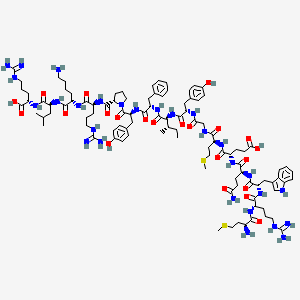
MOTS-c is a 16-amino-acid peptide made from instructions in mitochondrial DNA, the small separate genome inside the cell's energy-producing structures. That is unusual. Almost all of the body's signaling peptides are coded in the nucleus. The name stands for mitochondrial open reading frame of the 12S rRNA type-c.
It was described in 2015 by Changhan Lee, Pinchas Cohen and colleagues at the University of Southern California. Along with humanin, it helped establish the idea of mitochondrial-derived peptides, small signals that let mitochondria talk to the rest of the cell and the body.4
MOTS-c is not an approved drug. It is sold online as a research chemical and promoted for fat loss, insulin sensitivity, endurance and longevity, largely on the strength of mouse studies. It is often called an exercise mimetic. That label is a hypothesis drawn from animal work. No study has shown that MOTS-c given to people reproduces the broad benefits of regular physical activity.
- Anecdotal only
- In vitro only
- Animal models only
- Preliminary human
- Clinical trials
- Regulator approved
How MOTS-c works
Think of MOTS-c as a stress messenger from your mitochondria. When cells are under metabolic strain, MOTS-c levels rise and it nudges the cell toward burning more glucose and fat for fuel. In mice, its main target appears to be skeletal muscle, where it improves how muscle handles glucose.4 Exercise raises it, and blood levels fall with age, which is where the longevity interest comes from.
Under stress, MOTS-c also moves into the cell nucleus and changes the activity of many genes involved in metabolism and stress resistance.2
In more detail, MOTS-c inhibits the folate cycle and the linked de novo purine synthesis pathway. This causes a buildup of AICAR, an intermediate that activates AMP-activated protein kinase (AMPK), the cell's main energy sensor. AMPK activation increases glucose uptake and fatty acid oxidation. Under metabolic stress, MOTS-c translocates to the nucleus in an AMPK-dependent way and interacts with stress-responsive transcription factors such as NRF2. Its mechanism overlaps with that of metformin, which also acts partly through AMPK.8
These compounds target the cell’s energy machinery at different points: the inner mitochondrial membrane, the AMPK energy sensor, or NAD+ metabolism.
What the research shows on MOTS-c
Most of the evidence is from mice and cells. In mouse studies, MOTS-c injections prevented diet-induced obesity and insulin resistance, and improved physical performance in older animals.4 Reviews describe potential benefits across diabetes, cardiovascular disease, osteoporosis, postmenopausal obesity and Alzheimer's disease models.2 A 2023 review noted that despite this, no effective method of using MOTS-c in the clinic has been developed.5
Interest has spread to lung disease. Reviews report lower circulating MOTS-c in acute respiratory distress and chronic conditions such as COPD and asthma, and protective effects of the peptide in animal models of lung injury and fibrosis.31 These are associations and animal findings, not treatment results in people.
Human data is limited to measuring natural MOTS-c levels. In one study of breast cancer patients randomized to metformin or not, circulating MOTS-c did not change significantly with treatment.8 The assays used to measure MOTS-c in blood vary, which makes these studies harder to compare. Small exercise studies in people have found that MOTS-c rises in muscle and blood during and after exercise, which supports the idea that it is part of the body's exercise response, but they do not test giving it as a drug. A modified analog developed by a biotech company reached early human testing but did not progress to approval.
Not all findings are favorable. One lab study found that MOTS-c and humanin increased the inflammatory secretions of senescent cells, which complicates the anti-aging story.6 A 2026 sports medicine review grouped MOTS-c with other unapproved peptides that look promising in animals but lack rigorous human safety data.7
Studied for: Metabolic health research, Insulin sensitivity, Exercise capacity research, Longevity.
MOTS-c reference data
| Sequence | MRWQEMGYIFYPRKLR |
|---|---|
| Molecular weight | 2,174.6 Da |
| FDA status | Not approved for any indication. |
| Prohibited in sport | Not listed |
MOTS-c dosage in published research
2-3x weekly · usually run for about 4 weeks. A reference pattern, not a prescription.
Open this in the dosage calculator ↗
How MOTS-c is used in practice
MOTS-c is not FDA approved, and it is not a recognized compounding ingredient, so legitimate US pharmacies cannot supply it for patient use. Some wellness clinics have offered it anyway. Most users buy freeze-dried vials from research-chemical sites, mix them with bacteriostatic water and inject under the skin a few times a week, usually for several weeks at a time.
Doses used by consumers are in the milligram range, much larger than for most research peptides, so vials are costly. No human dose-finding study supports them.
Quality control is the usual gray-market problem. Identity, purity, peptide content and sterility are not verified, and a vendor's certificate of analysis is not independent proof. Some sellers package MOTS-c into longevity stacks with other mitochondrial peptides such as SS-31 or humanin analogs. Combining several unstudied peptides makes it impossible to tell what is helping or causing harm.
MOTS-c risks and side effects
Without human trials, side effects are known only from user reports. These include injection-site redness and soreness, fatigue and headache. Whether larger risks exist is unknown.
Because MOTS-c lowers blood glucose in animals and acts through AMPK, combining it with metformin or other diabetes drugs could add to their effects, so blood sugar is worth watching. It should be avoided in pregnancy and by anyone with a known allergy to the product. Its effects on senescent cells and inflammation are not fully understood.6
Injecting unregulated products adds risks of infection, contamination and wrong dosing.
Reported side effects
Alternatives to MOTS-c
The most reliable way to raise your own MOTS-c, and get the metabolic benefits it is linked to, is exercise. Regular aerobic and resistance training improves insulin sensitivity, endurance and body composition at any age.
For people with insulin resistance or type 2 diabetes, metformin is inexpensive, well understood and also activates AMPK. GLP-1 based drugs such as semaglutide and tirzepatide are approved for weight loss and diabetes with large outcome trials behind them. SGLT2 inhibitors are another approved option for diabetes. Losing excess weight, improving diet quality and sleeping enough also improve the same metabolic markers that MOTS-c is studied for.
The bottom line on MOTS-c
MOTS-c is real and biologically interesting, with consistent metabolic benefits in mice. Human evidence is limited to observational blood measurements, there are no clinical trials of injected MOTS-c, and the products sold online are unregulated. For now, exercise does what MOTS-c promises, with proof behind it.
Questions for a clinician
- What evidence applies to my situation, and at what level?
- What established alternatives should I consider first?
- What monitoring would be necessary, and how often?
- Can this be prescribed at all where I live, or only sold for research?
MOTS-c FAQ
What is MOTS-c?
A mitochondria-encoded peptide that acts as an exercise mimetic through AMPK, and one of the better-characterised mitochondrial-derived peptides. It is classed as mitochondrial & longevity.
Is MOTS-c FDA approved?
No. MOTS-c is not approved by the FDA for any indication. Material sold online is labelled for research use only.
Is MOTS-c legal in the US?
MOTS-c is not FDA approved. It was moved off FDA’s Category 2 safety-risk list in 2026 after its nomination was withdrawn, but it was not added to the 503A bulks list. That leaves no routine legal path for a US compounding pharmacy to prepare it. FDA’s Pharmacy Compounding Advisory Committee discussed it in July 2026; FDA had not announced a decision as of October 2026.
What dose of MOTS-c is used in research?
Published research and practitioner protocols report 5-10 mg, 2-3x weekly, typically for 4 weeks. This is a reference range, not a recommendation; dosing should be set by a licensed clinician.
How is MOTS-c reconstituted?
A 10 mg vial mixed with 2 mL of bacteriostatic water gives 5.0 mg/mL. At that concentration 5 mg is 100.0 units on a 100-unit insulin syringe.
What are the side effects of MOTS-c?
Reported side effects include injection-site reactions, transient fatigue, headache. Contraindications: pregnancy, known hypersensitivity.
What is the half-life of MOTS-c?
The reported half-life of MOTS-c is ~1-2 hours.
Is MOTS-c banned in sport?
MOTS-c is not specifically named on the WADA prohibited list, but athletes should check the current list and their federation's rules.
References
Regulatory and primary sources
- FDA: Bulk drug substances that may present significant safety risks (Category 2 and withdrawn nominations) ↗ · content current as of April 22, 2026; checked October 18, 2026
- FDA: Bulk drug substances used in compounding under section 503A ↗ · how the 503A categories work
- PubChem compound record (CID 146675088) ↗ · structure, identifiers, synonyms
- FDA: Unapproved drugs and "research use only" products ↗ · regulatory status of non-approved products
Published literature
- MOTS-c: A potential anti-pulmonary fibrosis factor derived by mitochondria.Mitochondrion 2023.PubMed 37307934 · doi:10.1016/j.mito.2023.06.002
- MOTS-c, the Most Recent Mitochondrial Derived Peptide in Human Aging and Age-Related Diseases.Int J Mol Sci 2022.PubMed 36233287 · doi:10.3390/ijms231911991
- MOTS-c: How a secreted mitochondrial microprotein may become a potential treatment for inflammatory lung diseases.J Transl Med 2026.PubMed 42243958 · doi:10.1186/s12967-026-08398-2
- MOTS-c: A novel mitochondrial-derived peptide regulating muscle and fat metabolism.Free Radic Biol Med 2016.PubMed 27216708 · doi:10.1016/j.freeradbiomed.2016.05.015
- MOTS-c: A promising mitochondrial-derived peptide for therapeutic exploitation.Front Endocrinol (Lausanne) 2023.PubMed 36761202 · doi:10.3389/fendo.2023.1120533
- Mitochondrial-Derived Peptides Exacerbate Senescence.Rejuvenation Res 2018.PubMed 30058454 · doi:10.1089/rej.2018.2114
- Safety and Efficacy of Approved and Unapproved Peptide Therapies for Musculoskeletal Injuries and Athletic Performance.Sports Med 2026.PubMed 41966639 · doi:10.1007/s40279-026-02437-0
- Circulating levels of MOTS-c in patients with breast cancer treated with metformin.Aging (Albany NY) 2022.PubMed 36490309 · doi:10.18632/aging.204423
Literature retrieved from PubMed on October 16, 2026, favouring human studies and reviews. Numbered markers in the text show which paper supports which statement; uncited entries are background reading.