Is FOXO4-DRI legal?
Not FDA approved- FDA status
- FOXO4-DRI is not FDA approved and is not on FDA’s 503A bulks list.
- Compounding
- US compounding pharmacies cannot routinely prepare it.
- Prescription
- There is no approved US prescription product for FOXO4-DRI.
- Online market
- Products sold online are labelled “for research use only”: not made, tested or labelled for human use, and often mislabelled.
US status checked October 2026 against FDA’s compounding lists. Sources at the foot of the page.
What is FOXO4-DRI?
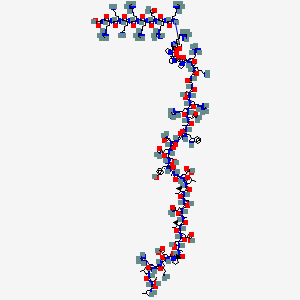
FOXO4-DRI is a synthetic peptide designed to kill senescent cells, the damaged cells that stop dividing but do not die. Drugs with this aim are called senolytics. FOXO4-DRI was created by Peter de Keizer's research group in the Netherlands and became widely known after a 2017 mouse study published in the journal Cell. It is sometimes sold under the name Proxofim.
Reviews of aging research have listed FOXO4-DRI among the more promising experimental anti-aging agents.2 That attention, together with striking before-and-after photos of aged mice, created demand for it online.
FOXO4-DRI is not approved anywhere and has no published human data. It is sold as a research chemical for longevity, and its legal status is covered in the box on this page.
- Anecdotal only
- In vitro only
- Animal models only
- Preliminary human
- Clinical trials
- Regulator approved
How FOXO4-DRI works
As we age, senescent cells build up in tissues. They release a mix of inflammatory signals and growth factors that disturb nearby healthy cells and reduce the body's ability to repair itself.1 Many senescent cells survive because of a protein called FOXO4, which holds another protein, p53, in a way that stops it from triggering cell death. FOXO4-DRI acts as a decoy. It gets between FOXO4 and p53, freeing p53 to start the cell's self-destruct program.3 Healthy cells have little FOXO4 bound to p53, so in theory they are left alone.
The DRI in the name stands for D-retro-inverso. The peptide is built from D-amino acids, the mirror images of the natural L-forms, arranged in reverse order. This design mimics the shape of the natural FOXO4 segment that binds p53, while making the peptide resistant to the enzymes that normally break proteins down. Once released, p53 moves toward the mitochondria and activates the internal pathway of programmed cell death.
These compounds target the cell’s energy machinery at different points: the inner mitochondrial membrane, the AMPK energy sensor, or NAD+ metabolism.
What the research shows on FOXO4-DRI
All of the evidence comes from cells and animals. The key 2017 study reported that FOXO4-DRI cleared senescent cells in fast-aging and naturally old mice and improved fitness, fur density and kidney function.
Broader reviews of senolytics describe the same pattern. A 2018 review noted that compounds that remove senescent cells restored tissue health in old mice, improved kidney function and extended healthy lifespan in animals. The authors proposed testing them to improve kidneys from older donors for transplant.1
A 2026 review focused on the brain. It summarized animal studies in which FOXO4-DRI reduced senescent cells, restored blood flow and blood-brain barrier integrity, reversed shrinkage of the hippocampus and improved cognition in aged animals, and cleared amyloid and tau in Alzheimer's and tauopathy models.3 The human evidence that review cites comes from other senolytic approaches, such as high-dose fisetin, not from FOXO4-DRI.3
The limits are clear. No human trial of FOXO4-DRI has been published. Mouse aging differs from human aging, the animal studies are small and come from a limited number of labs, and the doses used in mice do not translate simply to people. Narrative reviews tend to collect positive results, so the full picture may be less favorable.
There is also a gap between clearing senescent cells and slowing human aging. Senescence is only one of several proposed drivers of aging. It is not known whether removing these cells in middle-aged or older people improves health, how often treatment would be needed or whether the benefits would outweigh the harms.
Studied for: Senolytic research, Longevity research.
FOXO4-DRI reference data
| FDA status | Not approved for any indication. |
|---|---|
| Prohibited in sport | Not listed |
FOXO4-DRI dosage in published research
Open this in the dosage calculator ↗
How FOXO4-DRI is used in practice
FOXO4-DRI is not prescribed by clinicians and is not available from compounding pharmacies. It is sold by research-chemical vendors, often at high prices, as freeze-dried powder for injection. Users typically follow intermittent protocols of a few doses per cycle, loosely based on mouse studies. The intermittent approach reflects the idea behind senolytics in general: senescent cells build up slowly, so a short course might clear them for a long time. The right interval in people, if there is one, is unknown.
Product quality is a major issue. FOXO4-DRI is a long peptide made from D-amino acids, which is expensive and technically demanding to produce. Cheap products are unlikely to be the correctly made full-length peptide, and impurities from incomplete synthesis are common in this kind of product. No regulator checks what these vials contain.
Some people try to verify senolytic effects with blood tests or biological age clocks. None of these is validated for judging whether a senolytic is working in an individual.
FOXO4-DRI risks and side effects
Human side effects are unknown. Users report injection-site reactions and fatigue, but there is no systematic safety data.
There are reasons for caution. Senescent cells are not only harmful. They help with wound healing and tissue repair and act as a barrier against cancer by stopping damaged cells from dividing. Removing them, or activating p53 more widely, could have effects that mouse studies were not designed to detect. A peptide made of unnatural D-amino acids may also trigger immune reactions with repeated use. Killing many cells at once could also, in principle, release cell contents and inflammatory signals. Whether that matters at the doses people use is unknown.
People who are pregnant, have active cancer or have a weakened immune system should avoid it. Interactions with other drugs, especially cancer treatments that also act through p53, are unknown.
Reported side effects
Alternatives to FOXO4-DRI
No senolytic drug is approved. Other senolytics, such as the combination of dasatinib and quercetin, and fisetin, are being tested in early human trials, but they remain experimental and carry their own risks.3 Taking part in a registered trial is the safest way to try one. Store-bought fisetin and quercetin supplements are often marketed as senolytics, but they have not been shown to clear senescent cells in people at typical supplement doses.
For healthy aging today, the best evidence supports regular exercise, not smoking, managing blood pressure, cholesterol and blood sugar, keeping a healthy weight, getting enough sleep and following recommended screening. For kidney disease, approved treatments such as ACE inhibitors, angiotensin receptor blockers and SGLT2 inhibitors slow decline.
The bottom line on FOXO4-DRI
FOXO4-DRI is a clever idea with impressive mouse data and no human evidence at all. Its design is elegant, but senescent cells play useful roles too, and products sold online are hard to make and impossible to verify. Until human trials report, it belongs in the laboratory, not in a self-experiment.
Questions for a clinician
- What evidence applies to my situation, and at what level?
- What established alternatives should I consider first?
- What monitoring would be necessary, and how often?
- Can this be prescribed at all where I live, or only sold for research?
FOXO4-DRI FAQ
What is FOXO4-DRI?
A senolytic peptide designed to selectively kill senescent cells by disrupting the FOXO4-p53 interaction. It is classed as mitochondrial & longevity.
Is FOXO4-DRI FDA approved?
No. FOXO4-DRI is not approved by the FDA for any indication. Material sold online is labelled for research use only.
Is FOXO4-DRI legal in the US?
FOXO4-DRI is not FDA approved and is not on FDA’s 503A bulks list. US compounding pharmacies cannot routinely prepare it.
What dose of FOXO4-DRI is used in research?
Published research and practitioner protocols report 5-25 mg, intermittent research protocols, typically 3 doses per cycle. This is a reference range, not a recommendation; dosing should be set by a licensed clinician.
How is FOXO4-DRI reconstituted?
A 10 mg vial mixed with 2 mL of bacteriostatic water gives 5.0 mg/mL. At that concentration 5 mg is 100.0 units on a 100-unit insulin syringe.
What are the side effects of FOXO4-DRI?
Reported side effects include injection-site reactions, fatigue, poorly characterised in humans. Contraindications: pregnancy, active malignancy, any immunocompromised state.
What is the half-life of FOXO4-DRI?
The reported half-life of FOXO4-DRI is ~1-2 hours.
Is FOXO4-DRI banned in sport?
FOXO4-DRI is not specifically named on the WADA prohibited list, but athletes should check the current list and their federation's rules.
References
Regulatory and primary sources
- FDA: Bulk drug substances that may present significant safety risks (Category 2 and withdrawn nominations) ↗ · content current as of April 22, 2026; checked October 18, 2026
- FDA: Bulk drug substances used in compounding under section 503A ↗ · how the 503A categories work
- PubChem compound record (CID 167312269) ↗ · structure, identifiers, synonyms
- FDA: Unapproved drugs and "research use only" products ↗ · regulatory status of non-approved products
Published literature
- Cellular senescence as a therapeutic target to improve renal transplantation outcome.Pharmacol Res 2018.PubMed 29471104 · doi:10.1016/j.phrs.2018.02.015
- [Molecular regulative mechanisms of aging and interventional effects of Chinese herbal medicine].Zhongguo Zhong Yao Za Zhi 2017.PubMed 29171222 · doi:10.19540/j.cnki.cjcmm.20170731.001
- Targeting the FOXO4-p53 axis by retro-inverso peptide senolytic agents: a pharmacological strategy to mitigate brain aging and cognitive decline.Naunyn Schmiedebergs Arch Pharmacol 2026.PubMed 42024235 · doi:10.1007/s00210-026-05309-6
Literature retrieved from PubMed on October 16, 2026, favouring human studies and reviews. Numbered markers in the text show which paper supports which statement; uncited entries are background reading.