Is Decapeptide-12 legal?
Cosmetic ingredient- FDA status
- Decapeptide-12 is used in topical skin-care products and is regulated as a cosmetic ingredient, not as a drug.
- Compounding
- It is not a prescription medicine. Cosmetic claims may not promise to change the body’s structure or function.
- Prescription
- There is no approved US prescription product for Decapeptide-12.
US status checked October 2026 against FDA’s compounding lists. Sources at the foot of the page.
What is Decapeptide-12?
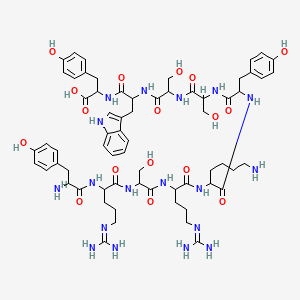
Decapeptide-12 is a synthetic peptide made of ten amino acids, used in skin-care products for dark spots, melasma and uneven skin tone. It was introduced as a proprietary oligopeptide under the brand name Lumixyl, and the first clinical report on it appeared in 2009.1
It is a cosmetic ingredient, not a prescription drug. It is sold in creams and serums, often as part of a multi-step brightening system that also includes a cleanser, a glycolic acid product and sunscreen. Its main selling point is that it lightens pigment without the cell toxicity linked to hydroquinone, the long-standing standard for melasma.
Melasma is common, especially in women with medium to darker skin tones, and it tends to come back. That makes a gentle product that can be used for months an attractive idea, and it explains the interest in decapeptide-12 despite a small evidence base.
- Anecdotal only
- In vitro only
- Animal models only
- Preliminary human
- Clinical trials
- Regulator approved
How Decapeptide-12 works
Skin color comes from melanin, a pigment made inside cells called melanocytes. The key step in making melanin depends on an enzyme called tyrosinase. Decapeptide-12 blocks tyrosinase, so the cells make less pigment. It does not kill the melanocytes, which means the effect is gradual and the cells keep working normally once the product is stopped.
In laboratory work, the peptide competitively inhibited both mushroom and human tyrosinase without the toxicity associated with hydroquinone.1 Hydroquinone also blocks tyrosinase, but its breakdown products can damage melanocytes, and long-term use has been linked to a bluish-black discoloration called exogenous ochronosis. Because decapeptide-12 only slows new pigment production, existing melanin still has to be shed through normal skin turnover. That is why visible change takes weeks to months rather than days.
Signal peptides are meant to prompt fibroblasts to make collagen; neurotransmitter-inhibiting peptides aim to soften expression lines. Both must first get through the outer skin barrier.
What the research shows on Decapeptide-12
The published human evidence consists of three small studies. The strongest design is a 2009 split-face, double-blind, randomized, placebo-controlled pilot. Five women with moderate, treatment-resistant melasma and Fitzpatrick skin type IV applied 0.01% decapeptide-12 to one side of the face and placebo to the other, twice daily for 16 weeks. All five showed statistically significant improvement in melasma and overall facial appearance, with no visible irritation or allergy.1
A 2012 open-label study enrolled 15 women with sun-related facial hyperpigmentation, 13 of whom finished. They used decapeptide-12 with an antioxidant cleanser, a glycolic acid moisturizer and broad-spectrum sunscreen for 24 weeks. By the end, 38.5% went from moderate photodamage to clear, and every completer improved by at least one grade. Treatments were well tolerated.2
A 2013 open-label, multicenter study tested the same kind of system, with 0.01% decapeptide-12 cream, a 20% buffered glycolic acid lotion and SPF 30 sunscreen, in 33 Hispanic women with mild to moderate melasma. Average melasma severity scores fell 36% at four weeks, 46% at eight, 54% at twelve and 60% at sixteen weeks, and no adverse events were reported.3
The limits are significant. The three studies together include about 50 people. Only one had a placebo control, and it had five participants. The two larger studies used combination regimens, and glycolic acid and daily sunscreen improve pigmentation on their own, so the peptide's share of the benefit cannot be separated out. All three tested the branded product, and the abstracts do not describe funding. No study in this reference set compares decapeptide-12 directly with hydroquinone, and none follows people after stopping to measure relapse.
Studied for: Melasma, Hyperpigmentation, Skin brightening.
Decapeptide-12 reference data
| Molecular weight | 1,120 Da |
|---|---|
| FDA status | Not approved for any indication. |
| Prohibited in sport | Not listed |
Decapeptide-12 dosage in published research
Applied topically 2x daily at approximately 0.01-0.1%. A reference pattern, not a prescription.
How Decapeptide-12 is used in practice
Decapeptide-12 is sold over the counter, through dermatology offices and online, typically at around 0.01% concentration. Users apply it once or twice a day, usually with daily sunscreen and sometimes with an exfoliating acid. The studies above ran for 16 to 24 weeks, which is a realistic time frame for judging whether it is working.
Dermatologists sometimes use it as a maintenance product after a course of hydroquinone, or for people who cannot tolerate hydroquinone. It does not need a prescription, so there is no telehealth or compounding angle. Telehealth dermatology services more often prescribe custom creams containing hydroquinone, tretinoin or azelaic acid.
Cosmetics are not reviewed by the FDA before sale, and concentration claims are not independently checked. A product that lists decapeptide-12 on its label may contain much less than the amount used in the studies.
Decapeptide-12 risks and side effects
In the published studies, decapeptide-12 was well tolerated. The 2009 pilot reported no irritation or allergy, and the 2013 study reported no adverse events in 33 participants.3 Reported side effects in general use are mild irritation and temporary dryness.
Most irritation in practice comes from the products it is paired with. Glycolic acid can sting, and irritation is itself a problem in melasma, because inflamed skin in medium and darker skin tones can develop new dark patches after the inflammation settles. Anyone with a known allergy to the product's ingredients should avoid it.
The unknowns are long-term use, use during pregnancy and breastfeeding, and results in larger and more varied groups. Topical peptides are thought to be poorly absorbed into the body, but that has not been specifically studied for decapeptide-12.
Reported side effects
Alternatives to Decapeptide-12
Daily broad-spectrum sunscreen is the foundation of every melasma plan. Tinted sunscreens containing iron oxides also block visible light, which can worsen melasma.
Prescription hydroquinone 4% remains the most studied lightening agent, and the triple combination cream of fluocinolone, hydroquinone and tretinoin (Tri-Luma) is FDA-approved for melasma. Hydroquinone can no longer be legally sold over the counter in the US. Azelaic acid, topical and oral tranexamic acid, cysteamine, niacinamide and retinoids are other options a dermatologist may suggest, several of them with more trial data than decapeptide-12. Chemical peels and some lasers are used for stubborn cases, with care in darker skin.
Oral tranexamic acid deserves a specific note. It is a prescription drug used off-label for melasma, and it can work faster than creams, but it affects blood clotting. It is not suitable for people with a history of blood clots, and doctors are cautious about it in people using estrogen-containing contraception. That trade-off is why it is a doctor's decision rather than a shelf product.
The bottom line on Decapeptide-12
Decapeptide-12 is a reasonable, low-irritation option for melasma and sun-related dark spots, and its mechanism is sound. The evidence, though, rests on three small studies with about 50 people, mostly using combination regimens. It is best seen as a gentle add-on or maintenance product alongside strict sun protection, not a replacement for better-studied treatments.
Questions for a clinician
- What evidence applies to my situation, and at what level?
- What established alternatives should I consider first?
- What monitoring would be necessary, and how often?
Decapeptide-12 FAQ
What is Decapeptide-12?
A tyrosinase-inhibiting peptide used for hyperpigmentation, positioned as a gentler alternative to hydroquinone. It is classed as cosmetic & topical.
Is Decapeptide-12 FDA approved?
No. Decapeptide-12 is not approved by the FDA for any indication.
Is Decapeptide-12 legal in the US?
Decapeptide-12 is used in topical skin-care products and is regulated as a cosmetic ingredient, not as a drug. It is not a prescription medicine. Cosmetic claims may not promise to change the body’s structure or function.
What dose of Decapeptide-12 is used in research?
Published research and practitioner protocols report 1 mg, applied topically 2x daily at approximately 0.01-0.1%. This is a reference range, not a recommendation; dosing should be set by a licensed clinician.
What are the side effects of Decapeptide-12?
Reported side effects include mild irritation, transient dryness. Contraindications: known hypersensitivity.
What is the half-life of Decapeptide-12?
The reported half-life of Decapeptide-12 is Topical.
Is Decapeptide-12 banned in sport?
Decapeptide-12 is not specifically named on the WADA prohibited list, but athletes should check the current list and their federation's rules.
References
Regulatory and primary sources
- FDA: Bulk drug substances that may present significant safety risks (Category 2 and withdrawn nominations) ↗ · content current as of April 22, 2026; checked October 18, 2026
- FDA: Bulk drug substances used in compounding under section 503A ↗ · how the 503A categories work
- PubChem compound record (CID 25087629) ↗ · structure, identifiers, synonyms
Published literature
- A split-face, double-blind, randomized and placebo-controlled pilot evaluation of a novel oligopeptide for the treatment of recalcitrant melasma.J Drugs Dermatol 2009.PubMed 19663110
- Open-label evaluation of the skin-brightening efficacy of a skin-brightening system using decapeptide-12.J Cosmet Laser Ther 2012.PubMed 22401652 · doi:10.3109/14764172.2012.672745
- Open-label evaluation of a novel skin brightening system containing 0.01% decapeptide-12 in combination with 20% buffered glycolic acid for the treatment of mild to moderate facial melasma.J Drugs Dermatol 2013.PubMed 23839199
Literature retrieved from PubMed on October 16, 2026, favouring human studies and reviews. Numbered markers in the text show which paper supports which statement; uncited entries are background reading.