Is Pentapeptide-18 legal?
Cosmetic ingredient- FDA status
- Pentapeptide-18 is used in topical skin-care products and is regulated as a cosmetic ingredient, not as a drug.
- Compounding
- It is not a prescription medicine. Cosmetic claims may not promise to change the body’s structure or function.
- Prescription
- There is no approved US prescription product for Pentapeptide-18.
US status checked October 2026 against FDA’s compounding lists. Sources at the foot of the page.
What is Pentapeptide-18?
Pentapeptide-18 is a cosmetic peptide sold for expression lines, the creases that form from repeated facial movement such as frowning and squinting. It is better known by its trade name, Leuphasyl, from the Spanish ingredient company Lipotec. It is often described as a topical alternative to wrinkle-relaxing injections, though its effects are far smaller.
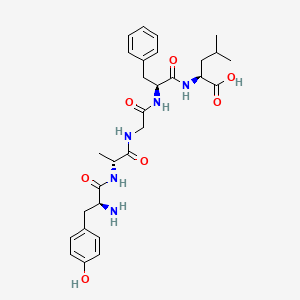
The peptide is modeled on enkephalins, small natural opioid peptides that the body uses to dampen nerve signaling. Published studies give its sequence as Tyr-Ala-Gly-Phe-Leu, a close relative of the natural enkephalins.7 The alanine is generally described as the D form, which makes the peptide harder for enzymes to break down.
Pentapeptide-18 is a cosmetic ingredient, not a drug. It is rarely used on its own. Most products pair it with acetyl hexapeptide-8, sold as Argireline, which targets the same goal through a different route.
- Anecdotal only
- In vitro only
- Animal models only
- Preliminary human
- Clinical trials
- Regulator approved
How Pentapeptide-18 works
Every facial expression starts with a nerve releasing a chemical messenger, acetylcholine, to tell a muscle to contract. Botulinum toxin injections block that release almost completely, which is why they smooth lines so well. Pentapeptide-18 is meant to turn the signal down a little, not switch it off.
It does this by acting like an enkephalin. When enkephalin receptors on the nerve ending are activated, the nerve becomes less excitable and releases less acetylcholine. The muscle contracts less forcefully and, in theory, lines soften over time.
In more detail, enkephalin receptors are G-protein-coupled opioid receptors. Their activation reduces calcium entry into the nerve terminal, and calcium is the trigger for acetylcholine-containing vesicles to fuse and release their contents. Argireline works further downstream by mimicking part of the SNAP-25 protein and interfering with the SNARE complex that vesicles need for fusion. Because the two act at different steps, suppliers combine them. Computer modeling studies have also explored whether pentapeptide-18 binds targets involved in skin aging such as TGF-beta, NF-kB and collagen-degrading enzymes, but these are predictions, not measured effects.15
Signal peptides are meant to prompt fibroblasts to make collagen; neurotransmitter-inhibiting peptides aim to soften expression lines. Both must first get through the outer skin barrier.
What the research shows on Pentapeptide-18
Evidence for pentapeptide-18 is thin. The human efficacy data come mainly from small supplier studies of creams containing it, often combined with Argireline, that reported modest reductions in wrinkle depth over several weeks. These were not independent, were not published in major peer-reviewed journals and generally did not compare against a matched vehicle cream in a large sample.
Recent indexed studies are mostly laboratory and computer work. A 2026 study combined spectroscopy with molecular docking and dynamics to model how pentapeptide-18 might interact with skin-aging pathways.1 Another tested Leuphasyl and Vialox in silico and found no toxicity to skin cells in culture at concentrations up to 1 mg/mL.5 Formulation scientists have also developed lipid nanoparticles that carry pentapeptide-18 together with retinol, a step toward better delivery rather than proof of benefit.3
Other work treats pentapeptide-18 as a building block. Adding a D-tyrosine to its end gave the peptide an extra ability to reduce melanin production in pigment cells and a 3D skin model, suggesting possible dual-purpose cosmetic peptides.2
What is missing is a well-designed, independent, placebo-controlled trial in people showing that pentapeptide-18 by itself reduces visible lines. Penetration is also uncertain. A peptide has to cross the skin barrier and reach nerve endings in the muscle layer to act as described. The mechanism itself rests on supplier lab experiments with nerve cells rather than measurements in human facial muscle.
Studied for: Expression line reduction, Anti-ageing skincare.
Pentapeptide-18 reference data
| Sequence | Tyr-D-Ala-Gly-Phe-Leu |
|---|---|
| Molecular weight | 569.7 Da |
| CAS number | 64963-01-5 |
| FDA status | Not approved for any indication. |
| Prohibited in sport | Not listed |
Pentapeptide-18 dosage in published research
Applied topically 1-2x daily at 2-5% concentration. A reference pattern, not a prescription.
How Pentapeptide-18 is used in practice
Pentapeptide-18 appears in over-the-counter serums and eye creams, usually listed alongside acetyl hexapeptide-8 and sometimes other neuropeptides. It is applied to the forehead, between the brows or around the eyes once or twice a day. It is not prescribed, injected or offered through telehealth.
Supplier guidance gives use levels of a few percent of a stock solution, and the actual peptide concentration in the final product is low. Labels rarely say how much is present, and no one checks that a product contains an effective amount.
Marketing often calls these products Botox in a bottle. That comparison is not accurate. The effect, if any, is small and builds slowly. Because these products are sold as cosmetics, labels can describe changes in appearance but cannot claim to change how nerves or muscles work in the body. That is why packaging usually refers to the look of expression lines.
Pentapeptide-18 risks and side effects
Pentapeptide-18 appears to be well tolerated. The most common problems are mild redness, stinging or dryness, often from the rest of the formula. People with a known allergy to any ingredient should avoid the product, and a patch test is sensible for sensitive skin.
Because it is designed around an opioid-receptor signal, people sometimes worry about systemic effects. Absorption through intact skin is expected to be minimal, and no such effects have been reported. Data in pregnancy is lacking. Products that combine several active peptides with retinoids or acids are more likely to irritate, so adding one new product at a time makes it easier to identify the cause of any reaction.
There are no known drug interactions for topical use. It is commonly combined with Argireline, retinoids, vitamin C and sunscreen.
Reported side effects
Alternatives to Pentapeptide-18
For expression lines, botulinum toxin injections such as onabotulinumtoxinA (Botox) are FDA approved for frown lines, forehead lines and crow's feet and produce clear, predictable results. Tretinoin cream is FDA approved for fine wrinkles and has decades of trial data.
Daily sunscreen helps prevent new lines. Among cosmetic peptides, Matrixyl (palmitoyl pentapeptide-4) has somewhat stronger controlled human data, and Argireline is the usual partner for pentapeptide-18. For people who want to avoid injections, steady use of a retinoid plus sunscreen over several months gives a more reliable improvement in fine lines than any neuropeptide cream.
The bottom line on Pentapeptide-18
Pentapeptide-18 is a safe cosmetic peptide with a sensible mechanism on paper. Independent human evidence that it softens expression lines is lacking, and most recent research is computer modeling and formulation work. Expect small effects at most, and do not treat it as a substitute for injections or a retinoid.
Questions for a clinician
- What evidence applies to my situation, and at what level?
- What established alternatives should I consider first?
- What monitoring would be necessary, and how often?
Pentapeptide-18 FAQ
What is Pentapeptide-18?
An enkephalin-derived peptide that reduces muscle contraction through a different pathway than Argireline, and is usually combined with it. It is classed as cosmetic & topical.
Is Pentapeptide-18 FDA approved?
No. Pentapeptide-18 is not approved by the FDA for any indication.
Is Pentapeptide-18 legal in the US?
Pentapeptide-18 is used in topical skin-care products and is regulated as a cosmetic ingredient, not as a drug. It is not a prescription medicine. Cosmetic claims may not promise to change the body’s structure or function.
What dose of Pentapeptide-18 is used in research?
Published research and practitioner protocols report 2-5 mg, applied topically 1-2x daily at 2-5% concentration. This is a reference range, not a recommendation; dosing should be set by a licensed clinician.
What are the side effects of Pentapeptide-18?
Reported side effects include mild local irritation. Contraindications: known hypersensitivity.
What is the half-life of Pentapeptide-18?
The reported half-life of Pentapeptide-18 is Topical.
Is Pentapeptide-18 banned in sport?
Pentapeptide-18 is not specifically named on the WADA prohibited list, but athletes should check the current list and their federation's rules.
References
Regulatory and primary sources
- FDA: Bulk drug substances that may present significant safety risks (Category 2 and withdrawn nominations) ↗ · content current as of April 22, 2026; checked October 18, 2026
- FDA: Bulk drug substances used in compounding under section 503A ↗ · how the 503A categories work
- PubChem compound record (CID 10099522) ↗ · structure, identifiers, synonyms
- CAS Registry Number 64963-01-5 ↗ · chemical identity
Published literature
- Pentapeptide-18 as an anti-aging candidate: Spectroscopic characterization and molecular interaction analysis.Comput Biol Chem 2026.PubMed 41722287 · doi:10.1016/j.compbiolchem.2026.108952
- D-tyrosine adds an anti-melanogenic effect to cosmetic peptides.Sci Rep 2020.PubMed 31937863 · doi:10.1038/s41598-019-57159-3
- Solid Lipid Nanoparticles Incorporated with Retinol and Pentapeptide-18-Optimization, Characterization, and Cosmetic Application.Int J Mol Sci 2024.PubMed 39337562 · doi:10.3390/ijms251810078
- Collision energies on QTof and Orbitrap instruments: How to make proteomics measurements comparable?.J Mass Spectrom 2021.PubMed 33277714 · doi:10.1002/jms.4693
- Integrative In Silico and In Vitro Evaluation of Vialox and Leuphasyl Pentapeptides for Antiaging Applications.Chem Biodivers 2026.PubMed 42116636 · doi:10.1002/cbdv.202502546
- In vivo electrochemical evidence for an enkephalinergic modulation underlying stereotyped behavior: reversibility by naloxone.Brain Res 1983.PubMed 6683987 · doi:10.1016/0006-8993(83)90151-8
- In Vitro and In Silico Assessment of Anticancer Activity of Venom-Derived and Biomimetic Neurotransmitter Inhibitor Pentapeptides.Cell Biochem Biophys 2026.PubMed 42412310 · doi:10.1007/s12013-026-02095-z
- Differential processing of proenkephalin-A by human peripheral blood monocytes and T lymphocytes.J Clin Invest 1991.PubMed 1885771 · doi:10.1172/JCI115382
Literature retrieved from PubMed on October 16, 2026, favouring human studies and reviews. Numbered markers in the text show which paper supports which statement; uncited entries are background reading.