Is SNAP-8 legal?
Cosmetic ingredient- FDA status
- SNAP-8 is used in topical skin-care products and is regulated as a cosmetic ingredient, not as a drug.
- Compounding
- It is not a prescription medicine. Cosmetic claims may not promise to change the body’s structure or function.
- Prescription
- There is no approved US prescription product for SNAP-8.
US status checked October 2026 against FDA’s compounding lists. Sources at the foot of the page.
What is SNAP-8?
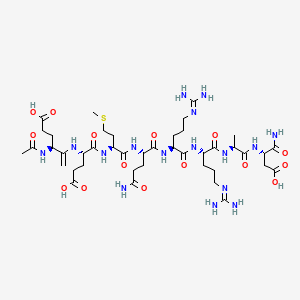
SNAP-8 is a synthetic peptide used in skincare to soften expression lines, the wrinkles that form from repeated muscle movement, such as frown lines and crow's feet. It is a trade name from the Spanish ingredient maker Lipotec, which also developed Argireline, the better-known 'topical Botox' peptide. On ingredient labels, SNAP-8 appears as acetyl octapeptide-3 or, under its newer cosmetic name, acetyl glutamyl heptapeptide-1.
SNAP-8 is essentially Argireline with two extra amino acids. Argireline is a six-amino-acid peptide (acetyl hexapeptide-3, now often listed as acetyl hexapeptide-8). SNAP-8 extends that sequence to eight. The supplier markets it as a more effective version of the same idea.
It is a cosmetic ingredient, not a drug. It is found in serums, eye creams and moisturizers, often combined with other peptides, and is also sold as a raw ingredient to do-it-yourself skincare formulators.
- Anecdotal only
- In vitro only
- Animal models only
- Preliminary human
- Clinical trials
- Regulator approved
How SNAP-8 works
For a facial muscle to contract, a nerve has to release a chemical messenger called acetylcholine. That release depends on a small protein machine, the SNARE complex, that docks packets of acetylcholine onto the nerve membrane. Botox works by cutting one of the proteins in that machine, so the muscle cannot contract. SNAP-8 is designed to do a gentler version of the same thing: it mimics a piece of one of those proteins and gets in the way of the machine assembling properly. The idea is that facial muscles contract a little less, so expression lines look shallower.
In more precise terms, SNAP-8 (Ac-Glu-Glu-Met-Gln-Arg-Arg-Ala-Asp-NH2) mimics the N-terminal region of SNAP-25, one of the three core SNARE proteins along with syntaxin and VAMP. By competing with native SNAP-25 for a position in the complex, it is proposed to destabilize SNARE assembly and modestly reduce calcium-triggered acetylcholine exocytosis. Botulinum toxin type A, by contrast, irreversibly cleaves SNAP-25 inside the nerve terminal. The key practical question for SNAP-8 is delivery. The peptide is water-loving and charged, with a molecular weight of about 1,000 daltons, roughly double the size usually cited as the upper limit for easy passage through intact skin. Whether enough reaches the nerve endings in facial muscle to matter has not been shown independently.
Signal peptides are meant to prompt fibroblasts to make collagen; neurotransmitter-inhibiting peptides aim to soften expression lines. Both must first get through the outer skin barrier.
What the research shows on SNAP-8
The evidence base is very small. Most published data come from the ingredient supplier's own testing, typically lab assays of neurotransmitter release and short studies in small groups of volunteers measuring wrinkle depth with skin imaging. Those studies report greater wrinkle-depth reduction than Argireline, but the full methods and raw data are not generally available for independent review.
Searches of PubMed under its trade and ingredient names return no independent, peer-reviewed clinical trials of SNAP-8. There are no published head-to-head trials comparing it with Argireline, retinoids or botulinum toxin, and no long-term studies. Argireline itself has a modest literature of small trials, and SNAP-8's claims rest partly on borrowing that rationale. Cosmetic wrinkle studies are also hard to interpret, because results depend on the imaging method and the cream base, and moisturizing alone temporarily plumps fine lines, so placebo creams often show some improvement too.
In short, the mechanism is plausible in a lab dish, the skin-penetration problem is real, and the clinical evidence that SNAP-8 produces visible, lasting improvement is limited to manufacturer data. Any effect is likely to be subtle and to fade when use stops.
Studied for: Expression line reduction, Anti-ageing skincare.
SNAP-8 reference data
| Sequence | Ac-EEMQRRADE-NH2 |
|---|---|
| Molecular weight | 1,075.2 Da |
| CAS number | 868844-74-0 |
| FDA status | Not approved for any indication. |
| Prohibited in sport | Not listed |
SNAP-8 dosage in published research
Applied topically 1-2x daily at 2-10% concentration. A reference pattern, not a prescription.
How SNAP-8 is used in practice
SNAP-8 is used in leave-on products applied once or twice a day, usually around the eyes, forehead and between the brows. Product labels and suppliers often describe concentrations of a few percent up to about 10%. That figure often refers to a percentage of the supplier's prepared peptide solution rather than pure peptide, so two products quoting the same percentage may contain different amounts of active ingredient.
It is frequently combined with pentapeptide-18 (sold as Leuphasyl), another Lipotec peptide that acts at a different step of nerve signaling, and with hyaluronic acid, signal peptides such as palmitoyl pentapeptide-4, or retinoids. Because US cosmetics do not need FDA approval before sale, the concentration and quality of SNAP-8 in a given product are set by the brand, not verified by a regulator. It is designed for topical use, and there is no evidence or rationale for injecting it. Because any change is small, people trying it are better off judging results over several weeks with photos taken in the same lighting.
SNAP-8 risks and side effects
Used on the skin, SNAP-8 appears to be low risk. The main reported problems are mild irritation, redness or stinging, which may come from other ingredients in the formula as much as from the peptide. Allergic reactions to any cosmetic ingredient are possible, so patch testing a new product on a small area is sensible, especially for people with sensitive skin or eczema.
There is no known systemic effect from topical use, largely because so little is thought to penetrate. Data in pregnancy are lacking, though meaningful absorption is unlikely. Homemade formulations from raw powder carry extra risks: wrong concentration, contamination and unstable preparations. The biggest practical risk is financial, since premium prices are often justified by peptide claims that independent research has not confirmed.
Reported side effects
Alternatives to SNAP-8
For expression lines, botulinum toxin type A injections are the best-proven option. FDA-approved products include onabotulinumtoxinA (Botox Cosmetic), abobotulinumtoxinA (Dysport), incobotulinumtoxinA (Xeomin), prabotulinumtoxinA (Jeuveau) and daxibotulinumtoxinA (Daxxify). Results are visible within days and last about three to four months.
For fine wrinkles and photoaging more broadly, prescription retinoids have the strongest topical evidence, and tretinoin and tazarotene creams are FDA approved for fine facial wrinkles. Over-the-counter retinol is a gentler, less potent option. Daily broad-spectrum sunscreen helps prevent further photoaging. Dermal fillers, lasers and other in-office procedures address deeper lines that no topical product can reach.
The bottom line on SNAP-8
SNAP-8 is a safe, plausible cosmetic peptide with a clever mechanism and very little independent evidence. It may offer a subtle softening of expression lines for some people, but it is not a topical substitute for botulinum toxin. Sunscreen and a retinoid are better-proven first steps.
Questions for a clinician
- What evidence applies to my situation, and at what level?
- What established alternatives should I consider first?
- What monitoring would be necessary, and how often?
SNAP-8 FAQ
What is SNAP-8?
An elongated Argireline analog with two additional residues, marketed as a more effective version of the same mechanism. It is classed as cosmetic & topical.
Is SNAP-8 FDA approved?
No. SNAP-8 is not approved by the FDA for any indication.
Is SNAP-8 legal in the US?
SNAP-8 is used in topical skin-care products and is regulated as a cosmetic ingredient, not as a drug. It is not a prescription medicine. Cosmetic claims may not promise to change the body’s structure or function.
What dose of SNAP-8 is used in research?
Published research and practitioner protocols report 2-10 mg, applied topically 1-2x daily at 2-10% concentration. This is a reference range, not a recommendation; dosing should be set by a licensed clinician.
What are the side effects of SNAP-8?
Reported side effects include mild local irritation. Contraindications: known hypersensitivity.
What is the half-life of SNAP-8?
The reported half-life of SNAP-8 is Topical.
Is SNAP-8 banned in sport?
SNAP-8 is not specifically named on the WADA prohibited list, but athletes should check the current list and their federation's rules.
References
Regulatory and primary sources
- FDA: Bulk drug substances that may present significant safety risks (Category 2 and withdrawn nominations) ↗ · content current as of April 22, 2026; checked October 18, 2026
- FDA: Bulk drug substances used in compounding under section 503A ↗ · how the 503A categories work
- PubChem compound record (CID 71587832) ↗ · structure, identifiers, synonyms
- CAS Registry Number 868844-74-0 ↗ · chemical identity