Is Argireline legal?
Cosmetic ingredient- FDA status
- Argireline is used in topical skin-care products and is regulated as a cosmetic ingredient, not as a drug.
- Compounding
- It is not a prescription medicine. Cosmetic claims may not promise to change the body’s structure or function.
- Prescription
- There is no approved US prescription product for Argireline.
US status checked October 2026 against FDA’s compounding lists. Sources at the foot of the page.
What is Argireline?
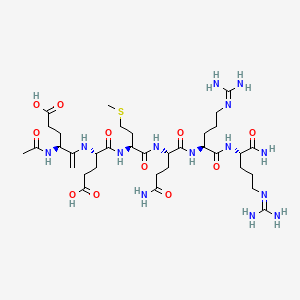
Argireline is a short synthetic peptide used in anti-aging skincare. Its ingredient-label name is acetyl hexapeptide-8, and it was formerly listed as acetyl hexapeptide-3. It is made of six amino acids patterned on the end of SNAP-25, a protein nerves use to release chemical signals to muscles.6
It was developed in the early 2000s by the Spanish cosmetic ingredient company Lipotec and marketed as a topical alternative to botulinum toxin injections. Today it appears in many serums, eye creams and moisturizers, often described as "Botox in a bottle".2
Unlike most compounds in this directory, Argireline is a permitted cosmetic ingredient, sold openly and applied to the skin. It is not a drug and is not FDA approved to treat wrinkles. The question with Argireline is not legality or safety so much as whether it does enough to be worth paying for.
- Anecdotal only
- In vitro only
- Animal models only
- Preliminary human
- Clinical trials
- Regulator approved
How Argireline works
Expression lines such as crow's feet and forehead lines form when small facial muscles contract repeatedly. Muscles contract when nerves release a chemical messenger, acetylcholine. That release depends on a group of proteins, the SNARE complex, that helps tiny packets of messenger fuse with the nerve's outer membrane. Botulinum toxin works by cutting one of those proteins. Argireline imitates a piece of one of them, SNAP-25, so it may slip into the complex and make it work less efficiently. Less messenger means slightly weaker contractions and, in theory, softer lines.
In more precise terms, Argireline (Ac-EEMQRR-NH2) competes with native SNAP-25 for a position in the ternary SNARE complex, destabilizing its formation and modestly reducing vesicle docking and neurotransmitter release, including catecholamines in cell studies.6 The mechanism is weaker and reversible compared with botulinum toxin, which permanently cleaves SNAP-25 until nerve terminals recover. The bigger issue is delivery. Argireline is water-loving and relatively large, so it penetrates the outer skin layer poorly, and whether enough reaches the nerve-muscle junction to act this way remains uncertain.2
Signal peptides are meant to prompt fibroblasts to make collagen; neurotransmitter-inhibiting peptides aim to soften expression lines. Both must first get through the outer skin barrier.
What the research shows on Argireline
The best clinical evidence is a randomized, placebo-controlled trial in 60 Chinese adults with wrinkles around the eyes. Participants applied Argireline or placebo twice daily for four weeks, randomized three to one. On subjective assessment, 48.9% of the Argireline group improved compared with none in the placebo group. Objective measurements from silicone skin replicas showed reduced roughness in the Argireline group but not with placebo.6
Other preclinical and clinical studies suggest that acetyl hexapeptide-8 may reduce wrinkle depth, improve elasticity and increase hydration, and some studies have looked at scar remodeling and oil control. A 2025 review of this work concluded that the precise mechanism, especially whether topical application actually inhibits muscle contraction, is still incompletely understood.2
A broader 2024 systematic review of cosmeceuticals for sun-damaged skin found that peptides as a group had some of the stronger evidence among topical cosmetic ingredients.1 That is a statement about a category, not proof that any single product works.
The limits are clear. Trials are small and short, some are funded by ingredient suppliers or brands, and effects are modest compared with injectables. No trial shows Argireline matching botulinum toxin. Results also depend heavily on the formulation, since delivery through the skin is the bottleneck.2
Studied for: Expression line reduction, Anti-ageing skincare.
Argireline reference data
| Sequence | Ac-EEMQRR-NH2 |
|---|---|
| Molecular weight | 888.99 Da |
| CAS number | 616204-22-9 |
| FDA status | Not approved for any indication. |
| Prohibited in sport | Not listed |
Argireline dosage in published research
Applied topically 1-2x daily at 5-10% concentration. A reference pattern, not a prescription.
How Argireline is used in practice
Argireline is sold over the counter in serums and creams at concentrations often in the range of a few percent up to about 10%. It is usually applied once or twice a day to areas with expression lines, such as around the eyes and on the forehead. Products range from inexpensive single-ingredient serums to premium formulas that combine it with other peptides, retinoids or hyaluronic acid. Any visible change, if it comes, generally takes several weeks of consistent use, and it fades when use stops.
Some dermatologists suggest topical acetyl hexapeptide as a supplement to botulinum toxin treatment rather than a replacement, and one review proposed it might reduce the number of injections needed.4 That idea has not been tested in a large trial.
Label claims vary widely, and the amount of Argireline in a product is not always disclosed. Because it is a cosmetic, products do not need to prove efficacy before sale. Buyers should treat "Botox-like" marketing as a description of the mechanism it is meant to mimic, not as a promise of similar results.
Argireline risks and side effects
Argireline is generally well tolerated on the skin. Published clinical studies have not raised significant safety concerns. The most common problems are mild irritation and temporary redness, usually from the overall formula rather than the peptide itself.
It is best avoided on broken or inflamed skin and by anyone with a known allergy to the product or its ingredients. Very little is absorbed into the body, so systemic side effects or drug interactions are not expected at cosmetic concentrations. Data on use during pregnancy are limited, though low absorption makes meaningful exposure unlikely.
The main practical risk is financial and expectational. Spending heavily on a product that delivers only subtle results can be disappointing, and some people delay more effective options as a result.
Reported side effects
Alternatives to Argireline
For dynamic expression lines, botulinum toxin injections, such as onabotulinumtoxinA (Botox), abobotulinumtoxinA (Dysport) and others, are FDA-approved and far more effective. For static lines and volume loss, hyaluronic acid fillers are commonly used. Injectable treatments carry their own risks, especially around the eyes, ranging from dry eye and drooping to rare but serious vascular complications.3
Among topical options, prescription tretinoin has the strongest evidence for treating photoaging and fine wrinkles, and over-the-counter retinol is a milder alternative. Daily broad-spectrum sunscreen prevents further damage. Other cosmetic peptides, such as palmitoyl pentapeptide-4 (Matrixyl) and copper peptide GHK-Cu, work through different pathways and can be combined with good basic skincare.
The bottom line on Argireline
Argireline is a safe, widely available cosmetic peptide with a plausible mechanism and small trials showing modest improvement in expression lines. It does not work like Botox in practice, and poor skin penetration limits it. It can be a reasonable part of a skincare routine, but expectations should stay modest, and sunscreen and retinoids deserve priority.
Questions for a clinician
- What evidence applies to my situation, and at what level?
- What established alternatives should I consider first?
- What monitoring would be necessary, and how often?
Argireline FAQ
What is Argireline?
A hexapeptide marketed as topical botulinum toxin, working on the same SNARE machinery by a much weaker mechanism. It is classed as cosmetic & topical.
Is Argireline FDA approved?
No. Argireline is not approved by the FDA for any indication.
Is Argireline legal in the US?
Argireline is used in topical skin-care products and is regulated as a cosmetic ingredient, not as a drug. It is not a prescription medicine. Cosmetic claims may not promise to change the body’s structure or function.
What dose of Argireline is used in research?
Published research and practitioner protocols report 5-10 mg, applied topically 1-2x daily at 5-10% concentration. This is a reference range, not a recommendation; dosing should be set by a licensed clinician.
What are the side effects of Argireline?
Reported side effects include mild local irritation, transient redness. Contraindications: known hypersensitivity, broken skin.
What is the half-life of Argireline?
The reported half-life of Argireline is Topical; not systemically absorbed in meaningful quantity.
Is Argireline banned in sport?
Argireline is not specifically named on the WADA prohibited list, but athletes should check the current list and their federation's rules.
References
Regulatory and primary sources
- FDA: Bulk drug substances that may present significant safety risks (Category 2 and withdrawn nominations) ↗ · content current as of April 22, 2026; checked October 18, 2026
- FDA: Bulk drug substances used in compounding under section 503A ↗ · how the 503A categories work
- PubChem compound record (CID 71587772) ↗ · structure, identifiers, synonyms
- CAS Registry Number 616204-22-9 ↗ · chemical identity
Published literature
- Cosmeceuticals in photoaging: A review.Skin Res Technol 2024.PubMed 39233460 · doi:10.1111/srt.13730
- Acetyl Hexapeptide-8 in Cosmeceuticals-A Review of Skin Permeability and Efficacy.Int J Mol Sci 2025.PubMed 40565185 · doi:10.3390/ijms26125722
- Complications and adverse effects of periocular aesthetic treatments.Surv Ophthalmol 2022.PubMed 33933438 · doi:10.1016/j.survophthal.2021.04.009
- Facial rejuvenation: combining cosmeceuticals with cosmetic procedures.Cutis 2014.PubMed 25279473
- The landscape of serum autoantibodies in lupus nephritis.Autoimmun Rev 2026.PubMed 42409299 · doi:10.1016/j.autrev.2026.104128
- The anti-wrinkle efficacy of argireline, a synthetic hexapeptide, in Chinese subjects: a randomized, placebo-controlled study.Am J Clin Dermatol 2013.PubMed 23417317 · doi:10.1007/s40257-013-0009-9
- Cyclosporine toxicity in renal transplant recipients detected by nailfold capillaroscopy with Na-fluorescein.Kidney Int 2000.PubMed 11115091 · doi:10.1046/j.1523-1755.2000.00441.x
- Do antibody responses to the influenza vaccine persist year-round in the elderly? A systematic review and meta-analysis.Vaccine 2017.PubMed 27939013 · doi:10.1016/j.vaccine.2016.11.013
Literature retrieved from PubMed on October 16, 2026, favouring human studies and reviews. Numbered markers in the text show which paper supports which statement; uncited entries are background reading.