Is DSIP legal?
Not approved · not compoundable- FDA status
- DSIP is not FDA approved. It was moved off FDA’s Category 2 safety-risk list in 2026 after its nomination was withdrawn, but it was not added to the 503A bulks list.
- Compounding
- That leaves no routine legal path for a US compounding pharmacy to prepare it.
- Prescription
- There is no approved US prescription product for DSIP.
- Online market
- Products sold online are labelled “for research use only”: not made, tested or labelled for human use, and often mislabelled.
US status checked October 2026 against FDA’s compounding lists. Sources at the foot of the page.
What is DSIP?
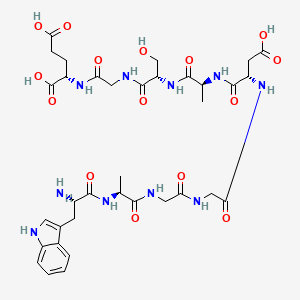
DSIP, short for delta sleep-inducing peptide, is a chain of nine amino acids with a molecular weight of about 849.8 It was isolated in 1977 by a research group in Basel, Switzerland, from the venous blood draining the brains of rabbits that had been put into deep sleep with electrical stimulation.5 The researchers named it after delta waves, the slow brain waves of deep sleep, because they believed it was a natural sleep-promoting factor.
That belief has not held up well. Nearly five decades later, no gene, precursor protein or receptor for DSIP has been found, and its role in sleep remains unclear.5
DSIP is not approved as a medicine in the US. It is sold online as a research chemical and offered by some wellness clinics for sleep, stress and chronic pain, usually as an injection before bed.
- Anecdotal only
- In vitro only
- Animal models only
- Preliminary human
- Clinical trials
- Regulator approved
How DSIP works
The short answer is that nobody knows for sure. The original idea was that the brain releases DSIP into the blood during sleep and that giving it would bring on deep sleep. Researchers have since proposed effects on stress hormones, the body's opioid system, body temperature and daily rhythms, but none of these has been pinned down as the main mechanism.
Early work found DSIP-like material in the brain, in other organs and in the blood of several mammals, and reported effects on brain electrical activity, neurotransmitter levels, daily activity patterns, hormone levels and drug withdrawal. Its sleep effect followed a U-shaped curve for both dose and timing, so more was not better.8 Later, researchers found that DSIP-like immunoreactivity sits mainly in hypothalamic areas not closely tied to sleep, and that some synthetic DSIP analogs, but not DSIP itself, promoted deep sleep in rabbits and rats. They proposed that a related, still unidentified peptide may explain the activity.5 Whether injected DSIP reaches the brain is also uncertain. A 1983 review found that it enters the spinal fluid intact only to a slight or moderate extent.6 Abba Kastin, co-author of an early DSIP review, was among the first scientists to show that peptides can cross the blood-brain barrier at all.4
Different compounds are said to act on different systems. Most of the evidence comes from animal work and small studies, much of it from Russia.
What the research shows on DSIP
The most positive human data come from the early 1980s. A 1984 summary of one investigator's work reported that two studies found better sleep after single injections given before bedtime, and that repeated injections seemed to normalize sleep structure in people with insomnia after about four doses. One case of insomnia linked to organic brain disease responded to higher doses.7 These were small studies from a single research program, using methods that would not meet current trial standards.
Later reviews were more cautious. A 1997 review of neuropeptides and human sleep in the journal Sleep concluded that the impact of DSIP on human sleep regulation was not yet clear.3 A 2006 review was blunter, calling the hypothesis that DSIP is a sleep factor extremely poorly documented and still weak.5
A 2026 review of therapeutic peptides listed DSIP among recovery-focused agents said to act on circadian regulation, while noting that clinical trials are lacking.2
In short, the evidence is a handful of small, older human studies with mixed results and no modern randomized trials. The name promises more than the research delivers. None of the studies followed people long enough to judge safety over months or years.
Studied for: Sleep research, Stress and chronic pain research.
DSIP reference data
| Sequence | WAGGDASGE |
|---|---|
| Molecular weight | 848.8 Da |
| CAS number | 62568-57-4 |
| FDA status | Not approved for any indication. |
| Prohibited in sport | Not listed |
DSIP dosage in published research
Once nightly before bed · usually run for about 4 weeks. A reference pattern, not a prescription.
Open this in the dosage calculator ↗
How DSIP is used in practice
DSIP is sold mainly by research-chemical vendors as freeze-dried powder in vials, labeled for research use only. Users mix it with bacteriostatic water and inject it under the skin, usually shortly before bed, often in courses of a few weeks. Some wellness and anti-aging clinics have offered it, but FDA has restricted it from use in compounding. The legal status box on this page has the details.
DSIP breaks down in the blood within minutes, which makes it hard to see how a single nightly dose would have a lasting effect. User reports range from deeper sleep to no effect at all, which is consistent with the mixed research and with a strong placebo effect for sleep.
As with other research peptides, there is no independent check on what the vials contain. Products may be underdosed, contain the wrong peptide or be contaminated, and buyers have no practical way to tell.
DSIP risks and side effects
Reported side effects include headache, morning grogginess and redness or soreness at the injection site. Because DSIP may add to the effects of sedatives, combining it with alcohol, sleeping pills, benzodiazepines or opioids is a concern.
The U-shaped dose response seen in early studies means that higher doses may work less well, not better.8 DSIP's proposed effects on stress hormones and other hormone systems have not been studied over the long term, and there are no safety data for pregnancy or breastfeeding.
A less obvious risk is delay. Persistent poor sleep can be a sign of sleep apnea, depression, restless legs or another treatable condition. Self-treating with an unproven peptide can postpone a proper diagnosis. Unregulated injectable products also carry the usual risks of infection and contamination.
Reported side effects
Alternatives to DSIP
For chronic insomnia, cognitive behavioral therapy for insomnia (CBT-I) is the recommended first-line treatment and is available in person, by telehealth and through digital programs. It has stronger and longer-lasting evidence than any sleep medicine.
When medication is needed, FDA-approved options include the orexin receptor antagonists suvorexant, lemborexant and daridorexant, low-dose doxepin, ramelteon and the Z-drugs such as zolpidem. Melatonin can help with circadian problems such as jet lag and delayed sleep timing. Anyone who snores loudly, wakes gasping or feels very sleepy during the day should be checked for sleep apnea.
DSIP is also marketed for stress and chronic pain. For those problems, the better-supported path is treating the underlying condition, with options ranging from physical therapy and graded exercise to talk therapy and approved medicines chosen with a clinician. Poor sleep and chronic pain often feed each other, so treating one tends to help the other.
The bottom line on DSIP
DSIP has a promising name and a disappointing record. Small studies from the 1980s suggested benefits for insomnia, but later reviews found the link to sleep weak, and the peptide's mechanism, receptor and even its natural role remain unknown. With better-proven treatments for insomnia widely available, DSIP is hard to recommend.
Questions for a clinician
- What evidence applies to my situation, and at what level?
- What established alternatives should I consider first?
- What monitoring would be necessary, and how often?
- Can this be prescribed at all where I live, or only sold for research?
DSIP FAQ
What is DSIP?
A nonapeptide isolated from rabbit brain during sleep induction, with inconsistent human results despite the name. It is classed as nootropic & neuro.
Is DSIP FDA approved?
No. DSIP is not approved by the FDA for any indication. Material sold online is labelled for research use only.
Is DSIP legal in the US?
DSIP is not FDA approved. It was moved off FDA’s Category 2 safety-risk list in 2026 after its nomination was withdrawn, but it was not added to the 503A bulks list. That leaves no routine legal path for a US compounding pharmacy to prepare it.
What dose of DSIP is used in research?
Published research and practitioner protocols report 100-300 mcg, once nightly before bed, typically for 4 weeks. This is a reference range, not a recommendation; dosing should be set by a licensed clinician.
How is DSIP reconstituted?
A 5 mg vial mixed with 2 mL of bacteriostatic water gives 2.5 mg/mL. At that concentration 100 mcg is 4.0 units on a 100-unit insulin syringe.
What are the side effects of DSIP?
Reported side effects include headache, grogginess, injection-site reactions. Contraindications: pregnancy, known hypersensitivity.
What is the half-life of DSIP?
The reported half-life of DSIP is ~7-15 minutes.
Is DSIP banned in sport?
DSIP is not specifically named on the WADA prohibited list, but athletes should check the current list and their federation's rules.
References
Regulatory and primary sources
- FDA: Bulk drug substances that may present significant safety risks (Category 2 and withdrawn nominations) ↗ · content current as of April 22, 2026; checked October 18, 2026
- FDA: Bulk drug substances used in compounding under section 503A ↗ · how the 503A categories work
- PubChem compound record (CID 68816) ↗ · structure, identifiers, synonyms
- FDA: Unapproved drugs and "research use only" products ↗ · regulatory status of non-approved products
- CAS Registry Number 62568-57-4 ↗ · chemical identity
Published literature
- Delta sleep-inducing peptide.Eur J Anaesthesiol 2001.PubMed 11437870 · doi:10.1046/j.1365-2346.2001.00917.x
- Therapeutic Peptides in Orthopaedics: Applications, Challenges, and Future Directions.J Am Acad Orthop Surg Glob Res Rev 2026.PubMed 41490200 · doi:10.5435/JAAOSGlobal-D-25-00236
- Neuropeptides and human sleep.Sleep 1997.PubMed 9456470
- Peptides and the blood-brain barrier.Peptides 2015.PubMed 25805003 · doi:10.1016/j.peptides.2015.03.010
- Delta sleep-inducing peptide (DSIP): a still unresolved riddle.J Neurochem 2006.PubMed 16539679 · doi:10.1111/j.1471-4159.2006.03693.x
- Minireview. Peptides and the blood-brain barrier.Life Sci 1983.PubMed 6304442 · doi:10.1016/0024-3205(83)90352-1
- DSIP in insomnia.Eur Neurol 1984.PubMed 6391925 · doi:10.1159/000115714
- Delta-sleep-inducing peptide (DSIP): a review.Neurosci Biobehav Rev 1984.PubMed 6145137 · doi:10.1016/0149-7634(84)90022-8
Literature retrieved from PubMed on October 16, 2026, favouring human studies and reviews. Numbered markers in the text show which paper supports which statement; uncited entries are background reading.