Is Selank legal?
Not approved · not compoundable- FDA status
- Selank is not FDA approved. It was moved off FDA’s Category 2 safety-risk list in 2026 after its nomination was withdrawn, but it was not added to the 503A bulks list.
- Compounding
- That leaves no routine legal path for a US compounding pharmacy to prepare it.
- Prescription
- There is no approved US prescription product for Selank.
- Outside the US
- Registered in the Russian Federation
- Online market
- Products sold online are labelled “for research use only”: not made, tested or labelled for human use, and often mislabelled.
US status checked October 2026 against FDA’s compounding lists. Sources at the foot of the page.
What is Selank?
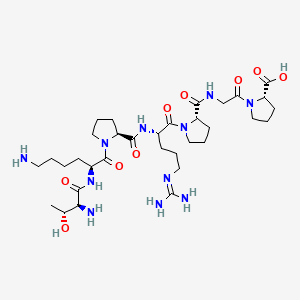
Selank is a short synthetic peptide developed in Russia as an anti-anxiety drug. It is made of seven amino acids (Thr-Lys-Pro-Arg-Pro-Gly-Pro) and is usually given as a nasal spray. It was created by Russian Academy of Sciences researchers, including teams at the Institute of Molecular Genetics in Moscow, and is registered as a medicine in Russia for anxiety and related conditions.
Selank is built on tuftsin, a natural four-amino-acid fragment of an antibody protein that stimulates immune cells. Tuftsin and its many analogs have been studied for decades for immune, anti-inflammatory and antimicrobial effects2. Selank adds a three-amino-acid tail to tuftsin so that it lasts longer in the body.
It is not approved in the US or Europe. In the West it is sold online as a research peptide and marketed as a 'nootropic' for calm focus, stress resilience and mood, usually with the claim that it reduces anxiety without the sedation or dependence of benzodiazepines.
- Anecdotal only
- In vitro only
- Animal models only
- Preliminary human
- Clinical trials
- Regulator approved
How Selank works
Nobody has pinned down exactly how Selank works. The leading idea is that it affects the brain's own calming chemistry rather than forcing a strong effect at one receptor the way a benzodiazepine does. Researchers have focused on enkephalins, natural opioid-like peptides that help regulate stress and mood, and on the serotonin and GABA systems that anxiety medicines target. Because it is given as a nasal spray, part of the dose may reach the brain through the nose, though how much does so in people is unclear.
In more detail, Selank (TKPRPGP) extends tuftsin (TKPR) with a Pro-Gly-Pro motif, a glyproline sequence that resists peptidase breakdown. Russian clinical work linked it to enkephalin metabolism: patients with generalized anxiety disorder and neurasthenia had a shortened half-life of leu-enkephalin in serum, and this measure rose during Selank treatment7. Animal and cell studies, mostly from the same research groups, also report effects on GABA-related gene expression, serotonin turnover and BDNF. Russian laboratory work has explored effects of glyproline peptides, including Selank and Semax, on blood coagulation as well8. A 2026 review grouped Selank with Semax as neuroactive peptides said to enhance BDNF signaling, while noting the lack of clinical trials for peptides of this kind1.
Different compounds are said to act on different systems. Most of the evidence comes from animal work and small studies, much of it from Russia.
What the research shows on Selank
Almost all human data come from small Russian clinical studies published in Russian-language journals. In one study of 62 patients with generalized anxiety disorder or neurasthenia, Selank (30 patients) was compared with the benzodiazepine medazepam (32 patients). The anti-anxiety effects of the two drugs were similar, and Selank also showed anti-fatigue and mildly stimulating effects7.
A second study compared Selank with phenazepam, a benzodiazepine widely used in Russia, in 60 patients with phobic, anxiety and somatoform disorders. It reported clear anti-anxiety and mild nootropic effects, with benefit persisting for about a week after the last dose5. A third study gave phenazepam alone (30 patients) or phenazepam plus Selank (40 patients). The combination worked faster and reduced benzodiazepine side effects such as sedation, memory and attention problems, and sexual problems, both during treatment and after the benzodiazepine was stopped4.
These results are interesting but weak by modern standards. The studies were small and short. The English abstracts do not describe placebo control or blinding, and several authors were involved in developing the drug. No independent replication outside Russia has been published, and no large randomized controlled trial meeting FDA or EMA standards exists. Claims about cognitive enhancement in healthy people rest mostly on animal research and on secondary findings in patient studies, not on trials designed to test them.
Studied for: Generalised anxiety research, Stress resilience, Cognitive support.
Selank reference data
| Sequence | TKPRPGP |
|---|---|
| Molecular weight | 751.9 Da |
| CAS number | 129954-34-3 |
| FDA status | Not approved for any indication. |
| Prohibited in sport | Not listed |
Selank dosage in published research
1-3x daily intranasal · usually run for about 4 weeks. A reference pattern, not a prescription.
Open this in the dosage calculator ↗
How Selank is used in practice
In Russia, Selank is available as a prescription nasal solution, typically used in courses of a few weeks. The Russian clinical studies used intranasal courses, but their English abstracts give few dosing details.
In the US, Selank is not an approved drug and is not a standard compounding option, so it is mostly sold through research-peptide websites, often as a lyophilized powder that buyers reconstitute and put into a nasal spray bottle themselves, or as ready-made nasal sprays. A few clinics and telehealth services have offered it, but there is no FDA-reviewed product. Research-chemical products are not tested to pharmaceutical standards. Purity, actual peptide content and sterility are unknown, and homemade nasal solutions can become contaminated. Users often combine Selank with Semax or other nootropics, which adds further unknowns.
Selank risks and side effects
In the Russian studies, Selank was generally well tolerated. Reported or commonly described side effects include nasal irritation, headache and transient drowsiness. The combination study suggested it may reduce rather than add to benzodiazepine side effects4, but that is a single small trial.
The bigger problem is what is not known. There are no long-term safety data, no systematic studies in pregnancy, and little information on interactions. Because it may affect enkephalin, GABA and serotonin systems, it could add to the effects of other anxiety medicines, sedatives, alcohol or antidepressants. Its parent molecule, tuftsin, acts on immune cells, and the immune effects of repeated Selank use in people have not been well studied. People with serious anxiety, depression or other psychiatric conditions risk delaying effective treatment if they rely on an unproven peptide. Finally, gray-market products add risks of wrong dose, impurities and bacterial contamination.
Reported side effects
Alternatives to Selank
For generalized anxiety disorder, first-line treatments in the US are well studied. Cognitive behavioral therapy has strong evidence and no drug side effects. SSRIs such as escitalopram and sertraline, and SNRIs such as venlafaxine and duloxetine, are FDA approved or widely used for anxiety disorders. Buspirone is a non-sedating, non-habit-forming option. Hydroxyzine can help with short-term symptoms. Benzodiazepines work quickly but carry dependence risks and are generally reserved for short-term use.
For stress and focus without a diagnosed disorder, sleep, regular exercise, mindfulness-based programs and limiting alcohol and caffeine have more evidence than any nootropic peptide. Anyone already on psychiatric medicine should talk to their prescriber before adding Selank or similar products.
The bottom line on Selank
Selank is a real medicine in Russia with a plausible mechanism and a handful of small, positive Russian studies comparing it with benzodiazepines. That is not enough to know how well it works or how safe it is over time. Proven therapies for anxiety exist, and research-grade Selank adds product-quality risks on top of the evidence gap.
Questions for a clinician
- What evidence applies to my situation, and at what level?
- What established alternatives should I consider first?
- What monitoring would be necessary, and how often?
- Can this be prescribed at all where I live, or only sold for research?
Selank FAQ
What is Selank?
A synthetic tuftsin analog developed in Russia as an anxiolytic without sedation or dependence. It is classed as nootropic & neuro.
Is Selank FDA approved?
No. Selank is not approved by the FDA for any indication. Material sold online is labelled for research use only.
Is Selank legal in the US?
Selank is not FDA approved. It was moved off FDA’s Category 2 safety-risk list in 2026 after its nomination was withdrawn, but it was not added to the 503A bulks list. That leaves no routine legal path for a US compounding pharmacy to prepare it.
What dose of Selank is used in research?
Published research and practitioner protocols report 250-750 mcg, 1-3x daily intranasal, typically for 4 weeks. This is a reference range, not a recommendation; dosing should be set by a licensed clinician.
How is Selank reconstituted?
A 5 mg vial mixed with 2 mL of bacteriostatic water gives 2.5 mg/mL. At that concentration 250 mcg is 10.0 units on a 100-unit insulin syringe.
What are the side effects of Selank?
Reported side effects include nasal irritation, transient drowsiness, headache. Contraindications: pregnancy, known hypersensitivity.
What is the half-life of Selank?
The reported half-life of Selank is ~30 minutes (intranasal).
Is Selank banned in sport?
Selank is not specifically named on the WADA prohibited list, but athletes should check the current list and their federation's rules.
References
Regulatory and primary sources
- FDA: Bulk drug substances that may present significant safety risks (Category 2 and withdrawn nominations) ↗ · content current as of April 22, 2026; checked October 18, 2026
- FDA: Bulk drug substances used in compounding under section 503A ↗ · how the 503A categories work
- PubChem compound record (CID 11765600) ↗ · structure, identifiers, synonyms
- FDA: Unapproved drugs and "research use only" products ↗ · regulatory status of non-approved products
- CAS Registry Number 129954-34-3 ↗ · chemical identity
Published literature
- Therapeutic Peptides in Orthopaedics: Applications, Challenges, and Future Directions.J Am Acad Orthop Surg Glob Res Rev 2026.PubMed 41490200 · doi:10.5435/JAAOSGlobal-D-25-00236
- Tuftsin - Properties and Analogs.Curr Med Chem 2017.PubMed 28745220 · doi:10.2174/0929867324666170725140826
- Anaesthesia and circulating blood volume.Eur J Anaesthesiol 2005.PubMed 15892402 · doi:10.1017/s0265021505000438
- [Optimization of the treatment of anxiety disorders with selank].Zh Nevrol Psikhiatr Im S S Korsakova 2015.PubMed 26356395 · doi:10.17116/jnevro20151156133-40
- [A comparison of the anxiolytic effect and tolerability of selank and phenazepam in the treatment of anxiety disorders].Zh Nevrol Psikhiatr Im S S Korsakova 2014.PubMed 25176261
- Low dosage lithium augmentation in venlafaxine resistant depression: an open-label study.Psychiatriki 2012.PubMed 22796912
- [Efficacy and possible mechanisms of action of a new peptide anxiolytic selank in the therapy of generalized anxiety disorders and neurasthenia].Zh Nevrol Psikhiatr Im S S Korsakova 2008.PubMed 18454096
- [Comparison of anticoagulant effects of regulatory proline-containing oligopeptides. Specificity of glyprolines, semax, and selank and potential of their practical application].Izv Akad Nauk Ser Biol 2006.PubMed 16634437
Literature retrieved from PubMed on October 16, 2026, favouring human studies and reviews. Numbered markers in the text show which paper supports which statement; uncited entries are background reading.