Is Semax legal?
Not approved · not compoundable- FDA status
- Semax is not FDA approved. It was moved off FDA’s Category 2 safety-risk list in 2026 after its nomination was withdrawn, but it was not added to the 503A bulks list.
- Compounding
- That leaves no routine legal path for a US compounding pharmacy to prepare it.
- Prescription
- There is no approved US prescription product for Semax.
- Outside the US
- Registered in the Russian Federation
- Online market
- Products sold online are labelled “for research use only”: not made, tested or labelled for human use, and often mislabelled.
US status checked October 2026 against FDA’s compounding lists. Sources at the foot of the page.
What is Semax?
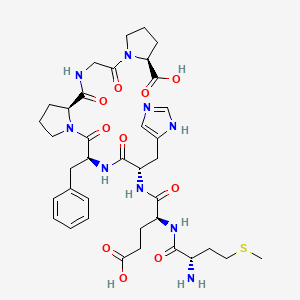
Semax is a synthetic seven-amino-acid peptide (Met-Glu-His-Phe-Pro-Gly-Pro) developed in the Soviet Union and Russia, mainly by researchers at the Institute of Molecular Genetics of the Russian Academy of Sciences. It is based on a fragment of adrenocorticotropic hormone (ACTH), the pituitary hormone that drives cortisol production, but it was designed so that it does not affect the adrenal glands.
In Russia, Semax is a registered medicine, given as nasal drops, used in ischemic stroke, cognitive disorders and some eye and nerve conditions. It is not approved in the US or Europe. Outside Russia, it is sold online as a research peptide and promoted as a nootropic for focus, memory, mood and mental energy, sometimes alongside its sister peptide Selank.
- Anecdotal only
- In vitro only
- Animal models only
- Preliminary human
- Clinical trials
- Regulator approved
How Semax works
Small pieces of ACTH were found decades ago to affect attention and learning in animals, separately from ACTH's hormonal role. Semax keeps the part of ACTH linked to those brain effects, drops the part that stimulates cortisol, and adds a short tail that makes it last longer. Given as nasal drops, it is thought to act on the brain partly by raising levels of growth factors that help nerve cells survive and form connections, especially brain-derived neurotrophic factor (BDNF). Supporters describe it as protecting brain cells under stress, such as during a stroke.
More precisely, Semax is an analog of the ACTH(4-10) fragment: it keeps ACTH(4-7) (Met-Glu-His-Phe) and adds a Pro-Gly-Pro sequence that resists enzymatic breakdown. Experimental work reports increased expression of BDNF and its receptor TrkB, changes in dopamine and serotonin signaling, and anti-inflammatory and antioxidant effects. In a rat model of focal brain ischemia, Semax altered the activity of many genes, with a striking change in transthyretin, a transport protein that its developers propose may mediate part of its neuroprotective effect6. Reviews of neuroprotective peptides list Semax among agents that reduce oxidative stress and neuroinflammation and support synaptic plasticity in preclinical and early clinical studies, while noting delivery and validation challenges7. Russian stress researchers have also described it as an anti-stress factor4.
Different compounds are said to act on different systems. Most of the evidence comes from animal work and small studies, much of it from Russia.
What the research shows on Semax
The main human evidence is in ischemic stroke and comes from Russian clinical studies. In one study of 110 patients recovering from ischemic stroke, those given Semax had higher blood BDNF levels throughout the study and faster, better recovery on the Barthel index, a standard measure of everyday function5. The regimen was two 10-day courses of 6,000 mcg a day separated by 20 days5. A 2024 Russian review concluded that Semax is clinically effective in both the acute and recovery phases of stroke, across different stroke subtypes, and argued that the nasal route helps deliver it to injured brain tissue8.
Those findings come with important caveats. The stroke studies are mostly small, from a limited group of Russian centers, and published in Russian-language journals. Abstracts often do not describe randomization or blinding clearly. Rising blood BDNF is a biomarker, not proof of better outcomes on its own. No large, independent randomized controlled trial has tested Semax for stroke to the standard expected by the FDA or EMA.
Evidence for cognitive enhancement in healthy people is thinner still. Reviews discuss Semax-like short peptides as possible multi-target agents for Alzheimer's disease3, but this is a theoretical and early-stage literature. A 2026 review of therapeutic peptides grouped Semax with Selank as neuroactive peptides said to enhance BDNF pathways, but stressed that clinical trials are lacking1. Most nootropic claims rest on animal studies and user reports.
Studied for: Cognitive enhancement research, Stroke recovery, Optic nerve conditions.
Semax reference data
| Sequence | MEHFPGP |
|---|---|
| Molecular weight | 813.9 Da |
| CAS number | 80714-61-0 |
| FDA status | Not approved for any indication. |
| Prohibited in sport | Not listed |
Semax dosage in published research
1-3x daily intranasal · usually run for about 4 weeks. A reference pattern, not a prescription.
Open this in the dosage calculator ↗
How Semax is used in practice
In Russian hospitals, Semax is given as nasal drops in courses during stroke treatment and rehabilitation, and at lower strengths for other indications. Higher-strength preparations are used in stroke, as in the study above.
In the US and Europe, Semax is used almost entirely through the gray market. Research-peptide sellers offer lyophilized powder for users to mix into nasal spray bottles, or premade sprays, and some sell 'N-acetyl Semax amidate,' a modified version with even less human data. A small number of clinics and telehealth services have offered it, but there is no FDA-reviewed product and it is not a standard compounding option. Research-grade peptides are not tested to pharmaceutical standards, so content, purity and sterility are unverified, and homemade nasal solutions can be contaminated.
Semax risks and side effects
In Russian clinical use Semax is described as well tolerated. Commonly reported effects include nasal irritation, headache, and in some users overstimulation, irritability or difficulty sleeping.
Because it is thought to influence dopamine and serotonin, it could add to the effects of stimulants or other drugs that act on those systems. People with psychosis, mania or severe anxiety disorders are generally advised to avoid it. Its effects on the growth factor BDNF are part of the appeal, but the long-term consequences of repeatedly raising growth factor signaling in healthy people have not been studied. There are no adequate data in pregnancy or breastfeeding, and no long-term safety studies in Western populations.
Product quality is a major risk. Research peptides can be under-dosed, contaminated or mislabeled, and the modified 'amidate' versions have essentially no human safety data at all.
Reported side effects
Alternatives to Semax
For acute ischemic stroke, proven treatments are time-critical: clot-dissolving drugs such as alteplase or tenecteplase, and mechanical thrombectomy for large vessel blockages. Recovery depends most on organized stroke-unit care and early, intensive rehabilitation. Secondary prevention uses antiplatelet drugs, statins, blood pressure control and, where appropriate, anticoagulants.
For memory and focus concerns, the evidence favors sleep, regular aerobic exercise, treating depression, hearing loss and sleep apnea, and reviewing medicines that dull thinking. For diagnosed ADHD, stimulant and non-stimulant medicines are approved and well studied. For Alzheimer's disease, cholinesterase inhibitors, memantine and the anti-amyloid antibodies lecanemab and donanemab are approved options for appropriate patients.
The bottom line on Semax
Semax is a legitimate Russian medicine with a plausible brain-protective mechanism and encouraging but limited stroke data from Russian studies. It has not been tested to Western regulatory standards, and evidence for cognitive enhancement in healthy people is weak. Research-grade products add uncertainty about what is actually in the vial.
Questions for a clinician
- What evidence applies to my situation, and at what level?
- What established alternatives should I consider first?
- What monitoring would be necessary, and how often?
- Can this be prescribed at all where I live, or only sold for research?
Semax FAQ
What is Semax?
A heptapeptide ACTH fragment analog used in Russia for stroke and cognitive indications, with no corticotropic activity. It is classed as nootropic & neuro.
Is Semax FDA approved?
No. Semax is not approved by the FDA for any indication. Material sold online is labelled for research use only.
Is Semax legal in the US?
Semax is not FDA approved. It was moved off FDA’s Category 2 safety-risk list in 2026 after its nomination was withdrawn, but it was not added to the 503A bulks list. That leaves no routine legal path for a US compounding pharmacy to prepare it.
What dose of Semax is used in research?
Published research and practitioner protocols report 300-900 mcg, 1-3x daily intranasal, typically for 4 weeks. This is a reference range, not a recommendation; dosing should be set by a licensed clinician.
How is Semax reconstituted?
A 5 mg vial mixed with 2 mL of bacteriostatic water gives 2.5 mg/mL. At that concentration 300 mcg is 12.0 units on a 100-unit insulin syringe.
What are the side effects of Semax?
Reported side effects include nasal irritation, headache, overstimulation, irritability. Contraindications: pregnancy, acute psychosis, severe anxiety disorders.
What is the half-life of Semax?
The reported half-life of Semax is ~30 minutes (intranasal).
Is Semax banned in sport?
Semax is not specifically named on the WADA prohibited list, but athletes should check the current list and their federation's rules.
References
Regulatory and primary sources
- FDA: Bulk drug substances that may present significant safety risks (Category 2 and withdrawn nominations) ↗ · content current as of April 22, 2026; checked October 18, 2026
- FDA: Bulk drug substances used in compounding under section 503A ↗ · how the 503A categories work
- PubChem compound record (CID 9811102) ↗ · structure, identifiers, synonyms
- FDA: Unapproved drugs and "research use only" products ↗ · regulatory status of non-approved products
- CAS Registry Number 80714-61-0 ↗ · chemical identity
Published literature
- Therapeutic Peptides in Orthopaedics: Applications, Challenges, and Future Directions.J Am Acad Orthop Surg Glob Res Rev 2026.PubMed 41490200 · doi:10.5435/JAAOSGlobal-D-25-00236
- Pharmacological Aspects of Neuro-Immune Interactions.Curr Pharm Des 2018.PubMed 28875850 · doi:10.2174/1381612823666170829135115
- [Prospects for use of short peptides in pharmacotherapeutic correction of Alzheimer's disease.].Adv Gerontol 2024.PubMed 38944767
- [Evolution of the stress concept].Vestn Ross Akad Med Nauk 2008.PubMed 19140465
- [The efficacy of semax in the tretament of patients at different stages of ischemic stroke].Zh Nevrol Psikhiatr Im S S Korsakova 2018.PubMed 29798983 · doi:10.17116/jnevro20181183261-68
- [POSSIBLE ROLE OF TRANSTHYRETIN IN THE BIOLOGICAL MECHANISM OF THE REGULATORY PEPTIDE NEUROPROTECTION.].Mol Gen Mikrobiol Virusol 2016.PubMed 30383932
- Modulation of neuropathological pathways by bioactive peptides and proteins/polypeptides: Targeting oxidative stress in neurodegenerative diseases.Neuropeptides 2025.PubMed 41004910 · doi:10.1016/j.npep.2025.102563
- [Place of oligopeptide H-Met-Glu-His-Phe-Pro-Gly-Pro-OH in the therapy and rehabilitation of patients with ischemic stroke].Zh Nevrol Psikhiatr Im S S Korsakova 2024.PubMed 39166935 · doi:10.17116/jnevro202412408256
Literature retrieved from PubMed on October 16, 2026, favouring human studies and reviews. Numbered markers in the text show which paper supports which statement; uncited entries are background reading.