Is Kisspeptin-10 legal?
FDA Category 2- FDA status
- Kisspeptin-10 is not FDA approved. FDA lists it in Category 2 of its 503A bulk substances review: substances that may present significant safety risks.
- Compounding
- US compounding pharmacies should not prepare it.
- Prescription
- There is no approved US prescription product for Kisspeptin-10.
- Online market
- Products sold online are labelled “for research use only”: not made, tested or labelled for human use, and often mislabelled.
US status checked October 2026 against FDA’s compounding lists. Sources at the foot of the page.
What is kisspeptin-10?
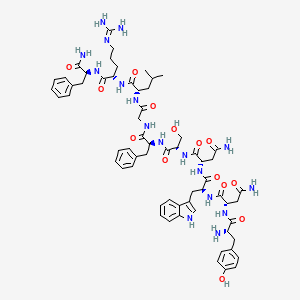
Kisspeptin-10 is a ten-amino-acid peptide, the shortest active form of kisspeptin. Kisspeptin is a natural hormone made in the brain that switches on the reproductive system. The gene that encodes it, KISS1, was discovered in 1996 by researchers in Hershey, Pennsylvania, who named it after the town's famous chocolate.
At first the gene was studied as a suppressor of cancer spread, which is why one of its products is called metastin.1 In 2001 kisspeptins were identified as the natural partners of a receptor called GPR54. In 2003, two research groups found that people with broken copies of that receptor never go through puberty, which revealed kisspeptin's central role in reproduction.1 Kisspeptin-10 is not an approved drug. It is studied in fertility research and marketed online and by some clinics for testosterone support and libido.
- Anecdotal only
- In vitro only
- Animal models only
- Preliminary human
- Clinical trials
- Regulator approved
How kisspeptin-10 works
The reproductive system runs on a chain of signals. The hypothalamus releases gonadotropin-releasing hormone (GnRH). GnRH tells the pituitary to release LH and FSH. Those hormones tell the testes or ovaries to make sex hormones and sperm or eggs. Kisspeptin sits at the top of that chain. It is the signal that tells GnRH neurons to fire.
Because kisspeptin works upstream, it uses the body's own control system rather than replacing a hormone further down. The hope is that this produces a more natural hormone pattern than giving GnRH, LH or testosterone directly.
In more precise terms, kisspeptin-10 is an agonist at KISS1R (also called GPR54), a G protein-coupled receptor on hypothalamic GnRH neurons. The kisspeptin system acts as a gatekeeper of GnRH neurons. It helps switch them on at puberty and helps relay feedback from sex steroids and, probably, metabolic signals.1 In monkeys, kisspeptin-10 stimulated GnRH release before and during puberty, and females were much more sensitive than males.4 Kisspeptin receptors also occur outside the reproductive system, including in the hippocampus, where kisspeptin-10 increased excitatory signaling between nerve cells in rat brain tissue.5 Its half-life in blood is only a few minutes.
Kisspeptin starts the cascade; gonadorelin is GnRH itself; hCG acts like LH at the testes or ovaries. Continuous GnRH agonists such as triptorelin switch the axis off rather than on.
What the research shows on kisspeptin-10
Kisspeptin-10 has more human research than most peptides on this site, but nearly all of it is short-term physiology rather than treatment trials.
The core finding is consistent. In several species, and by different routes, kisspeptins including kisspeptin-10 are strong stimulators of LH and FSH release.1 Small human studies have shown that kisspeptin injections or infusions raise LH and testosterone in healthy men. In IVF research, a longer form, kisspeptin-54, has been used to trigger egg maturation as an alternative to hCG, with interest in its potential to lower the risk of ovarian hyperstimulation. Brain imaging studies in small groups of men have also reported changes in activity in regions linked to sexual and emotional processing after kisspeptin.
Several limits apply. Much of the strongest clinical work used kisspeptin-54, a longer form that lasts longer in the blood, so its results do not transfer automatically to kisspeptin-10. Most human studies involve dozens of participants or fewer and last hours to days. Responses vary by sex and, in women, by phase of the menstrual cycle. Continuous exposure can desensitize the system, so more is not always better. There are no long-term trials of kisspeptin-10 for low testosterone, infertility or low libido.
Kisspeptin also acts beyond reproduction. Its metabolic effects appear to differ by sex: in mammal studies it tended to raise metabolic activity and lower body weight in females but increase weight gain in males.6 Some findings raise caution. Kisspeptin-10 is a vasoconstrictor, and four weeks of infusion sped up the development of atherosclerosis in mice prone to the disease.3 That has not been studied in people.
Studied for: Reproductive axis research, Fertility research, Sexual desire research.
Kisspeptin-10 reference data
| Sequence | YNWNSFGLRF-NH2 |
|---|---|
| Molecular weight | 1,302.4 Da |
| CAS number | 374675-21-5 |
| FDA status | Not approved for any indication. |
| Prohibited in sport | Not listed |
Kisspeptin-10 dosage in published research
Open this in the dosage calculator ↗
How kisspeptin-10 is used in practice
There is no approved kisspeptin product. In research settings it is given by injection or intravenous infusion under close monitoring.
Some men's health and telehealth clinics have offered kisspeptin-10 as a way to raise natural testosterone or improve libido, sometimes alongside or instead of hCG or gonadorelin. Compounding access is restricted because of FDA concerns about bulk peptides. Clinic protocols vary widely, and the very short half-life raises the question of how much a once-daily injection actually does.
Kisspeptin-10 is also sold online as a "research use only" peptide. These products are not made to pharmaceutical standards. Their identity, purity and sterility are unverified.
Kisspeptin-10 risks and side effects
In short human studies kisspeptin has been well tolerated. Reported effects include flushing, injection-site reactions and headache.
The open questions are about longer use. Repeated or continuous dosing may blunt the response rather than strengthen it. The mouse finding that kisspeptin-10 worsened atherosclerosis is a theoretical concern for people with heart disease.3 The relationship with cancer is complicated. KISS1 is generally considered a metastasis suppressor,7 but its role in breast cancer appears to cut both ways, with evidence for both restricting and promoting invasion.2 Because kisspeptin raises sex hormones, it should be avoided with hormone-sensitive cancers. It should not be used in pregnancy.
Interactions are poorly characterized. Combining it with other drugs that act on the reproductive axis makes effects harder to predict. Grey-market products add the usual risks of wrong dose and contamination.
Reported side effects
Alternatives to kisspeptin-10
For men with confirmed low testosterone who want to preserve fertility, clinicians use hCG, clomiphene citrate (off-label) or enclomiphene, which is not FDA approved. Gonadorelin works one step further down, at the pituitary. For confirmed hypogonadism without fertility goals, FDA-approved testosterone is standard.
For low libido, approved options include bremelanotide (Vyleesi) and flibanserin (Addyi) for premenopausal women, and PDE5 inhibitors such as sildenafil and tadalafil for erectile dysfunction. For women who do not ovulate, letrozole and clomiphene are first-line treatments. In IVF, hCG and GnRH agonist triggers are the established standards.
The bottom line on kisspeptin-10
Kisspeptin-10 is a scientifically important hormone fragment that reliably triggers the reproductive axis in short studies. That makes it a promising research tool, not a proven treatment. There are no long-term trials for low testosterone or libido, its effect is brief, and some animal findings call for caution.
Questions for a clinician
- What evidence applies to my situation, and at what level?
- What established alternatives should I consider first?
- What monitoring would be necessary, and how often?
- Can this be prescribed at all where I live, or only sold for research?
Kisspeptin-10 FAQ
What is Kisspeptin-10?
The upstream trigger for GnRH release, and the most physiologically natural way to stimulate the reproductive axis. It is classed as reproductive & HPTA.
Is Kisspeptin-10 FDA approved?
No. Kisspeptin-10 is not approved by the FDA for any indication. Material sold online is labelled for research use only.
Is Kisspeptin-10 legal in the US?
Kisspeptin-10 is not FDA approved. FDA lists it in Category 2 of its 503A bulk substances review: substances that may present significant safety risks. US compounding pharmacies should not prepare it.
What dose of Kisspeptin-10 is used in research?
Published research and practitioner protocols report 10-100 mcg, research protocols vary widely. This is a reference range, not a recommendation; dosing should be set by a licensed clinician.
How is Kisspeptin-10 reconstituted?
A 5 mg vial mixed with 2 mL of bacteriostatic water gives 2.5 mg/mL. At that concentration 10 mcg is 0.4 units on a 100-unit insulin syringe.
What are the side effects of Kisspeptin-10?
Reported side effects include flushing, injection-site reactions, headache. Contraindications: hormone-sensitive malignancy, pregnancy.
What is the half-life of Kisspeptin-10?
The reported half-life of Kisspeptin-10 is ~4 minutes.
Is Kisspeptin-10 banned in sport?
Kisspeptin-10 is not specifically named on the WADA prohibited list, but athletes should check the current list and their federation's rules.
References
Regulatory and primary sources
- FDA: Bulk drug substances that may present significant safety risks (Category 2 and withdrawn nominations) ↗ · content current as of April 22, 2026; checked October 18, 2026
- FDA: Bulk drug substances used in compounding under section 503A ↗ · how the 503A categories work
- PubChem compound record (CID 25240297) ↗ · structure, identifiers, synonyms
- FDA: Unapproved drugs and "research use only" products ↗ · regulatory status of non-approved products
- CAS Registry Number 374675-21-5 ↗ · chemical identity
Published literature
- GPR54 and kisspeptin in reproduction.Hum Reprod Update 2006.PubMed 16731583 · doi:10.1093/humupd/dml023
- KISS1 in breast cancer progression and autophagy.Cancer Metastasis Rev 2019.PubMed 31705228 · doi:10.1007/s10555-019-09814-4
- Roles of the kisspeptin/GPR54 system in pathomechanisms of atherosclerosis.Nutr Metab Cardiovasc Dis 2020.PubMed 32409274 · doi:10.1016/j.numecd.2020.02.017
- Role of Kisspeptin and NKB in Puberty in Nonhuman Primates: Sex Differences.Semin Reprod Med 2019.PubMed 31847024 · doi:10.1055/s-0039-3400253
- The role of kisspeptin and GPR54 in the hippocampus.Peptides 2009.PubMed 18765263 · doi:10.1016/j.peptides.2008.07.023
- Endocrine-metabolic effects of kisspeptin in mammals.Gen Comp Endocrinol 2026.PubMed 41581529 · doi:10.1016/j.ygcen.2026.114888
- Kisspeptins (KiSS-1): essential players in suppressing tumor metastasis.Asian Pac J Cancer Prev 2013.PubMed 24377507 · doi:10.7314/apjcp.2013.14.11.6215
- The kisspeptin (KiSS-1)/GPR54 system in cancer biology.Cancer Treat Rev 2008.PubMed 18583061 · doi:10.1016/j.ctrv.2008.05.007
Literature retrieved from PubMed on October 16, 2026, favouring human studies and reviews. Numbered markers in the text show which paper supports which statement; uncited entries are background reading.