Is PT-141 legal?
FDA approved- FDA status
- PT-141 is FDA approved for: Acquired, generalised hypoactive sexual desire disorder in premenopausal women (Vyleesi).
- Compounding
- It is a prescription medicine. Use outside the approved indication is off-label and a clinician’s decision. Compounded copies are restricted when the approved product is available.
- Prescription
- A licensed US clinician can prescribe PT-141.
US status checked October 2026 against FDA’s compounding lists. Sources at the foot of the page.
What is PT-141?
PT-141 is the research code for bremelanotide, a synthetic peptide sold in the US as Vyleesi. It is one of only two drugs the FDA has approved for hypoactive sexual desire disorder (HSDD), a condition defined by persistently low sexual desire that causes distress and is not explained by another medical problem, relationship issue or medication. Its approved use is narrow: premenopausal women with acquired, generalized HSDD.
The compound grew out of melanotan II, a peptide first studied as a tanning agent. Researchers noticed that melanotan II produced sexual arousal as a side effect, and bremelanotide was developed to pursue that effect. Palatin Technologies originally developed PT-141 as a nasal spray for both erectile dysfunction and female sexual dysfunction, and had completed a phase IIb trial in men with erectile dysfunction by 20031. The nasal program was later dropped amid concerns about blood pressure, and the product that reached market is a self-administered subcutaneous injection used on demand. Palatin ran the phase 3 trials and licensed North American rights to AMAG Pharmaceuticals, which filed for approval2. The FDA approved it in 2019.
Outside its approved use, PT-141 is widely sold online as a research chemical and promoted for libido in men and women, including as an alternative for men who do not respond to erectile dysfunction pills.
- Anecdotal only
- In vitro only
- Animal models only
- Preliminary human
- Clinical trials
- Regulator approved
How PT-141 works
Most sexual dysfunction drugs that people know about, such as sildenafil, work on blood flow. PT-141 works in the brain instead. It switches on a signaling system called the melanocortin system, which helps regulate appetite, skin pigment and sexual motivation. By nudging the brain circuits involved in desire, it aims to increase interest in sex rather than to produce a physical response directly. That is why it is aimed at low desire, not at a mechanical problem with arousal.
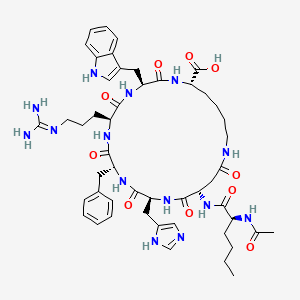
In more precise terms, bremelanotide is a cyclic heptapeptide analog of alpha-melanocyte-stimulating hormone (alpha-MSH) with high affinity for the melanocortin-4 receptor (MC4R)2. It is closely related to melanotan II, differing mainly at the C-terminus, a change that reduces activity at MC1R, the receptor that drives skin darkening. MC4R is expressed in hypothalamic and limbic areas that shape sexual motivation. Agonism there is thought to shift the balance between excitatory and inhibitory inputs to desire, consistent with the dual-control model of sexual response used to describe HSDD3. The same melanocortin system is the target of setmelanotide for genetic obesity and afamelanotide for a rare light-sensitivity disorder, and a 2023 review cites these approvals as evidence that peptides in this class can be developed safely4.
One family of receptors controls skin pigment, appetite and sexual arousal. Drugs differ mainly in which receptor they favour: afamelanotide (MC1R), setmelanotide (MC4R), bremelanotide (MC4R), melanotan II (several).
What the research shows on PT-141
The strongest evidence comes from the phase 3 program in premenopausal women that supported approval. A review of the two phase 3 reports and two phase 2 reports found that bremelanotide produced statistically significant improvements in sexual desire and significant reductions in distress about low desire compared with placebo8. The same review cautioned that, although the trials met statistical significance, the clinical benefit may be modest8. In practical terms, many women in the trials did not notice a large change, and some on placebo improved too.
Reviews of female sexual dysfunction treatment place bremelanotide alongside flibanserin as the two centrally acting options for HSDD in premenopausal women, with transdermal testosterone the better-studied option after menopause7. Other reviews describe the safety data for these approved medicines as strengthening over time6. There is also ongoing debate about how female sexual disorders are diagnosed, since the DSM-5 merged desire and arousal disorders into one category, which complicates how trial results apply to individual patients5.
Evidence in men is thinner. Early trials explored erectile dysfunction, including in men who did not respond to PDE5 inhibitors, but that program did not lead to approval and there is no large modern trial base for male use. Claims about male libido, enhanced orgasm or use alongside sildenafil rest on small early studies and anecdote, not on the kind of evidence that supported the female indication.
Studied for: Hypoactive sexual desire disorder in premenopausal women, Erectile dysfunction research.
PT-141 reference data
| Molecular weight | 1,025.2 Da |
|---|---|
| CAS number | 189691-06-3 |
| FDA status | Acquired, generalised hypoactive sexual desire disorder in premenopausal women (Vyleesi) |
| Prohibited in sport | Not listed |
PT-141 dosage in published research
How PT-141 is used in practice
As a prescription drug, Vyleesi comes as a single-dose autoinjector that the patient uses under the skin of the abdomen or thigh about 45 minutes before anticipated sexual activity8. Prescribing information limits use to no more than one dose in 24 hours and no more than eight doses a month, and advises stopping after eight weeks if there is no benefit8. It is an on-demand drug, not a daily one, which some patients prefer to flibanserin's nightly pill.
Cost, patchy insurance coverage and the need to inject are practical barriers.Some telehealth services prescribe it for women who meet the HSDD criteria. Other clinics and online sellers offer compounded or unbranded bremelanotide to men and women off label, often in multi-dose vials. Products sold as research chemicals are not made to pharmaceutical standards. Their identity, purity, sterility and dose are not verified, and because PT-141 and melanotan II are chemically close, mislabeling between them is a realistic concern.
PT-141 risks and side effects
Nausea is the most common side effect, reported by about 40% of trial participants, followed by facial flushing in about 20% and headache in about 11%8. Nausea is usually worst after the first dose and tends to ease with later doses. Injection-site reactions are also common.
Bremelanotide causes a transient rise in blood pressure and a small drop in heart rate after each dose, which usually resolves within about 12 hours. For that reason it is not recommended for people with uncontrolled high blood pressure or known cardiovascular disease. Repeated use can cause focal darkening of the skin, gums or face, which may not fully reverse. The label also warns that it can lower blood levels of oral naltrexone, a concern for anyone taking naltrexone for alcohol or opioid dependence. It may slow stomach emptying and affect absorption of other oral drugs.
The review literature describes limited drug interactions and no clinically significant interaction with alcohol8. It should not be used in pregnancy. Long-term data on frequent use beyond the trial periods are limited, and none of the trial safety data apply to unregulated products of unknown content.
Reported side effects
Alternatives to PT-141
For premenopausal women with HSDD, the main approved alternative is flibanserin (Addyi), a daily oral tablet that acts on serotonin and dopamine signaling. It requires daily use and carries warnings about low blood pressure and fainting, particularly with alcohol. After menopause, transdermal testosterone at doses appropriate for women has the strongest evidence for desire, and menopausal hormone therapy is the mainstay for midlife symptoms that affect sexual function7.
Non-drug approaches matter too. Clinicians are advised to take a biopsychosocial approach, looking at medications such as SSRIs, relationship factors, depression and pain before reaching for a drug3. Sex therapy and cognitive behavioral therapy have evidence for low desire.
For men with erectile dysfunction, PDE5 inhibitors such as sildenafil and tadalafil are approved, well studied and inexpensive. Men with low desire should be checked for low testosterone, depression, medication effects and other medical causes, since PT-141 is not approved for any male indication.
The bottom line on PT-141
PT-141 is a real, FDA-approved drug with a narrow indication and a modest effect. For premenopausal women with diagnosed HSDD who can tolerate nausea and do not have cardiovascular risk, it is a reasonable on-demand option to discuss with a clinician. For men, and for anyone buying it as a research chemical, the evidence is weak and product quality is unverified.
Questions for a clinician
- What evidence applies to my situation, and at what level?
- What established alternatives should I consider first?
- What monitoring would be necessary, and how often?
PT-141 FAQ
What is PT-141?
A melanocortin-4 selective agonist approved for hypoactive sexual desire disorder, acting centrally rather than vascularly. It is classed as melanocortins.
Is PT-141 FDA approved?
Yes. PT-141 is FDA approved for: Acquired, generalised hypoactive sexual desire disorder in premenopausal women (Vyleesi).
Is PT-141 legal in the US?
PT-141 is FDA approved for: Acquired, generalised hypoactive sexual desire disorder in premenopausal women (Vyleesi). It is a prescription medicine. Use outside the approved indication is off-label and a clinician’s decision. Compounded copies are restricted when the approved product is available.
What dose of PT-141 is used in research?
Published research and practitioner protocols report 1-2 mg, as needed, at most once per 24 hours and 8 doses per month. This is a reference range, not a recommendation; dosing should be set by a licensed clinician.
What are the side effects of PT-141?
Reported side effects include nausea, flushing, injection-site reactions, headache, transient blood pressure increase. Contraindications: uncontrolled hypertension, established cardiovascular disease, pregnancy.
What is the half-life of PT-141?
The reported half-life of PT-141 is ~2.7 hours.
Is PT-141 banned in sport?
PT-141 is not specifically named on the WADA prohibited list, but athletes should check the current list and their federation's rules.
Which telehealth clinics prescribe PT-141?
Clinics in our directory that list PT-141 include Defy Medical, Blokes. Each is scored on our published rubric.
References
Regulatory and primary sources
- FDA: Bulk drug substances that may present significant safety risks (Category 2 and withdrawn nominations) ↗ · content current as of April 22, 2026; checked October 18, 2026
- FDA: Bulk drug substances used in compounding under section 503A ↗ · how the 503A categories work
- PubChem compound record (CID 9941379) ↗ · structure, identifiers, synonyms
- DailyMed: FDA-approved labeling for PT-141 ↗ · indications, dosing, warnings as approved
- FDA Drugs@FDA database ↗ · approval history
- CAS Registry Number 189691-06-3 ↗ · chemical identity
Published literature
- PT-141 Palatin.Curr Opin Investig Drugs 2004.PubMed 15134289
- Bremelanotide: First Approval.Drugs 2019.PubMed 31429064 · doi:10.1007/s40265-019-01187-w
- Hypoactive Sexual Desire Disorder in Women: Physiology, Assessment, Diagnosis, and Treatment.J Midwifery Womens Health 2021.PubMed 34510696 · doi:10.1111/jmwh.13283
- Targeting the central melanocortin system for the treatment of metabolic disorders.Nat Rev Endocrinol 2023.PubMed 37365323 · doi:10.1038/s41574-023-00855-y
- Pharmacotherapy for Sexual Dysfunction in Women.Curr Psychiatry Rep 2022.PubMed 35102537 · doi:10.1007/s11920-022-01322-7
- Pharmacologic therapeutic options for sexual dysfunction.Curr Opin Obstet Gynecol 2022.PubMed 36036468 · doi:10.1097/GCO.0000000000000821
- Medical Treatment of Female Sexual Dysfunction.Urol Clin North Am 2022.PubMed 35428435 · doi:10.1016/j.ucl.2022.02.001
- Bremelanotide: New Drug Approved for Treating Hypoactive Sexual Desire Disorder.Ann Pharmacother 2020.PubMed 31893927 · doi:10.1177/1060028019899152
Literature retrieved from PubMed on October 16, 2026, favouring human studies and reviews. Numbered markers in the text show which paper supports which statement; uncited entries are background reading.