The core difference boils down to one simple concept: prohormones are blunt instruments, precursors that your body converts into powerful hormones. This process delivers fast, dramatic muscle gains but comes with a host of significant, steroid-like side effects.
On the flip side, SARMs are engineered for precision. They are designed to specifically target muscle and bone receptors, aiming for more moderate, sustainable lean mass gains with what is—at least in theory—a better safety profile. Ultimately, your choice depends on whether you're chasing raw power or a more targeted approach.
Prohormones vs. SARMs: The Immediate Verdict
Choosing between prohormones and SARMs is really a question of risk versus reward. Think of prohormones as a sledgehammer—incredibly effective for smashing through plateaus and packing on mass quickly, but they cause a lot of collateral damage. This isn't just speculation; the risks are well-documented and mirror those of anabolic steroids, including serious liver toxicity and a complete shutdown of your natural hormone production. Their legal status is cut and dried: most are illegal and classified as controlled substances.
SARMs, by contrast, are more like a scalpel. They were created to provide the muscle-building benefits of androgens without the widespread side effects, thanks to their tissue selectivity. While that sounds great, they are far from risk-free. SARMs still suppress your natural testosterone and, because they lack long-term human trials, their full health impact remains a big question mark. They currently occupy a legal gray area, often sold under the "for research purposes only" loophole.
The bottom line is this: Prohormones promise explosive gains but come with equally explosive risks. SARMs offer a more controlled path to growth, but they carry their own set of significant, and often unknown, risks. It's crucial to remember that neither is approved for human use.
Key Differences at a Glance
To make sense of the trade-offs, it helps to see the core differences side-by-side. This table breaks down what truly separates these two classes of compounds.
| Factor | Prohormones | SARMs |
|---|---|---|
| How They Work | Convert into active anabolic hormones inside the body. | Directly bind to androgen receptors in select tissues, like muscle and bone. |
| Expected Results | Fast gains in mass and strength, but often with water retention. | Steady, quality lean muscle and strength gains over time. |
| Common Side Effects | High-risk profile similar to steroids: liver stress, hair loss, hormonal shutdown. | Milder but still serious: testosterone suppression, vision issues (specific SARMs). |
| Legal Status | Mostly illegal; classified as anabolic steroids under federal law. | Not approved for human use; sold in a legal gray area for "research." |
Deciding which compound aligns with your goals requires a clear understanding of their fundamental differences in mechanism, effect, and risk.
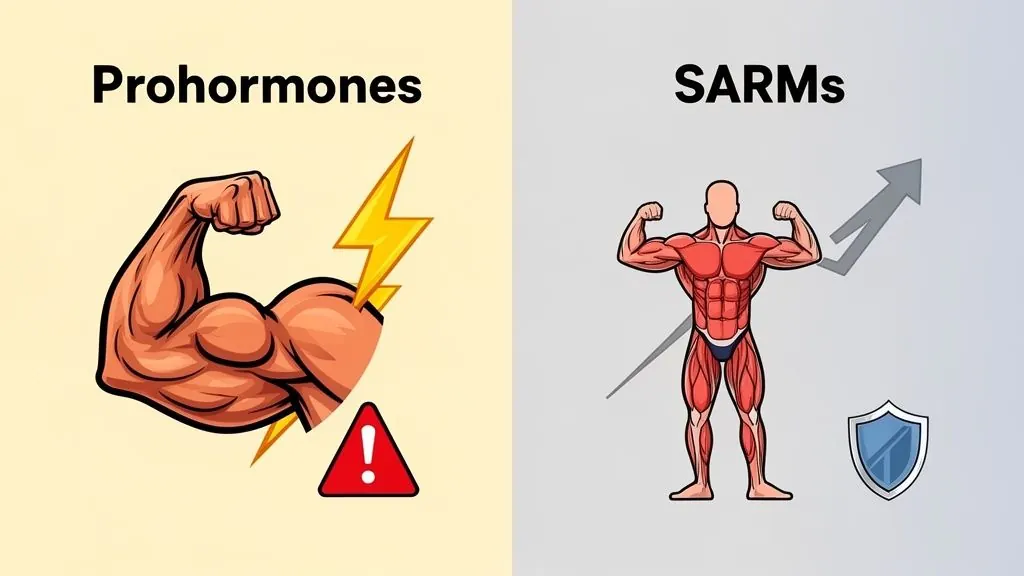
The Shift From Anabolic Precursors to Selective Modulators
To really get to the bottom of the prohormones vs. SARMs debate, you have to understand where they came from. Their origins couldn't be more different. The story really kicks off in the late 1990s when prohormones first hit the scene as a clever way to sidestep anabolic steroid laws. These compounds were specifically engineered to be just one molecular conversion away from a powerful anabolic hormone, which let them exist in a legal gray area for a while.
Their popularity exploded, especially after some high-profile athletes were connected to them. Of course, that kind of mainstream attention brought the hammer down. By 2004, the Anabolic Steroid Control Act reclassified most of the popular prohormones as Schedule III controlled substances. Just like that, they were wiped from supplement shelves and the whole market was pushed underground. To get a better sense of these anabolic precursors, looking into specific examples like DHEA Sulphate can offer some helpful context.
The Rise of a New Scientific Approach
That legal crackdown on prohormones left a huge vacuum, creating the perfect opening for a totally different kind of compound to gain a foothold. Unlike prohormones, SARMs weren’t invented to exploit market loopholes; they were born in pharmaceutical research labs. Scientists had a clear goal: design molecules that could deliver the muscle-building benefits of androgens without all the nasty side effects on tissues like the prostate and skin. This is the critical distinction—one was market-driven, the other was research-driven.
The entire philosophy behind SARMs was tissue selectivity. Instead of causing a hormonal flood like prohormones do, the idea was to achieve precision, activating androgen receptors in muscle and bone while leaving other tissues alone.
Clinical trials on SARMs started getting noticed around 2007. Compounds like Ostarine began showing real promise for helping elderly patients increase lean mass with far fewer androgenic problems. This was a major change in direction, moving away from the brute-force chemical approach of prohormones toward the targeted action of selective modulators. You can dive deeper into a related topic in our guide on anabolic steroids vs SARMs.
This history is exactly why the performance enhancement landscape changed so drastically. The fall of prohormones, which basically acted like oral steroids, paved the way for SARMs—a family of compounds built on a completely different scientific foundation.
How Each Compound Works Inside Your Body
When you get down to it, the core difference between prohormones and SARMs is how they function once they're in your system. They take fundamentally different routes to achieve similar goals, and that's where the nuance really lies.
Prohormones are essentially precursors. Think of them as raw ingredients that your body's natural enzymes have to process and convert into fully-fledged anabolic hormones. This conversion process is what kicks things into gear.
The problem? It's a shotgun approach. Once converted, those new hormones don't just go to your muscles. They flood your entire system, binding to androgen receptors everywhere—muscle, bone, liver, prostate, you name it. This is why they can deliver rapid results but also come with a heavy-handed list of side effects that mirror traditional steroids.
A Tale of Two Receptors
SARMs, on the other hand, play a completely different game. They don't need any conversion; they are active right out of the gate. Their design allows them to bind directly to androgen receptors.
The key selling point here is tissue selectivity. The entire concept is to create a compound that primarily targets the receptors in muscle and bone tissue while leaving other areas, like the prostate or scalp, alone.
This is why they're called Selective Androgen Receptor Modulators. You can dive deeper into what SARMs are and how they work in our dedicated guide. Of course, this selectivity isn't perfect—no compound is—and they absolutely still come with their own set of health risks.
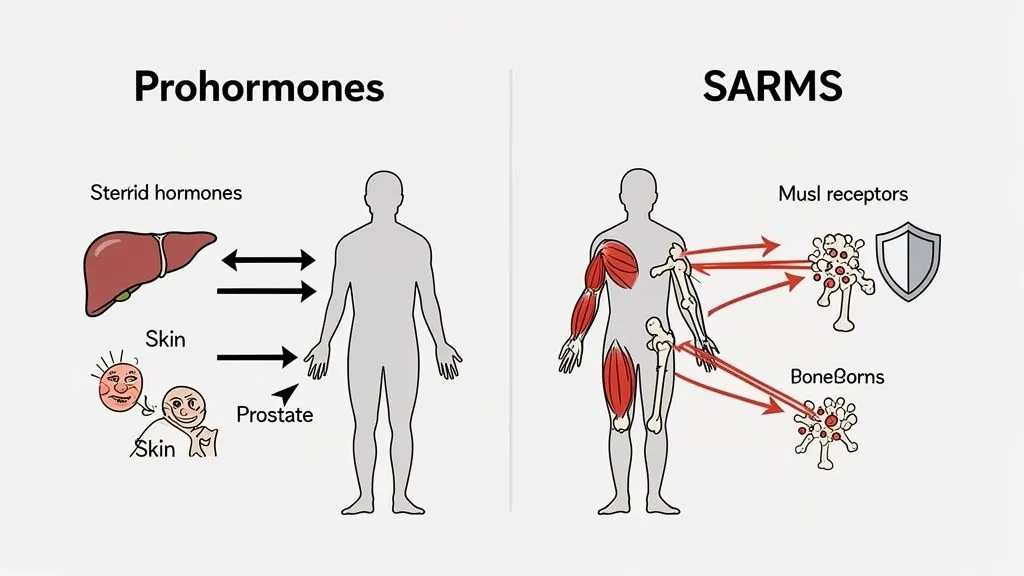
To really see the contrast, it helps to put their mechanisms side-by-side.
Mechanism Comparison Prohormones vs SARMs
| Attribute | Prohormones | SARMs (Selective Androgen Receptor Modulators) |
|---|---|---|
| Primary Action | Indirect; requires enzymatic conversion to become active. | Direct; binds to androgen receptors without needing conversion. |
| Specificity | Non-selective; creates a systemic hormonal increase affecting all tissues. | Tissue-selective; designed to primarily target muscle and bone receptors. |
| Biological Target | All androgen-sensitive tissues (muscle, prostate, skin, liver). | Primarily androgen receptors in skeletal muscle and bone. |
Ultimately, this table highlights the central trade-off: the broad, powerful, but messy action of prohormones versus the more targeted, refined, but still risky approach of SARMs.
Real-World Muscle and Strength Gains: What to Expect
When you're trying to decide between prohormones and SARMs, the most important question is pretty simple: what kind of results are we actually talking about? The answer really boils down to a classic trade-off: speed and raw size versus quality and sustainability.
Prohormones have a well-earned reputation for delivering dramatic, almost shockingly fast changes in both size and strength. It’s not rare to hear about guys packing on 15-20 pounds in a single cycle.
But there’s a catch. A good chunk of that new weight is just water retention, which can leave you looking more "puffy" than chiseled. While the numbers on the scale and the weights on the bar jump up, that progress can be fleeting. Once the cycle ends, a lot of that water weight—and the size that came with it—tends to vanish.
The Quality of the Gains
SARMs play a different game entirely. The progress is more gradual and controlled, with users typically reporting gains in the neighborhood of 5-10 pounds of lean muscle over a cycle.
This isn't just a number on the scale; it's high-quality, dense muscle tissue. Because these gains aren't artificially inflated by water, they are far easier to hold onto after you finish your cycle. For anyone focused on long-term results, this slower, steadier approach often wins out because it’s building real, lasting muscle.
It really comes down to this: Prohormones can give you a massive, rapid, but often temporary surge. SARMs are designed for building solid, sustainable lean muscle that you can actually keep.
How This Translates to Strength
The difference in strength gains mirrors the difference in size. Prohormones can trigger an explosive jump in your lifts, letting you blast past old personal records in a hurry. This is a direct result of their powerful, system-wide hormonal impact.
SARMs will also make you significantly stronger, but the climb is more linear and methodical. You’re building functional strength that’s directly tied to the new muscle you’re growing.
Of course, neither of these compounds works in a vacuum. They amplify your hard work in the gym, which is why understanding the fundamental principles of progressive resistance training is so crucial. Ultimately, your choice depends on your goal: are you chasing a rapid, short-term peak, or are you building a stronger, more muscular physique that’s meant to last?
A Realistic Look at Side Effects and Health Risks
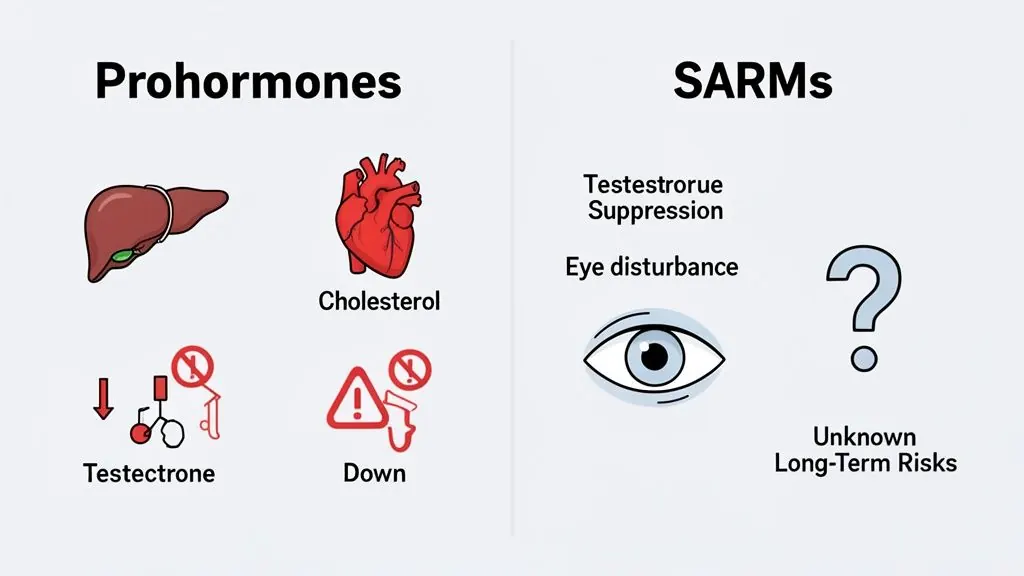
Let's cut to the chase: when we're talking about prohormones vs SARMs, we have to have a serious conversation about the risks. Neither of these compounds is a free ride, and anyone considering them needs to go in with their eyes wide open.
Prohormones, especially the old-school methylated ones, have a reputation for a reason. They're notorious for side effects that walk and talk just like anabolic steroids. Because they don't just target muscle, they hit your whole system, opening the door to a lot of collateral damage.
The Clear Dangers of Prohormones
The risks that come with prohormones aren't theoretical; they're well-documented and can be severe. These compounds convert into powerful hormones that flood your body, which is why the potential for things to go wrong is so high.
Here's what you're up against:
- Liver Toxicity: Many prohormones are methylated, which means your liver has to work overtime to process them. This puts a huge strain on the organ and can lead to serious, long-term damage.
- Cardiovascular Strain: They can completely wreck your cholesterol profile. We’re talking about sending your LDL ("bad" cholesterol) through the roof while tanking your HDL ("good" cholesterol), which is a recipe for heart problems down the line.
- Hormonal Shutdown: Prohormones will shut down your body's natural testosterone production—hard. Getting your system back online almost always requires an aggressive post-cycle therapy (PCT).
Understanding the Risks of SARMs
SARMs came onto the scene with the promise of a better safety profile, but let's be clear: "better" isn't the same as "safe." These are still experimental chemicals that haven't been approved for people to use, and we just don't have the long-term data on what they do to the human body over years.
While SARMs are more selective, they are not without significant drawbacks. They still suppress natural testosterone production, and the absence of long-term human safety data means users are navigating uncharted territory.
We do know SARMs cause significant testosterone suppression, and you'll absolutely need a proper PCT to recover. Some specific compounds carry unique risks, too. For instance, Andarine (S-4) is known for causing vision disturbances, like seeing a yellow tint or having trouble with night vision. You can read more about these issues in our complete guide to SARM side effects.
At the end of the day, you're choosing between two risky paths. With prohormones, you face a known set of high-risk, steroid-like consequences. With SARMs, the immediate risks might seem lower, but you're rolling the dice on a substance with a lot of long-term unknowns.
Choosing Between Prohormones and SARMs: It's All About Your Goals and Risk Tolerance
So, which one is right for you? The honest answer is that there's no single "better" choice between prohormones and SARMs. It really comes down to what you want to achieve, your experience level, and frankly, how much risk you’re comfortable taking on.
Let’s be blunt: if your only goal is to pack on as much mass and strength as humanly possible, as fast as you can, prohormones are the heavy hitters. They deliver on that promise, but the reward comes with a serious price. The risk profile is high, walking a fine line with traditional anabolic steroids, and should only be considered by seasoned veterans who know exactly what they’re getting into, both medically and legally.
Building for the Long Haul
On the other hand, if your focus is on building quality, lean muscle that you can actually keep, SARMs start to look like the more sensible option. Their action is more targeted, which generally means a more controlled path to muscle growth with a lower (but definitely not zero) risk of side effects.
This approach tends to appeal to people who value sustainable progress over a rapid, but potentially temporary, transformation. They’re willing to play the long game.
Ultimately, you're looking at a classic trade-off. Prohormones are the aggressive, high-stakes route to raw size, while SARMs offer a more measured approach to lean, sustainable gains. Neither should be taken lightly.
At the end of the day, this decision is about more than just what happens in the gym—it’s about your long-term health. Before you even think about starting either, do your homework and have a serious conversation with a medical professional. That’s the only way to make a truly informed choice.
Prohormones vs. SARMs: Answering Your Top Questions
When you're digging into the world of performance enhancers, you're bound to have questions. It’s smart to be asking them. Let's clear up some of the most common points of confusion around prohormones and SARMs, especially when it comes to legality, recovery, and safety.
This quick decision guide can help you visualize the initial choice: are you chasing maximum mass with prohormones, or are you after leaner, more defined gains with SARMs?
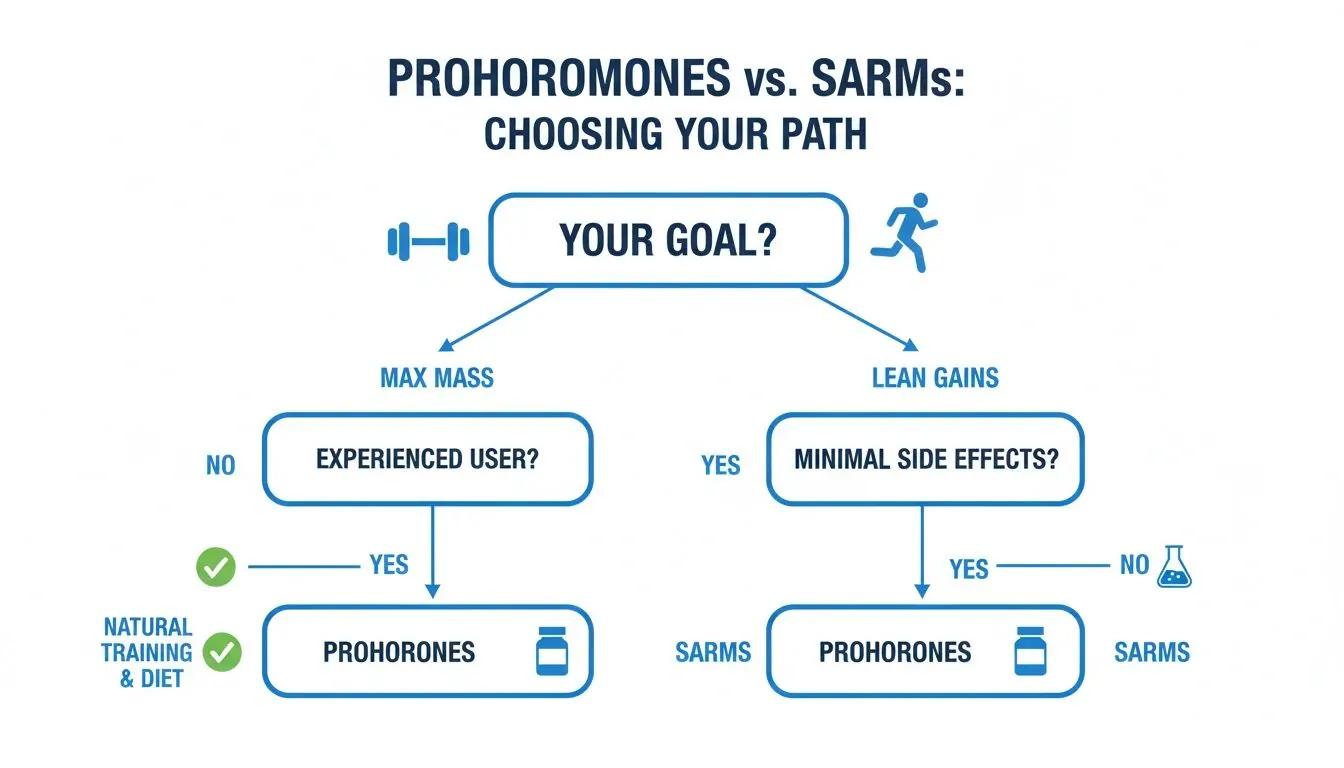
As the flowchart shows, the first question you need to answer is about your primary goal. That will point you in the right direction—whether it's toward a specific compound or sticking with natural training.
Are Prohormones and SARMs Legal to Buy?
This is where things get complicated, as the legal status is murky and location-dependent. In the United States, the most effective prohormones were reclassified as controlled substances under the Anabolic Steroid Control Act. This makes them illegal to sell as dietary supplements.
SARMs exist in a different legal territory. Since they aren't approved for human use, they are often sold with a disclaimer like "for research purposes only." This creates a significant legal gray area, making their purchase and use for personal fitness goals legally risky.
Is Post-Cycle Therapy (PCT) Necessary for Both?
Yes, absolutely. This part is non-negotiable. Both types of compounds interfere with and suppress your body's natural ability to produce testosterone.
Prohormones are generally the bigger offenders here. Their powerful, systemic effects almost always require a serious Post-Cycle Therapy (PCT) protocol to help your body get its hormonal balance back on track.
Even though some SARMs cycles might cause less suppression, a proper PCT is still a critical step. Skipping it is asking for trouble. A good PCT ensures you recover fully and avoid the lasting negative side effects that come with low testosterone levels after a cycle.
A quick word of warning: Combining prohormones and SARMs is an extremely high-risk strategy that I strongly advise against. Stacking them will multiply the hormonal suppression and dramatically increase the likelihood of severe, unpredictable side effects. We're talking serious potential for liver and cardiovascular damage.
At Lindy Health, we focus on building a stronger, healthier you with protocols grounded in solid evidence and expert guidance. If you want to optimize your health with a plan built for you, check out our coaching programs at https://lindyhealth.com.
Further reading
- Sarcopenia.Joint Bone Spine 2019.PubMed 30098424 · doi:10.1016/j.jbspin.2018.08.001
- Testosterone Replacement Therapy in Hypogonadal Men.Endocrinol Metab Clin North Am 2022.PubMed 35216722 · doi:10.1016/j.ecl.2021.11.005
- Testosterone prohormone supplements.Med Sci Sports Exerc 2006.PubMed 16888459 · doi:10.1249/01.mss.0000228928.69512.2e
- Performance-Enhancing Drugs in Healthy Athletes: An Umbrella Review of Systematic Reviews and Meta-analyses.Sports Health 2024.PubMed 37688400 · doi:10.1177/19417381231197389
- Androgens and antiandrogens.Ann N Y Acad Sci 2003.PubMed 14644837 · doi:10.1196/annals.1290.033
- Vitamin D therapy.Curr Osteoporos Rep 2008.PubMed 18430394 · doi:10.1007/s11914-008-0002-z
- Therapeutic advances in sarcopenia management: From traditional interventions to personalized medicine.Clin Nutr 2025.PubMed 40580805 · doi:10.1016/j.clnu.2025.06.007
- Novel Therapy for Male Hypogonadism.Curr Urol Rep 2018.PubMed 29886559 · doi:10.1007/s11934-018-0816-x
Literature retrieved from PubMed on October 16, 2026, favouring human studies and reviews. Numbered markers in the text show which paper supports which statement; uncited entries are background reading.