Is Tesamorelin legal?
FDA approved- FDA status
- Tesamorelin is FDA approved for: Reduction of excess abdominal fat in HIV-infected patients with lipodystrophy.
- Compounding
- It is a prescription medicine. Use outside the approved indication is off-label and a clinician’s decision. Compounded copies are restricted when the approved product is available.
- Prescription
- A licensed US clinician can prescribe Tesamorelin.
- Sport
- Prohibited in sport under the World Anti-Doping Agency list.
US status checked October 2026 against FDA’s compounding lists. Sources at the foot of the page.
What is tesamorelin?
Tesamorelin is a synthetic version of growth hormone-releasing hormone (GHRH), the signal the brain uses to tell the pituitary gland to release growth hormone. It was developed by the Canadian company Theratechnologies under the code name TH9507 and is sold in the US as Egrifta.
The FDA approved tesamorelin in November 2010 to reduce excess abdominal fat in people with HIV who have lipodystrophy, a condition in which fat builds up around the organs, often linked to older antiretroviral drugs.6 It was the first, and for years the only, treatment approved for that use.5 Newer formulations, Egrifta SV and Egrifta WR, are easier to prepare than the original product.
Outside that approved use, tesamorelin has become popular in anti-aging, body composition and telehealth clinics as a way to raise growth hormone without injecting growth hormone itself. A 2026 sports medicine review lists it among the peptides now marketed directly to patients.4 That off-label market is much larger than the evidence behind it.
- Anecdotal only
- In vitro only
- Animal models only
- Preliminary human
- Clinical trials
- Regulator approved
How tesamorelin works
Your body releases growth hormone in pulses, mostly during sleep, when the hypothalamus sends GHRH to the pituitary. Tesamorelin mimics that signal. The pituitary responds by releasing more of its own growth hormone, which in turn raises IGF-1, a hormone made mainly in the liver. Growth hormone breaks down stored fat, and in people with HIV lipodystrophy this effect falls most heavily on deep belly fat around the organs.
Because tesamorelin works through the pituitary rather than replacing growth hormone, the body's normal feedback controls stay partly in place. That is one reason it is studied separately from direct growth hormone therapy.
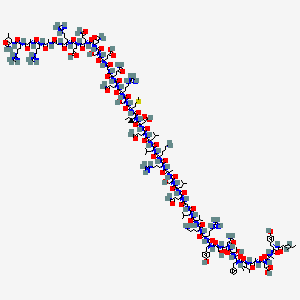
In more precise terms, tesamorelin is the full 44-amino-acid sequence of human GHRH with a trans-3-hexenoyl group attached to the N-terminus. Native GHRH is broken down within minutes by dipeptidyl peptidase-4. The added group slows that breakdown and extends activity, although the half-life is still well under an hour. Tesamorelin binds the GHRH receptor on pituitary somatotrophs and increases pulsatile growth hormone secretion. Reviews of growth hormone secretagogues describe their downstream effects as running through IGF-1 signaling.1 The preferential loss of visceral rather than subcutaneous fat is the clinically important finding.5
GHRH analogues such as sermorelin, tesamorelin and CJC-1295 mimic the hypothalamic GHRH signal, so the pituitary releases more of its own growth hormone.
What the research shows on tesamorelin
The strongest evidence comes from two 26-week phase 3 trials in people with HIV and central fat accumulation. Tesamorelin, given at 2 mg once daily, reduced visceral fat and waist circumference compared with placebo, and improved some measures of body image.6 It did not meaningfully change fat under the skin. The visceral fat reduction held for patients who continued treatment to week 52, but fat returned when treatment stopped.5
A 2026 meta-analysis pooled five randomized trials against placebo in adults with HIV. Tesamorelin reduced visceral fat by about 28 square centimeters on imaging, cut trunk fat by about 1.2 kg and lowered liver fat by about 4 percentage points. Lean body mass rose by about 1.4 kg. There was no significant change in BMI, subcutaneous fat or CD4 counts.3 Those liver fat results are why tesamorelin is studied in fatty liver disease linked to HIV.
Researchers are also testing it for other HIV-related problems, including cognitive complications, and results were presented at the 2024 Conference on Retroviruses and Opportunistic Infections.8 That work is early.
The limits are important. Almost all the controlled data come from people with HIV, many of them on older antiretroviral regimens. There are few trials in people without HIV, and none show that tesamorelin slows aging or improves lifespan. For orthopedic and sports uses, a 2026 primer found no supporting evidence at all.2 The pivotal trials were sponsored by the manufacturer.
Studied for: HIV-associated lipodystrophy, Visceral fat reduction, NAFLD research.
Tesamorelin reference data
| Molecular weight | 5,135.9 Da |
|---|---|
| CAS number | 218949-48-5 |
| FDA status | Reduction of excess abdominal fat in HIV-infected patients with lipodystrophy |
| Prohibited in sport | Yes, under the WADA prohibited list |
Tesamorelin dosage in published research
Once daily · usually run for about 26 weeks. A reference pattern, not a prescription.
Open this in the dosage calculator ↗
How tesamorelin is used in practice
In approved use, tesamorelin is prescribed by HIV specialists and dispensed through specialty pharmacies. It is injected under the skin of the abdomen once daily. The label suggests checking whether visceral fat has responded after about six months and stopping it in people who have not responded. Cost has long been a barrier, and early reviews flagged price and limited long-term data as practical limits.6
Off label, telehealth and anti-aging clinics prescribe tesamorelin for belly fat, body recomposition and general vitality, often in people without HIV. Some use the branded product. Others use compounded versions, which have not been reviewed by the FDA for quality or consistency. Research-chemical vendors also sell it, with the same purity and labeling problems seen across the gray peptide market.
Because tesamorelin raises IGF-1, careful prescribers check IGF-1 and blood glucose at baseline and during treatment. It is prohibited in competitive sport.
Tesamorelin risks and side effects
The common side effects track what you would expect from more growth hormone: joint pain, muscle aches, tingling or numbness, swelling of the hands and feet, and injection-site redness or itching.3 In the phase 3 trials, serious adverse events occurred in under 4% of patients over 26 weeks.5
Glucose is the main metabolic concern. The pooled trial data did not show a meaningful change in blood sugar, but the label warns that tesamorelin can worsen glucose tolerance, and people with diabetes may need their medications adjusted. Higher IGF-1 levels also raise a theoretical concern about cancer growth. Tesamorelin should not be used with active cancer, in pregnancy, or in people whose hypothalamic-pituitary axis has been disrupted by surgery, radiation or a pituitary tumor.
Growth hormone can change how the liver clears some drugs, so levels of certain medications, such as simvastatin, may fall. Long-term safety beyond about a year of use is not well characterized. Compounded or gray-market product adds the usual risks of wrong dose, contamination and poor sterility.
Reported side effects
Alternatives to tesamorelin
For excess abdominal fat in HIV, options include reviewing the antiretroviral regimen with an HIV specialist, diet and exercise, and treating related conditions such as diabetes. GLP-1-based drugs such as semaglutide and tirzepatide produce larger total weight loss than tesamorelin, though they act on overall fat rather than selectively on visceral fat.
For fatty liver disease, resmetirom (Rezdiffra) and semaglutide (Wegovy) are FDA approved for adults with MASH and moderate to advanced liver fibrosis.
For confirmed adult growth hormone deficiency, recombinant growth hormone is the approved treatment. Sermorelin and CJC-1295 are often marketed as cheaper GHRH alternatives, but neither has tesamorelin's controlled trial record.
The bottom line on tesamorelin
Tesamorelin is one of the few growth hormone secretagogues with solid randomized trial evidence and an FDA approval. In people with HIV lipodystrophy it reliably reduces visceral and liver fat, as long as treatment continues. Outside that group, especially for anti-aging or athletic goals, the evidence is thin and the claims run well ahead of it.
Questions for a clinician
- What evidence applies to my situation, and at what level?
- What established alternatives should I consider first?
- What monitoring would be necessary, and how often?
Tesamorelin FAQ
What is Tesamorelin?
A stabilised GHRH analog and the only growth-hormone secretagogue with a current FDA approval for a body-composition indication. It is classed as GHRH analogs.
Is Tesamorelin FDA approved?
Yes. Tesamorelin is FDA approved for: Reduction of excess abdominal fat in HIV-infected patients with lipodystrophy.
Is Tesamorelin legal in the US?
Tesamorelin is FDA approved for: Reduction of excess abdominal fat in HIV-infected patients with lipodystrophy. It is a prescription medicine. Use outside the approved indication is off-label and a clinician’s decision. Compounded copies are restricted when the approved product is available.
What dose of Tesamorelin is used in research?
Published research and practitioner protocols report 1-2 mg, once daily, typically for 26 weeks. This is a reference range, not a recommendation; dosing should be set by a licensed clinician.
How is Tesamorelin reconstituted?
A 2 mg vial mixed with 2 mL of bacteriostatic water gives 1.0 mg/mL. At that concentration 1 mg is 100.0 units on a 100-unit insulin syringe.
What are the side effects of Tesamorelin?
Reported side effects include arthralgia, injection-site reactions, peripheral oedema, myalgia, impaired glucose tolerance. Contraindications: active malignancy, pregnancy, disruption of the hypothalamic-pituitary axis.
What is the half-life of Tesamorelin?
The reported half-life of Tesamorelin is ~26-38 minutes.
Is Tesamorelin banned in sport?
Yes. Tesamorelin falls under the World Anti-Doping Agency prohibited list.
Which telehealth clinics prescribe Tesamorelin?
Clinics in our directory that list Tesamorelin include OneTwenty, Marek Health, Ways2Well. Each is scored on our published rubric.
References
Regulatory and primary sources
- FDA: Bulk drug substances that may present significant safety risks (Category 2 and withdrawn nominations) ↗ · content current as of April 22, 2026; checked October 18, 2026
- FDA: Bulk drug substances used in compounding under section 503A ↗ · how the 503A categories work
- PubChem compound record (CID 16137828) ↗ · structure, identifiers, synonyms
- DailyMed: FDA-approved labeling for Tesamorelin ↗ · indications, dosing, warnings as approved
- FDA Drugs@FDA database ↗ · approval history
- WADA Prohibited List ↗ · current year
- CAS Registry Number 218949-48-5 ↗ · chemical identity
Published literature
- Therapeutic Peptides in Orthopaedics: Applications, Challenges, and Future Directions.J Am Acad Orthop Surg Glob Res Rev 2026.PubMed 41490200 · doi:10.5435/JAAOSGlobal-D-25-00236
- Injectable Peptide Therapy: A Primer for Orthopaedic and Sports Medicine Physicians.Am J Sports Med 2026.PubMed 41476424 · doi:10.1177/03635465251357593
- Body composition, hepatic fat, metabolic, and safety outcomes of Tesamorelin, a GHRH analogue, in HIV-associated lipodystrophy: A meta-analysis of randomized controlled trials.Obes Res Clin Pract 2026.PubMed 41545261 · doi:10.1016/j.orcp.2026.01.002
- Safety and Efficacy of Approved and Unapproved Peptide Therapies for Musculoskeletal Injuries and Athletic Performance.Sports Med 2026.PubMed 41966639 · doi:10.1007/s40279-026-02437-0
- Tesamorelin: a review of its use in the management of HIV-associated lipodystrophy.Drugs 2011.PubMed 21668043 · doi:10.2165/11202240-000000000-00000
- Tesamorelin: a growth hormone-releasing factor analogue for HIV-associated lipodystrophy.Ann Pharmacother 2012.PubMed 22298602 · doi:10.1345/aph.1Q629
- Therapeutic Peptides in Aesthetic, Metabolic and Endocrine Conditions: Effects, Safety, Clinical Applications, and Future Perspectives.Int J Mol Sci 2026.PubMed 42123471 · doi:10.3390/ijms27093890
- CROI 2024: Neuropsychiatric Complications in People With HIV.Top Antivir Med 2024.PubMed 39746672
Literature retrieved from PubMed on October 16, 2026, favouring human studies and reviews. Numbered markers in the text show which paper supports which statement; uncited entries are background reading.