Is Sermorelin legal?
FDA approved · US product discontinued- FDA status
- Sermorelin is FDA approved for: Diagnostic assessment of pituitary GH secretory capacity (Geref); Treatment of idiopathic growth hormone deficiency in children with growth failure (Geref, approved 1997; discontinued by the manufacturer in 2008, not for safety reasons).
- Compounding
- The branded US product is no longer marketed. Some clinics prescribe compounded versions; ask the prescriber which pharmacy makes it and how it is tested.
- Prescription
- A licensed US clinician can prescribe Sermorelin.
- Sport
- Prohibited in sport under the World Anti-Doping Agency list.
US status checked October 2026 against FDA’s compounding lists. Sources at the foot of the page.
What is sermorelin?
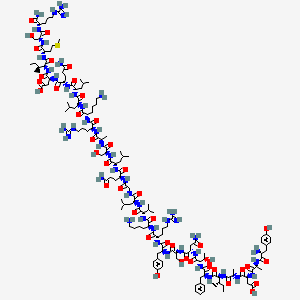
Sermorelin is a synthetic version of the first 29 amino acids of growth hormone-releasing hormone (GHRH), the hypothalamic hormone that tells the pituitary gland to release growth hormone. This 29-amino-acid fragment, sometimes called GRF 1-29, is the shortest piece of GHRH that keeps full biological activity.
Serono marketed sermorelin in the US as Geref. It was used as a diagnostic test of the pituitary's ability to release growth hormone and to treat children with growth hormone deficiency. Serono stopped making Geref in 2008, and the FDA later determined that the product was not withdrawn for safety or effectiveness reasons. Since then, sermorelin has been available in the US mainly through compounding pharmacies.
Today it is best known as an 'anti-aging' or wellness peptide, prescribed by men's health, longevity and telehealth clinics for energy, sleep, body composition and recovery. Those uses were never part of its approved labeling.
- Anecdotal only
- In vitro only
- Animal models only
- Preliminary human
- Clinical trials
- Regulator approved
How sermorelin works
Growth hormone is released in pulses, mostly during deep sleep, under the control of two brain signals: GHRH, which turns release on, and somatostatin, which turns it off. Sermorelin mimics the 'on' signal. It prompts the pituitary to make and release its own growth hormone, which then raises IGF-1, the hormone that carries out many of growth hormone's effects. Because the body's own brakes still work, levels are less likely to climb as high as with injected growth hormone.
Technically, sermorelin is GHRH(1-29)-NH2. It binds the GHRH receptor, a G-protein-coupled receptor on somatotroph cells of the anterior pituitary, increasing cAMP and stimulating both synthesis and pulsatile secretion of growth hormone. Its half-life is only about 10 to 20 minutes, so it produces a short pulse rather than sustained exposure. Release remains subject to negative feedback from somatostatin and IGF-1, and the response depends on a functioning pituitary. Reviews classify sermorelin with other growth hormone secretagogues that act through the IGF-1 axis1.
GHRH analogues such as sermorelin, tesamorelin and CJC-1295 mimic the hypothalamic GHRH signal, so the pituitary releases more of its own growth hormone.
What the research shows on sermorelin
The strongest human data are old and relate to its original uses. As a diagnostic agent, intravenous Geref was used to test pituitary growth hormone reserve, including in research on how cranial irradiation affects growth hormone secretion7 and how high-altitude living changes pituitary responses5. In both, sermorelin served as a tool to provoke growth hormone release, not as a treatment.
As a treatment for children with growth hormone deficiency, sermorelin worked for some but not all. In one follow-up study, 27 children who left a Geref trial, mostly because their growth rate was inadequate, were switched to recombinant growth hormone and responded well8. That pattern is a key reason recombinant growth hormone, not sermorelin, became standard care for childhood deficiency.
For adults, the case rests largely on small studies and expert opinion. A 2006 commentary argued that sermorelin might be a better approach to adult-onset growth hormone insufficiency than direct growth hormone replacement because it preserves feedback control4. Small older trials in older adults reported modest rises in growth hormone and IGF-1, with inconsistent effects on body composition, strength or wellbeing. There are no large, modern randomized trials showing that sermorelin improves sleep, body fat, muscle, recovery or longevity in healthy adults.
Recent reviews of peptide use in sport and musculoskeletal medicine list sermorelin among peptides promoted for recovery and performance, and conclude that rigorous human evidence for those uses is lacking26.
Studied for: Growth hormone deficiency diagnosis and paediatric treatment, Age-related GH decline, Sleep quality, Body composition.
Sermorelin reference data
| Sequence | YADAIFTNSYRKVLGQLSARKLLQDIMSR |
|---|---|
| Molecular weight | 3,357.9 Da |
| CAS number | 86168-78-7 |
| FDA status | Diagnostic assessment of pituitary GH secretory capacity (Geref); Treatment of idiopathic growth hormone deficiency in children with growth failure (Geref, approved 1997; discontinued by the manufacturer in 2008, not for safety reasons) |
| Prohibited in sport | Yes, under the WADA prohibited list |
Sermorelin dosage in published research
Once daily at bedtime · usually run for about 12 weeks. A reference pattern, not a prescription.
Open this in the dosage calculator ↗
How sermorelin is used in practice
In current US practice, sermorelin is mostly prescribed by wellness, anti-aging and telehealth clinics and dispensed by compounding pharmacies as a powder that is mixed with sterile water for injection. It is usually injected under the skin at bedtime to coincide with the natural nighttime growth hormone pulse, often for courses of several months. Some clinics check IGF-1 before and during treatment, others do not. Compounded sermorelin is not FDA-approved, so its quality depends on the pharmacy. Clinics often combine it with growth hormone-releasing peptides such as ipamorelin, on the theory that the two signals work together. Those combinations have even less clinical data than sermorelin alone.
Sermorelin is also sold by research-peptide websites, where identity, purity and sterility are unverified. Reviews of the gray market note that products are often mislabeled or contaminated6. Athletes should know that GHRH and its analogs, including sermorelin, are prohibited by the World Anti-Doping Agency, and laboratories have developed methods to detect sermorelin and its metabolites in urine3.
Sermorelin risks and side effects
Short-term side effects are usually mild: redness, swelling or pain at the injection site, flushing, headache and occasional dizziness. Allergic reactions are possible.
Longer-term risks mirror the concerns with raising growth hormone and IGF-1: fluid retention, joint pain, reduced insulin sensitivity and, in theory, promotion of existing tumors, which is why active cancer is a contraindication. Glucocorticoids, somatostatin analogs and thyroid status can change the response. Sermorelin should not be used in pregnancy. Because it relies on a working pituitary, it does little for people whose pituitary is damaged, and using it without proper testing can delay the diagnosis of a real hormone problem.
The biggest unknown is long-term use in healthy adults, which has never been studied properly. Reviews of peptide use in sport warn of possible insulin resistance and other metabolic harms with unsupervised use, and of an unregulated supply chain6.
Reported side effects
Alternatives to sermorelin
For confirmed growth hormone deficiency in children or adults, FDA-approved recombinant growth hormone (somatropin) and long-acting versions such as somapacitan, somatrogon and lonapegsomatropin are the standard of care. Macimorelin (Macrilen) is an approved oral test for adult growth hormone deficiency. Tesamorelin (Egrifta), a GHRH analog, is FDA-approved for reducing excess abdominal fat in people with HIV-associated lipodystrophy.
For the goals clinics usually target, such as better sleep, more muscle and less fat, the best-evidenced options are resistance training, adequate protein, weight loss where appropriate, consistent sleep habits and treatment of sleep apnea. Low testosterone, thyroid disease and depression should be ruled out when fatigue is the main complaint.
The bottom line on sermorelin
Sermorelin is a well-characterized GHRH analog with a real history as an approved drug, and it does raise growth hormone in people with a working pituitary. What it lacks is good evidence that this helps healthy adults. Compounded use for anti-aging is legal but rests on a plausible mechanism, not proven outcomes.
Questions for a clinician
- What evidence applies to my situation, and at what level?
- What established alternatives should I consider first?
- What monitoring would be necessary, and how often?
Sermorelin FAQ
What is Sermorelin?
The first 29 amino acids of endogenous growth-hormone-releasing hormone, and the shortest fragment that retains full biological activity. It is classed as GHRH analogs.
Is Sermorelin FDA approved?
Yes. Sermorelin is FDA approved for: Diagnostic assessment of pituitary GH secretory capacity (Geref); Treatment of idiopathic growth hormone deficiency in children with growth failure (Geref, approved 1997; discontinued by the manufacturer in 2008, not for safety reasons).
Is Sermorelin legal in the US?
Sermorelin is FDA approved for: Diagnostic assessment of pituitary GH secretory capacity (Geref); Treatment of idiopathic growth hormone deficiency in children with growth failure (Geref, approved 1997; discontinued by the manufacturer in 2008, not for safety reasons). The branded US product is no longer marketed. Some clinics prescribe compounded versions; ask the prescriber which pharmacy makes it and how it is tested.
What dose of Sermorelin is used in research?
Published research and practitioner protocols report 200-500 mcg, once daily at bedtime, typically for 12 weeks. This is a reference range, not a recommendation; dosing should be set by a licensed clinician.
How is Sermorelin reconstituted?
A 5 mg vial mixed with 2 mL of bacteriostatic water gives 2.5 mg/mL. At that concentration 200 mcg is 8.0 units on a 100-unit insulin syringe.
What are the side effects of Sermorelin?
Reported side effects include injection-site erythema, flushing, headache, transient dizziness. Contraindications: active malignancy, pregnancy, known hypersensitivity.
What is the half-life of Sermorelin?
The reported half-life of Sermorelin is ~10-20 minutes.
Is Sermorelin banned in sport?
Yes. Sermorelin falls under the World Anti-Doping Agency prohibited list.
Which telehealth clinics prescribe Sermorelin?
Clinics in our directory that list Sermorelin include OneTwenty, Marek Health, Defy Medical, Ways2Well, Blokes, Joi. Each is scored on our published rubric.
References
Regulatory and primary sources
- FDA: Bulk drug substances that may present significant safety risks (Category 2 and withdrawn nominations) ↗ · content current as of April 22, 2026; checked October 18, 2026
- FDA: Bulk drug substances used in compounding under section 503A ↗ · how the 503A categories work
- PubChem compound record (CID 16132413) ↗ · structure, identifiers, synonyms
- DailyMed: FDA-approved labeling for Sermorelin ↗ · indications, dosing, warnings as approved
- FDA Drugs@FDA database ↗ · approval history
- WADA Prohibited List ↗ · current year
- CAS Registry Number 86168-78-7 ↗ · chemical identity
Published literature
- Therapeutic Peptides in Orthopaedics: Applications, Challenges, and Future Directions.J Am Acad Orthop Surg Glob Res Rev 2026.PubMed 41490200 · doi:10.5435/JAAOSGlobal-D-25-00236
- Safety and Efficacy of Approved and Unapproved Peptide Therapies for Musculoskeletal Injuries and Athletic Performance.Sports Med 2026.PubMed 41966639 · doi:10.1007/s40279-026-02437-0
- Advances in the detection of growth hormone releasing hormone synthetic analogs.Drug Test Anal 2021.PubMed 34665524 · doi:10.1002/dta.3183
- Sermorelin: a better approach to management of adult-onset growth hormone insufficiency?.Clin Interv Aging 2006.PubMed 18046908 · doi:10.2147/ciia.2006.1.4.307
- The effects of high altitude on hypothalamic-pituitary secretory dynamics in men.Clin Endocrinol (Oxf) 1995.PubMed 7641401 · doi:10.1111/j.1365-2265.1995.tb01887.x
- A new era of doping? Use of peptide and peptide-analog drugs in recreational and professional sport and bodybuilding: a critical review.J Sports Med Phys Fitness 2026.PubMed 41880199 · doi:10.23736/S0022-4707.26.17773-1
- The impact of cranial irradiation on GH responsiveness to GHRH plus GH-releasing peptide-6.J Clin Endocrinol Metab 2002.PubMed 11994347 · doi:10.1210/jcem.87.5.8485
- Outcome of growth hormone therapy in children with growth hormone deficiency showing an inadequate response to growth hormone-releasing hormone.Endocrine 2001.PubMed 11572326 · doi:10.1385/ENDO:15:1:051
Literature retrieved from PubMed on October 16, 2026, favouring human studies and reviews. Numbered markers in the text show which paper supports which statement; uncited entries are background reading.