Is ARA-290 legal?
Not FDA approved- FDA status
- ARA-290 is not FDA approved and is not on FDA’s 503A bulks list.
- Compounding
- US compounding pharmacies cannot routinely prepare it.
- Prescription
- There is no approved US prescription product for ARA-290.
- Online market
- Products sold online are labelled “for research use only”: not made, tested or labelled for human use, and often mislabelled.
US status checked October 2026 against FDA’s compounding lists. Sources at the foot of the page.
What is ARA-290?
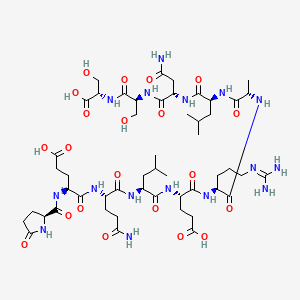
ARA-290, also called cibinetide, is an 11-amino-acid peptide engineered from erythropoietin (EPO), the hormone that tells the bone marrow to make red blood cells. It copies a small surface region of EPO known as helix B. The aim was to keep EPO's tissue-protective effects while removing its effect on red blood cell production.5
It was developed by Araim Pharmaceuticals, a US company whose scientists also authored most of the published research. Its main clinical target has been small fiber neuropathy, a form of nerve damage that causes burning pain, numbness and problems with automatic body functions such as sweating and heart rate. Most trials have studied people whose neuropathy is caused by sarcoidosis, an inflammatory disease, with additional work in type 2 diabetes.2
ARA-290 is not approved for any use. It is sold online as a research peptide for nerve pain, inflammation and general healing.
- Anecdotal only
- In vitro only
- Animal models only
- Preliminary human
- Clinical trials
- Regulator approved
How ARA-290 works
EPO does two separate jobs through two different receptors. One receptor, found on red blood cell precursors, drives red cell production. The other, called the innate repair receptor, appears on stressed or injured tissue and switches on protective, anti-inflammatory and repair programs. Giving EPO itself to protect tissues is risky because it also thickens the blood and raises clot risk. ARA-290 is designed to activate only the repair receptor.5
Technically, ARA-290 is pyroglutamate helix B surface peptide (pHBSP). It binds the innate repair receptor, a heteromer of the EPO receptor and the beta common receptor (CD131), but not the EPO receptor homodimer that mediates erythropoiesis. The repair receptor is typically not expressed by healthy tissue and is induced by injury or inflammation. ARA-290 has a plasma half-life of about two minutes, yet animal and human studies report effects that last far longer, which researchers attribute to a sustained switch in cellular signaling rather than continued drug presence.5
Repair peptides are said to act on blood-vessel growth and cell migration in the proliferation stage. Most of that evidence comes from animal studies.
What the research shows on ARA-290
The human evidence comes from small phase 2 trials, most run by the developer and its academic collaborators. That is a real limitation, but the trials were randomized and placebo-controlled.
The largest is a phase 2b trial of 64 people with sarcoidosis-associated small nerve fiber loss and neuropathic pain. Participants took 1, 4 or 8 mg of cibinetide daily or placebo for 28 days. The 4 mg dose significantly increased corneal nerve fiber area, a measure of small nerve fibers seen by imaging the eye, and also increased regenerating nerve fibers in skin biopsies. Pain improved in all groups including placebo, and the pain benefit over placebo in those with moderate to severe pain was not statistically significant.4
An earlier blinded trial in sarcoidosis patients found that 28 days of daily injections improved neuropathic symptoms, increased corneal small nerve fiber density and improved the six-minute walk test.6 A review of the two sarcoidosis trials concluded that ARA-290 consistently improved pain scores and quality of life with a good safety profile.2
In a phase 2 trial in type 2 diabetes with painful neuropathy, 28 days of 4 mg daily improved neuropathic symptoms, hemoglobin A1c and lipid profiles over 56 days of follow-up, with no safety issues identified.8
These trials are short, small and mostly industry-linked. Corneal nerve measures are surrogate markers, not proof of lasting clinical benefit. A broader review of diabetic neuropathy notes that many promising agents have failed in longer trials, partly because the condition progresses slowly and requires long studies to prove benefit.1 A systematic review of sarcoidosis fatigue treatments, which included ARA-290, found the trial evidence limited, with small participant numbers and short durations.3
Studied for: Small fibre neuropathy, Neuropathic pain research, Tissue protection.
ARA-290 reference data
| Sequence | QEQLERALNSS |
|---|---|
| Molecular weight | 1,257.3 Da |
| FDA status | Not approved for any indication. |
| Prohibited in sport | Not listed |
ARA-290 dosage in published research
Once daily · usually run for about 4 weeks. A reference pattern, not a prescription.
Open this in the dosage calculator ↗
How ARA-290 is used in practice
ARA-290 has no approved clinical use and is not available through standard prescribing. It is not a product US compounding pharmacies can routinely use. In the gray market it is sold as lyophilized powder for subcutaneous injection, often marketed for neuropathic pain, autoimmune conditions or injury recovery.
In the clinical trials, participants self-injected the peptide under the skin once daily for 28 days and were then followed for a period without treatment.8 Gray-market users often try to copy that pattern. Doing so without a diagnosis, baseline nerve testing or follow-up means there is no way to tell whether any change is real, a placebo response or the natural course of the condition.
Recent reviews of regenerative peptides list cibinetide among the agents of interest for chronic pain but stress that most remain unapproved and that clinical evidence in humans is limited.7
Quality is a concern. Gray-market products are not tested to pharmaceutical standards for identity, purity or sterility. The doses used in trials were specific and short-term, and users extending courses or combining ARA-290 with other peptides are operating outside any studied protocol.
ARA-290 risks and side effects
In the published trials, ARA-290 was well tolerated, with no safety issues identified in the diabetes study and a good safety profile in the sarcoidosis studies.82 Reported side effects in use include injection-site reactions, headache and fatigue.
Because it does not activate the red-cell-producing receptor, it is not expected to raise hematocrit or clotting risk the way EPO does.5 That expectation rests on receptor biology and short trials, not on long-term human safety data.
Unknowns remain. No trial has followed people for years. Effects in pregnancy, in people with cancer, and with other immune-modifying drugs have not been studied. Gray-market products add the risks of contamination and incorrect dosing.
Reported side effects
Alternatives to ARA-290
For neuropathic pain, guideline-supported medicines include gabapentin, pregabalin, duloxetine and tricyclic antidepressants such as amitriptyline or nortriptyline. A high-concentration capsaicin patch is approved for some forms of neuropathic pain. These treat symptoms rather than nerve damage itself, and responses vary.
For sarcoidosis-related small fiber neuropathy, treating the underlying sarcoidosis with corticosteroids, methotrexate or anti-TNF drugs such as infliximab is standard, and immune therapies are sometimes considered under specialist care. For diabetic neuropathy, good glucose control is the foundation of prevention.
The bottom line on ARA-290
ARA-290 is one of the better-studied unapproved peptides. Small, mostly developer-run trials suggest it can improve nerve fiber measures and some neuropathy symptoms without EPO's blood-thickening effects. The trials are short, the pain results are mixed, and it has no approval. It is a reasonable candidate for further study, not an established treatment.
Questions for a clinician
- What evidence applies to my situation, and at what level?
- What established alternatives should I consider first?
- What monitoring would be necessary, and how often?
- Can this be prescribed at all where I live, or only sold for research?
ARA-290 FAQ
What is ARA-290?
An 11-amino-acid erythropoietin derivative that keeps the tissue-protective signalling without any effect on red blood cell production. It is classed as healing & repair.
Is ARA-290 FDA approved?
No. ARA-290 is not approved by the FDA for any indication. Material sold online is labelled for research use only.
Is ARA-290 legal in the US?
ARA-290 is not FDA approved and is not on FDA’s 503A bulks list. US compounding pharmacies cannot routinely prepare it.
What dose of ARA-290 is used in research?
Published research and practitioner protocols report 2-4 mg, once daily, typically for 4 weeks. This is a reference range, not a recommendation; dosing should be set by a licensed clinician.
How is ARA-290 reconstituted?
A 4 mg vial mixed with 2 mL of bacteriostatic water gives 2.0 mg/mL. At that concentration 2 mg is 100.0 units on a 100-unit insulin syringe.
What are the side effects of ARA-290?
Reported side effects include injection-site reactions, headache, fatigue. Contraindications: pregnancy, known hypersensitivity.
What is the half-life of ARA-290?
The reported half-life of ARA-290 is ~2 minutes.
Is ARA-290 banned in sport?
ARA-290 is not specifically named on the WADA prohibited list, but athletes should check the current list and their federation's rules.
References
Regulatory and primary sources
- FDA: Bulk drug substances that may present significant safety risks (Category 2 and withdrawn nominations) ↗ · content current as of April 22, 2026; checked October 18, 2026
- FDA: Bulk drug substances used in compounding under section 503A ↗ · how the 503A categories work
- PubChem compound record (CID 91810664) ↗ · structure, identifiers, synonyms
- FDA: Unapproved drugs and "research use only" products ↗ · regulatory status of non-approved products
Published literature
- The time to develop treatments for diabetic neuropathy.Expert Opin Investig Drugs 2021.PubMed 33423557 · doi:10.1080/13543784.2021.1868433
- ARA 290 for treatment of small fiber neuropathy in sarcoidosis.Expert Opin Investig Drugs 2014.PubMed 24555851 · doi:10.1517/13543784.2014.892072
- Managing fatigue in sarcoidosis - A systematic review of the evidence.Chron Respir Dis 2017.PubMed 27507833 · doi:10.1177/1479972316661926
- Cibinetide Improves Corneal Nerve Fiber Abundance in Patients With Sarcoidosis-Associated Small Nerve Fiber Loss and Neuropathic Pain.Invest Ophthalmol Vis Sci 2017.PubMed 28475703 · doi:10.1167/iovs.16-21291
- Flipping the molecular switch for innate protection and repair of tissues: Long-lasting effects of a non-erythropoietic small peptide engineered from erythropoietin.Pharmacol Ther 2015.PubMed 25728128 · doi:10.1016/j.pharmthera.2015.02.005
- ARA 290 improves symptoms in patients with sarcoidosis-associated small nerve fiber loss and increases corneal nerve fiber density.Mol Med 2013.PubMed 24136731 · doi:10.2119/molmed.2013.00122
- Peptides in Regenerative Medicine: A Comprehensive Review of Clinical Applications in Tissue Repair and Chronic Pain Management.Curr Pain Headache Rep 2026.PubMed 42635865 · doi:10.1007/s11916-026-01542-z
- ARA 290, a nonerythropoietic peptide engineered from erythropoietin, improves metabolic control and neuropathic symptoms in patients with type 2 diabetes.Mol Med 2015.PubMed 25387363 · doi:10.2119/molmed.2014.00215
Literature retrieved from PubMed on October 16, 2026, favouring human studies and reviews. Numbered markers in the text show which paper supports which statement; uncited entries are background reading.