Is BPC-157 legal?
Not approved · not compoundable- FDA status
- BPC-157 is not FDA approved. It was moved off FDA’s Category 2 safety-risk list in 2026 after its nomination was withdrawn, but it was not added to the 503A bulks list.
- Compounding
- That leaves no routine legal path for a US compounding pharmacy to prepare it. FDA’s Pharmacy Compounding Advisory Committee discussed it in July 2026; FDA had not announced a decision as of October 2026.
- Prescription
- There is no approved US prescription product for BPC-157.
- Online market
- Products sold online are labelled “for research use only”: not made, tested or labelled for human use, and often mislabelled.
- Sport
- Prohibited in sport under the World Anti-Doping Agency list.
US status checked October 2026 against FDA’s compounding lists. Sources at the foot of the page.
What is BPC-157?
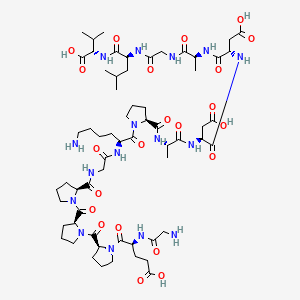
BPC-157 is a synthetic peptide of 15 amino acids. The most important fact about it comes first: there is no adequately powered human trial showing that it heals anything. Nearly all of the evidence comes from rodent studies.
The name stands for Body Protection Compound 157. The sequence is derived from a protein found in human gastric juice, and it was developed by a research group at the University of Zagreb in Croatia, which has produced most of the published work on it since the early 1990s. It also carries the development code PL 14736, but no drug based on it has completed late-stage human trials.
BPC-157 is now one of the most searched peptides online. It is marketed for tendon, ligament and muscle injuries, joint pain, gut problems such as ulcers and inflammatory bowel disease, and general recovery. It is not approved for any use, and it is prohibited in sport.
- Anecdotal only
- In vitro only
- Animal models only
- Preliminary human
- Clinical trials
- Regulator approved
How BPC-157 works
Healing depends on blood supply, cell movement and growth signals. In animal studies, BPC-157 appears to encourage the growth of new blood vessels into injured tissue, help repair cells called fibroblasts move into wounds, and influence nitric oxide, a molecule that controls blood vessel tone. The proposed result is faster, better-organized repair in tissues with poor blood supply, like tendons and ligaments.1
In more detail, the Zagreb group describes BPC-157 as an angiomodulatory agent acting through several vasoactive pathways, including nitric oxide signaling, VEGF and focal adhesion kinase (FAK).8 Animal and cell studies also report increased growth hormone receptor expression in tendon fibroblasts and enhanced fibroblast outgrowth and migration. Unlike standard growth factors such as EGF, FGF and VEGF, which usually need carriers and local delivery, BPC-157 is reported to be stable in gastric juice and active by several routes, including by mouth, in rodents.2 How these effects fit together, and whether any of them occur at relevant doses in humans, is not established.1
Repair peptides are said to act on blood-vessel growth and cell migration in the proliferation stage. Most of that evidence comes from animal studies.
What the research shows on BPC-157
The animal literature is large and consistently positive. A 2019 review of musculoskeletal studies found that every study of BPC-157 reported positive and prompt healing effects across tendon, ligament and muscle injuries. The same review noted that most studies used small rodent models, only a handful of research groups have studied the peptide in depth, and efficacy has not been confirmed in humans.1
The Zagreb group's own reviews report that BPC-157 was effective across models of injury to the esophagus, stomach, intestines, tendon, ligament and bone.2 Uniformly positive results from one research network are a reason for caution, not confidence. Independent replication is limited.
Human data are minimal. A 2026 primer for orthopedic and sports medicine physicians found that the tendon and muscle benefits are largely unvalidated in human trials. The only human report it identified was a single case series of knee injections with significant methodological flaws and no control group.3 Other recent reviews reach the same conclusion: promising preclinical results, a current lack of clinical trials.45
A 2026 sports medicine review of unapproved peptides added two points. Rigorous human safety data are scarce, and the placebo effect, amplified by social media, likely explains part of the benefit users report.6 Injury pain often improves with time and rest regardless of treatment, which makes personal experience a poor guide. Only a controlled trial can separate the peptide's effect from natural recovery.
Studied for: Tendon and ligament injury research, Gastrointestinal healing research, Soft tissue repair.
BPC-157 reference data
| Sequence | GEPPPGKPADDAGLV |
|---|---|
| Molecular weight | 1,419.5 Da |
| CAS number | 137525-51-0 |
| FDA status | Not approved for any indication. |
| Prohibited in sport | Yes, under the WADA prohibited list |
BPC-157 dosage in published research
1-2x daily, often near the injury site · usually run for about 6 weeks. A reference pattern, not a prescription.
Open this in the dosage calculator ↗
How BPC-157 is used in practice
BPC-157 is usually bought online as a research peptide in powder form, mixed with bacteriostatic water and injected under the skin, sometimes near the injured area. Oral capsules and nasal sprays are also sold. Some telehealth services and wellness clinics have offered it, although FDA has placed it in a category that bars US compounding pharmacies from using it, so legitimate prescription sources are very limited.
The gray market has well-documented quality problems. Peptides sold "for research use only" are not tested to pharmaceutical standards, and independent testing of gray-market peptides has found products with wrong amounts, impurities or different substances. Nonsterile injectables also carry an infection risk. Recent reviews describe these products as readily available yet unregulated.5
Protocols circulating online, such as cycles of several weeks with daily injections, come from forums and clinic marketing. They are not derived from human trials, because none have been completed.3
BPC-157 risks and side effects
The honest answer is that the human risk profile is unknown. Animal studies report few adverse effects, but that is not the same as human safety data.1 Users report injection-site reactions, nausea, headache and dizziness.
The most discussed theoretical concern is cancer. BPC-157's proposed benefits rest on promoting new blood vessel growth, and blood vessel growth is also central to how tumors grow and spread. The Zagreb group's own review of BPC-157 and blood vessels notes the role of new vessel formation in tumor biology.8 No study has shown that BPC-157 causes or worsens cancer, but no study has ruled it out. People with active or suspected cancer have particular reason to avoid it.
Pregnancy and breastfeeding have not been studied. Interactions with other drugs are poorly characterized. For gray-market products, add contamination, mislabeling and infection risks. A review of peptide therapies in aesthetic and metabolic medicine concluded that further studies are needed before most new peptides can be used safely in humans.7
Reported side effects
Alternatives to BPC-157
For tendon and ligament injuries, structured physical therapy with progressive loading has the best evidence for long-term recovery. Short courses of NSAIDs or a corticosteroid injection can relieve pain in selected cases, though steroid injections can weaken tendons with repeated use. Platelet-rich plasma has mixed evidence but more human data than BPC-157. Surgery is appropriate for some tears.
For stomach ulcers and reflux, proton pump inhibitors and treatment of H. pylori infection are standard. Inflammatory bowel disease is managed with proven medicines including aminosalicylates, immunomodulators and biologic drugs under a gastroenterologist's care.
The bottom line on BPC-157
BPC-157 has an impressive animal record, mostly from one research group, and almost no human evidence. Its safety in people is unknown, its blood-vessel effects raise a theoretical cancer concern, and products sold online are unverified. Until proper human trials exist, it remains an experimental compound, not a proven treatment.
Questions for a clinician
- What evidence applies to my situation, and at what level?
- What established alternatives should I consider first?
- What monitoring would be necessary, and how often?
- Can this be prescribed at all where I live, or only sold for research?
BPC-157 FAQ
What is BPC-157?
A synthetic pentadecapeptide derived from a gastric protein, and the most searched compound in the peptide category. It is classed as healing & repair.
Is BPC-157 FDA approved?
No. BPC-157 is not approved by the FDA for any indication. Material sold online is labelled for research use only.
Is BPC-157 legal in the US?
BPC-157 is not FDA approved. It was moved off FDA’s Category 2 safety-risk list in 2026 after its nomination was withdrawn, but it was not added to the 503A bulks list. That leaves no routine legal path for a US compounding pharmacy to prepare it. FDA’s Pharmacy Compounding Advisory Committee discussed it in July 2026; FDA had not announced a decision as of October 2026.
What dose of BPC-157 is used in research?
Published research and practitioner protocols report 200-500 mcg, 1-2x daily, often near the injury site, typically for 6 weeks. This is a reference range, not a recommendation; dosing should be set by a licensed clinician.
How is BPC-157 reconstituted?
A 5 mg vial mixed with 2 mL of bacteriostatic water gives 2.5 mg/mL. At that concentration 200 mcg is 8.0 units on a 100-unit insulin syringe.
What are the side effects of BPC-157?
Reported side effects include injection-site reactions, transient nausea, headache, dizziness. Contraindications: active or suspected malignancy, pregnancy, breastfeeding.
What is the half-life of BPC-157?
The reported half-life of BPC-157 is ~4 hours.
Is BPC-157 banned in sport?
Yes. BPC-157 falls under the World Anti-Doping Agency prohibited list.
References
Regulatory and primary sources
- FDA: Bulk drug substances that may present significant safety risks (Category 2 and withdrawn nominations) ↗ · content current as of April 22, 2026; checked October 18, 2026
- FDA: Bulk drug substances used in compounding under section 503A ↗ · how the 503A categories work
- PubChem compound record (CID 9941957) ↗ · structure, identifiers, synonyms
- WADA Prohibited List ↗ · current year
- FDA: Unapproved drugs and "research use only" products ↗ · regulatory status of non-approved products
- CAS Registry Number 137525-51-0 ↗ · chemical identity
Published literature
- Gastric pentadecapeptide body protection compound BPC 157 and its role in accelerating musculoskeletal soft tissue healing.Cell Tissue Res 2019.PubMed 30915550 · doi:10.1007/s00441-019-03016-8
- BPC 157 and Standard Angiogenic Growth Factors. Gastrointestinal Tract Healing, Lessons from Tendon, Ligament, Muscle and Bone Healing.Curr Pharm Des 2018.PubMed 29998800 · doi:10.2174/1381612824666180712110447
- Injectable Peptide Therapy: A Primer for Orthopaedic and Sports Medicine Physicians.Am J Sports Med 2026.PubMed 41476424 · doi:10.1177/03635465251357593
- Therapeutic Peptides in Orthopaedics: Applications, Challenges, and Future Directions.J Am Acad Orthop Surg Glob Res Rev 2026.PubMed 41490200 · doi:10.5435/JAAOSGlobal-D-25-00236
- Injectable Therapeutic Peptides-An Adjunct to Regenerative Medicine and Sports Performance?.Arthroscopy 2025.PubMed 39265666 · doi:10.1016/j.arthro.2024.09.005
- Safety and Efficacy of Approved and Unapproved Peptide Therapies for Musculoskeletal Injuries and Athletic Performance.Sports Med 2026.PubMed 41966639 · doi:10.1007/s40279-026-02437-0
- Therapeutic Peptides in Aesthetic, Metabolic and Endocrine Conditions: Effects, Safety, Clinical Applications, and Future Perspectives.Int J Mol Sci 2026.PubMed 42123471 · doi:10.3390/ijms27093890
- BPC 157 and blood vessels.Curr Pharm Des 2014.PubMed 23782145 · doi:10.2174/13816128113199990421
Literature retrieved from PubMed on October 16, 2026, favouring human studies and reviews. Numbered markers in the text show which paper supports which statement; uncited entries are background reading.