Is Retatrutide legal?
Investigational- FDA status
- Retatrutide is in clinical trials and is not FDA approved for any use.
- Compounding
- It cannot be legally prescribed or compounded outside a clinical trial. Products sold online under this name are unapproved and unverified.
- Prescription
- There is no approved US prescription product for Retatrutide.
- Online market
- Products sold online are labelled “for research use only”: not made, tested or labelled for human use, and often mislabelled.
US status checked October 2026 against FDA’s compounding lists. Sources at the foot of the page.
What is retatrutide?
Retatrutide is an experimental weight-loss and diabetes drug developed by Eli Lilly under the code LY3437943. It is a once-weekly injectable peptide that activates three hormone receptors at once: GLP-1, GIP and glucagon. That has earned it the nickname 'triple G' and puts it one step beyond tirzepatide, Lilly's approved dual agonist sold as Mounjaro and Zepbound.
Retatrutide drew attention in 2023 when a phase 2 obesity trial reported average weight loss of about 24% after 48 weeks on the highest dose, a larger figure than earlier incretin drugs had shown in trials of similar length1. It is being studied for obesity, type 2 diabetes and fatty liver disease. It is not approved anywhere and cannot be legally prescribed outside a clinical trial. Despite that, it is heavily marketed online as a research chemical.
- Anecdotal only
- In vitro only
- Animal models only
- Preliminary human
- Clinical trials
- Regulator approved
How retatrutide works
After a meal, the gut releases hormones that tell the pancreas to release insulin and tell the brain that you are full. GLP-1 and GIP are two of these hormones. Drugs like semaglutide copy GLP-1, and tirzepatide copies both. Retatrutide adds a third signal, glucagon. Glucagon is usually thought of as a blood-sugar-raising hormone, but it also pushes the liver to burn fat and may raise the number of calories the body uses. The idea is that appetite reduction from GLP-1 and GIP, plus extra fat burning from glucagon, adds up to more weight loss than either alone, while the GLP-1 and GIP effects keep blood sugar in check.
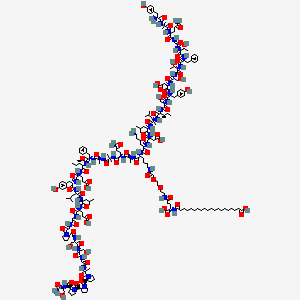
In more precise terms, retatrutide is a single peptide engineered to act as an agonist at the glucose-dependent insulinotropic polypeptide receptor (GIPR), the glucagon-like peptide-1 receptor (GLP-1R) and the glucagon receptor (GCGR)4. A fatty acid modification extends its half-life to about six days, which supports weekly dosing. Glucagon receptor agonism increases hepatic lipid oxidation and energy expenditure, which is the proposed reason for the very large drops in liver fat seen in trials. Animal studies show delayed gastric emptying and reduced food intake4. Retatrutide and survodutide are the two most advanced molecules that pair glucagon and GLP-1 receptor activation8.
GLP-1 drugs copy a gut hormone that the body breaks down within minutes; the drugs are modified to last hours or days. Dual and triple agonists add GIP and glucagon receptors.
What the research shows on retatrutide
The key published trial is a 48-week phase 2 study in 338 adults with obesity or overweight plus a weight-related condition, funded by Lilly. At 48 weeks, mean weight change was -8.7% at 1 mg, -17.1% at 4 mg, -22.8% at 8 mg and -24.2% at 12 mg, compared with -2.1% on placebo1. On the 12 mg dose, 83% of participants lost at least 15% of their body weight1. Weight had not clearly plateaued by the end of the trial.
A substudy of 98 participants with fatty liver disease found that liver fat fell by about 82% at 24 weeks on the 8 mg and 12 mg doses, and 86% of those on 12 mg reached normal liver fat levels2. In people with type 2 diabetes, trials have reported HbA1c reductions of up to about 2.2 percentage points and weight loss of up to about 17%7.
A 2025 systematic review of placebo-controlled trials in adults without diabetes estimated weight loss of up to 22.1% versus placebo for retatrutide at 48 weeks, compared with 17.8% for tirzepatide at 72 weeks and 13.9% for semaglutide at 68 weeks6. The authors stressed that no head-to-head trials existed, so these are cross-trial comparisons, not direct proof of superiority6. Another systematic review drew on only three published articles covering 691 randomized participants3.
These are the important limits. The phase 2 trials were relatively small and short, industry funded, and not designed to measure heart attacks, strokes or deaths. Phase 3 trials, known as the TRIUMPH program, are designed to test long-term efficacy and safety in larger and more varied populations4. Until regulators have reviewed the full phase 3 data, retatrutide's real-world effect size and safety profile are not settled.
Studied for: Investigational obesity treatment, Type 2 diabetes research, NAFLD research.
Retatrutide reference data
| FDA status | Not approved for any indication. |
|---|---|
| Prohibited in sport | Not listed |
Retatrutide dosage in published research
Once weekly (trial protocols). A reference pattern, not a prescription.
How retatrutide is used in practice
Legitimately, retatrutide is used only inside clinical trials. Trial protocols start at a low weekly dose and step up over weeks to reduce nausea. The phase 2 study found that starting at 2 mg rather than 4 mg partly reduced gastrointestinal side effects1.
Outside trials, retatrutide is one of the most popular gray-market peptides. Sellers market it as a 'research chemical not for human use' while customers inject it for weight loss, often copying trial doses from social media. It is not a compounding option: US pharmacies cannot lawfully compound an unapproved drug substance, so any clinic or telehealth service offering retatrutide is operating outside the rules. Products bought this way have not been checked for identity, purity, dose or sterility. Because the drug is long-acting, a mis-dosed or contaminated vial can cause problems that last a week or more.
Retatrutide risks and side effects
The most common side effects in trials were gastrointestinal: nausea, vomiting, diarrhea and constipation. They were dose-related and mostly mild to moderate1. Heart rate rose in a dose-dependent way, peaking at about 24 weeks before easing1. A 2026 review linked the higher rates of gastrointestinal events at the top doses partly to rapid dose escalation and higher starting doses7.
Like other incretin drugs, it is expected to carry warnings about pancreatitis, gallbladder disease, and thyroid C-cell tumors seen in rodents, which is why people with a history of medullary thyroid cancer or MEN2 are excluded. Slowed stomach emptying affects oral drug absorption and raises concern about retained stomach contents during anesthesia8. Combined with insulin or sulfonylureas, it can raise the risk of low blood sugar. It should not be used in pregnancy.
Rapid, large weight loss also removes muscle. Reviews of incretin drugs estimate lean mass losses of roughly 10%, or about 6 kg, and recommend resistance exercise to limit this5. Long-term effects of sustained glucagon receptor activation in humans are not yet known.
Reported side effects
Alternatives to retatrutide
Several approved drugs target the same goal with far more data. Tirzepatide (Zepbound for obesity, Mounjaro for diabetes) is the closest relative and produced about 18% weight loss versus placebo in trials6. Semaglutide (Wegovy, Ozempic) has the longest safety record of the newer drugs and proven cardiovascular benefit. Liraglutide (Saxenda) is older and less effective but well characterized.
Other options include oral medicines such as phentermine-topiramate and naltrexone-bupropion, and metabolic and bariatric surgery for people with severe obesity. For fatty liver disease, resmetirom (Rezdiffra) and semaglutide are FDA approved for MASH with moderate to advanced fibrosis. Whatever the drug, structured nutrition and resistance training help protect muscle during weight loss5.
The bottom line on retatrutide
Retatrutide has produced some of the largest weight losses seen in obesity drug trials, and the liver fat data are striking. It is still an investigational drug. Approved alternatives such as tirzepatide and semaglutide deliver most of the benefit with years of safety data, legal prescriptions and verified products, which gray-market retatrutide cannot offer.
Questions for a clinician
- What evidence applies to my situation, and at what level?
- What established alternatives should I consider first?
- What monitoring would be necessary, and how often?
- Can this be prescribed at all where I live, or only sold for research?
Retatrutide FAQ
What is Retatrutide?
An investigational triple agonist at GIP, GLP-1 and glucagon receptors, in Phase 3 trials and not FDA approved. It is classed as GLP-1 & incretins.
Is Retatrutide FDA approved?
No. Retatrutide is not approved by the FDA for any indication. Material sold online is labelled for research use only.
Is Retatrutide legal in the US?
Retatrutide is in clinical trials and is not FDA approved for any use. It cannot be legally prescribed or compounded outside a clinical trial. Products sold online under this name are unapproved and unverified.
What dose of Retatrutide is used in research?
Published research and practitioner protocols report 1-12 mg, once weekly (trial protocols). This is a reference range, not a recommendation; dosing should be set by a licensed clinician.
What are the side effects of Retatrutide?
Reported side effects include nausea, vomiting, diarrhoea, increased heart rate, constipation. Contraindications: pregnancy, medullary thyroid carcinoma history, multiple endocrine neoplasia type 2.
What is the half-life of Retatrutide?
The reported half-life of Retatrutide is ~6 days.
Is Retatrutide banned in sport?
Retatrutide is not specifically named on the WADA prohibited list, but athletes should check the current list and their federation's rules.
References
Regulatory and primary sources
- FDA: Bulk drug substances that may present significant safety risks (Category 2 and withdrawn nominations) ↗ · content current as of April 22, 2026; checked October 18, 2026
- FDA: Bulk drug substances used in compounding under section 503A ↗ · how the 503A categories work
- PubChem compound record (CID 171390338) ↗ · structure, identifiers, synonyms
- FDA: Unapproved drugs and "research use only" products ↗ · regulatory status of non-approved products
Published literature
- Triple-Hormone-Receptor Agonist Retatrutide for Obesity - A Phase 2 Trial.N Engl J Med 2023.PubMed 37366315 · doi:10.1056/NEJMoa2301972
- Triple hormone receptor agonist retatrutide for metabolic dysfunction-associated steatotic liver disease: a randomized phase 2a trial.Nat Med 2024.PubMed 38858523 · doi:10.1038/s41591-024-03018-2
- Efficacy and safety of retatrutide for the treatment of obesity: a systematic review of clinical trials.J Basic Clin Physiol Pharmacol 2025.PubMed 40728138 · doi:10.1515/jbcpp-2025-0113
- Retatrutide-A Game Changer in Obesity Pharmacotherapy.Biomolecules 2025.PubMed 40563436 · doi:10.3390/biom15060796
- Incretin-Based Weight Loss Pharmacotherapy: Can Resistance Exercise Optimize Changes in Body Composition?.Diabetes Care 2024.PubMed 38687506 · doi:10.2337/dci23-0100
- Efficacy and Safety of Glucagon-Like Peptide-1 Receptor Agonists for Weight Loss Among Adults Without Diabetes : A Systematic Review of Randomized Controlled Trials.Ann Intern Med 2025.PubMed 39761578 · doi:10.7326/ANNALS-24-01590
- Retatrutide in type 2 diabetes mellitus and obesity: an overview.Expert Rev Clin Pharmacol 2026.PubMed 41785010 · doi:10.1080/17512433.2026.2642415
- Efficacy and Safety of GLP-1 Medicines for Type 2 Diabetes and Obesity.Diabetes Care 2024.PubMed 38843460 · doi:10.2337/dci24-0003
Literature retrieved from PubMed on October 16, 2026, favouring human studies and reviews. Numbered markers in the text show which paper supports which statement; uncited entries are background reading.