Is Semaglutide legal?
FDA approved- FDA status
- Semaglutide is FDA approved for: Type 2 diabetes mellitus (Ozempic, Rybelsus); Chronic weight management (Wegovy); Cardiovascular risk reduction in established CVD with overweight or obesity; Reducing the risk of kidney disease progression and cardiovascular death in adults with type 2 diabetes and chronic kidney disease (Ozempic, January 2025); Noncirrhotic MASH with moderate to advanced liver fibrosis in adults (Wegovy, accelerated approval August 2025).
- Compounding
- It is a prescription medicine. Use outside the approved indication is off-label and a clinician’s decision. Compounded copies are restricted when the approved product is available.
- Prescription
- A licensed US clinician can prescribe Semaglutide.
US status checked October 2026 against FDA’s compounding lists. Sources at the foot of the page.
What is semaglutide?
Semaglutide is a GLP-1 receptor agonist made by Novo Nordisk. It is sold as Ozempic, a weekly injection for type 2 diabetes approved in 2017; Rybelsus, a daily tablet for type 2 diabetes approved in 2019; and Wegovy, a higher-dose weekly injection for chronic weight management approved in 2021. Wegovy is also approved to lower the risk of heart attack, stroke and cardiovascular death in people with established heart disease and overweight or obesity.
Semaglutide changed expectations for obesity medicine. Before it, approved weight-loss drugs typically produced average losses of around 10% or less. In the STEP 1 trial, people taking semaglutide 2.4 mg lost about 15% of their body weight over 68 weeks3. It has since become one of the most prescribed drugs in the US, and one of the most discussed.
- Anecdotal only
- In vitro only
- Animal models only
- Preliminary human
- Clinical trials
- Regulator approved
How semaglutide works
After you eat, your gut releases a hormone called GLP-1. It tells the pancreas to release insulin when blood sugar is high, slows the rate at which food leaves the stomach, and signals the brain that you are full. Natural GLP-1 lasts only a couple of minutes in the blood. Semaglutide is a modified version that lasts about a week, so a single weekly injection keeps that 'I have eaten' signal switched on. People typically feel less hungry, get full sooner and think about food less.
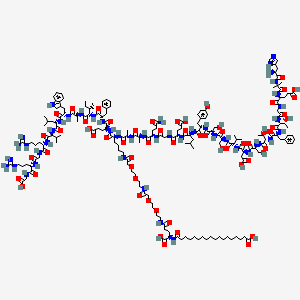
Chemically, semaglutide shares about 94% of its sequence with human GLP-1. An alpha-aminoisobutyric acid substitution at position 8 protects it from breakdown by the enzyme DPP-4, and a C18 fatty diacid side chain binds it to albumin in the blood, slowing clearance and giving a half-life of about seven days. It stimulates glucose-dependent insulin secretion and suppresses glucagon, which lowers blood sugar with little risk of hypoglycemia on its own. Its weight effect comes mainly from GLP-1 receptors in the hypothalamus and brainstem that reduce appetite and energy intake, rather than from burning more calories. The oral version uses an absorption enhancer to survive the stomach.
GLP-1 drugs copy a gut hormone that the body breaks down within minutes; the drugs are modified to last hours or days. Dual and triple agonists add GIP and glucagon receptors.
What the research shows on semaglutide
Semaglutide has one of the largest evidence bases of any obesity drug. In STEP 1, 1,961 adults without diabetes received semaglutide 2.4 mg or placebo weekly for 68 weeks, alongside lifestyle support. Average weight change was -14.9% with semaglutide versus -2.4% with placebo, and half of those on the drug lost at least 15%3. In STEP 8, semaglutide produced -15.8% weight change compared with -6.4% for daily liraglutide, the previous standard2.
The SELECT trial enrolled 17,604 people with heart disease and overweight or obesity but no diabetes. Over about 40 months, semaglutide cut major cardiovascular events (cardiovascular death, heart attack or stroke) by 20%, from 8.0% to 6.5%7. That made it the first obesity drug shown to reduce heart attacks and strokes in this population.
The trials also show limits. Weight returns when treatment stops. In STEP 4, people who switched to placebo after 20 weeks regained 6.9% of body weight over the next 48 weeks, while those who continued lost a further 7.9%4. In the STEP 1 extension, participants regained about two-thirds of their lost weight within a year of stopping, and most cardiometabolic improvements faded1. This points to obesity as a chronic condition needing ongoing treatment.
Newer drugs now outperform it on weight. In SURMOUNT-5, tirzepatide produced -20.2% weight change versus -13.7% for semaglutide at 72 weeks5, and tirzepatide also lowered HbA1c and weight more than semaglutide 1 mg in type 2 diabetes8. A higher 7.2 mg semaglutide dose produced -18.7% weight change in the STEP UP trial, compared with -15.6% on 2.4 mg6. Nearly all the major trials were funded by the manufacturers.
Studied for: Type 2 diabetes, Chronic weight management, Cardiovascular risk reduction.
Semaglutide reference data
| Molecular weight | 4,113.6 Da |
|---|---|
| CAS number | 910463-68-2 |
| FDA status | Type 2 diabetes mellitus (Ozempic, Rybelsus); Chronic weight management (Wegovy); Cardiovascular risk reduction in established CVD with overweight or obesity; Reducing the risk of kidney disease progression and cardiovascular death in adults with type 2 diabetes and chronic kidney disease (Ozempic, January 2025); Noncirrhotic MASH with moderate to advanced liver fibrosis in adults (Wegovy, accelerated approval August 2025) |
| Prohibited in sport | Not listed |
Semaglutide dosage in published research
Once weekly, titrated over 16+ weeks · usually run for about 68 weeks. A reference pattern, not a prescription.
How semaglutide is used in practice
Semaglutide is started at a low weekly dose and increased every four weeks over about 16 weeks to reduce nausea. Branded pens are prescribed by primary care doctors, endocrinologists, obesity specialists and many telehealth services. Cost and insurance coverage remain major barriers, particularly for weight management, and manufacturer direct-to-consumer cash programs have expanded access somewhat.
During the national shortage from 2022 to early 2025, compounding pharmacies were allowed to make copies, and many telehealth companies sold compounded semaglutide at lower prices. The FDA declared the shortage resolved in February 2025, which sharply restricted routine compounding. Some compounded products had used salt forms such as semaglutide sodium that differ from the approved drug, and FDA received reports of dosing errors with multi-dose vials. Semaglutide is also sold online as a research chemical, with no guarantee of content or sterility.
Semaglutide risks and side effects
Gastrointestinal effects are the most common: nausea, diarrhea, vomiting, constipation and abdominal pain. In STEP 1 they were usually mild to moderate and eased with time, but 4.5% of semaglutide users stopped treatment because of them, compared with 0.8% on placebo3. In SELECT, 16.6% of semaglutide users discontinued because of adverse events versus 8.2% on placebo7. At 7.2 mg, unpleasant skin sensations (dysesthesia) were reported by 22.9% of participants6.
Less common but more serious risks include pancreatitis, gallbladder disease, kidney injury from dehydration, and worsening diabetic retinopathy in people with existing eye disease and rapid blood sugar improvement. The label carries a boxed warning about thyroid C-cell tumors seen in rodents, so it is not used by people with a personal or family history of medullary thyroid carcinoma or MEN2. Slowed stomach emptying can affect oral drug absorption and raise aspiration risk during anesthesia. Combined with insulin or sulfonylureas, it increases hypoglycemia risk. It should be stopped before a planned pregnancy. Weight loss includes some muscle loss, so protein intake and resistance exercise matter.
Reported side effects
Alternatives to semaglutide
Tirzepatide (Zepbound, Mounjaro) is the main alternative and produced greater weight loss in a direct comparison5. Liraglutide (Saxenda, Victoza) is a daily GLP-1 drug with lower efficacy but generic versions. Older oral options include phentermine-topiramate and naltrexone-bupropion. Metabolic and bariatric surgery remains the most effective long-term treatment for severe obesity. For type 2 diabetes, SGLT2 inhibitors and metformin are common alternatives or companions.
The bottom line on semaglutide
Semaglutide is one of the best-studied drugs in medicine, with proven weight loss, blood sugar control and cardiovascular benefit. Side effects are common but usually manageable, and benefits fade when it is stopped. Tirzepatide now produces more weight loss, but semaglutide's long safety record and outcome data keep it a first-line choice. Branded or properly prescribed products are the safe way to use it.
Questions for a clinician
- What evidence applies to my situation, and at what level?
- What established alternatives should I consider first?
- What monitoring would be necessary, and how often?
Semaglutide FAQ
What is Semaglutide?
A long-acting GLP-1 receptor agonist and the compound that reset expectations for pharmacological weight loss. It is classed as GLP-1 & incretins.
Is Semaglutide FDA approved?
Yes. Semaglutide is FDA approved for: Type 2 diabetes mellitus (Ozempic, Rybelsus); Chronic weight management (Wegovy); Cardiovascular risk reduction in established CVD with overweight or obesity; Reducing the risk of kidney disease progression and cardiovascular death in adults with type 2 diabetes and chronic kidney disease (Ozempic, January 2025); Noncirrhotic MASH with moderate to advanced liver fibrosis in adults (Wegovy, accelerated approval August 2025).
Is Semaglutide legal in the US?
Semaglutide is FDA approved for: Type 2 diabetes mellitus (Ozempic, Rybelsus); Chronic weight management (Wegovy); Cardiovascular risk reduction in established CVD with overweight or obesity; Reducing the risk of kidney disease progression and cardiovascular death in adults with type 2 diabetes and chronic kidney disease (Ozempic, January 2025); Noncirrhotic MASH with moderate to advanced liver fibrosis in adults (Wegovy, accelerated approval August 2025). It is a prescription medicine. Use outside the approved indication is off-label and a clinician’s decision. Compounded copies are restricted when the approved product is available.
What dose of Semaglutide is used in research?
Published research and practitioner protocols report 250 mcg - 2.4 mg, once weekly, titrated over 16+ weeks, typically for 68 weeks. This is a reference range, not a recommendation; dosing should be set by a licensed clinician.
What are the side effects of Semaglutide?
Reported side effects include nausea, vomiting, diarrhoea, constipation, abdominal pain, injection-site reactions. Contraindications: personal or family history of medullary thyroid carcinoma, multiple endocrine neoplasia type 2, pregnancy, history of pancreatitis (caution).
What is the half-life of Semaglutide?
The reported half-life of Semaglutide is ~7 days.
Is Semaglutide banned in sport?
Semaglutide is not specifically named on the WADA prohibited list, but athletes should check the current list and their federation's rules.
Which telehealth clinics prescribe Semaglutide?
Clinics in our directory that list Semaglutide include OneTwenty, Ro, Noom Med, Male Excel, Rex MD, Mochi Health. Each is scored on our published rubric.
References
Regulatory and primary sources
- FDA: Bulk drug substances that may present significant safety risks (Category 2 and withdrawn nominations) ↗ · content current as of April 22, 2026; checked October 18, 2026
- FDA: Bulk drug substances used in compounding under section 503A ↗ · how the 503A categories work
- PubChem compound record (CID 56843331) ↗ · structure, identifiers, synonyms
- DailyMed: FDA-approved labeling for Semaglutide ↗ · indications, dosing, warnings as approved
- FDA Drugs@FDA database ↗ · approval history
- CAS Registry Number 910463-68-2 ↗ · chemical identity
Published literature
- Weight regain and cardiometabolic effects after withdrawal of semaglutide: The STEP 1 trial extension.Diabetes Obes Metab 2022.PubMed 35441470 · doi:10.1111/dom.14725
- Effect of Weekly Subcutaneous Semaglutide vs Daily Liraglutide on Body Weight in Adults With Overweight or Obesity Without Diabetes: The STEP 8 Randomized Clinical Trial.JAMA 2022.PubMed 35015037 · doi:10.1001/jama.2021.23619
- Once-Weekly Semaglutide in Adults with Overweight or Obesity.N Engl J Med 2021.PubMed 33567185 · doi:10.1056/NEJMoa2032183
- Effect of Continued Weekly Subcutaneous Semaglutide vs Placebo on Weight Loss Maintenance in Adults With Overweight or Obesity: The STEP 4 Randomized Clinical Trial.JAMA 2021.PubMed 33755728 · doi:10.1001/jama.2021.3224
- Tirzepatide as Compared with Semaglutide for the Treatment of Obesity.N Engl J Med 2025.PubMed 40353578 · doi:10.1056/NEJMoa2416394
- Once-weekly semaglutide 7·2 mg in adults with obesity (STEP UP): a randomised, controlled, phase 3b trial.Lancet Diabetes Endocrinol 2025.PubMed 40961952 · doi:10.1016/S2213-8587(25)00226-8
- Semaglutide and Cardiovascular Outcomes in Obesity without Diabetes.N Engl J Med 2023.PubMed 37952131 · doi:10.1056/NEJMoa2307563
- Tirzepatide versus Semaglutide Once Weekly in Patients with Type 2 Diabetes.N Engl J Med 2021.PubMed 34170647 · doi:10.1056/NEJMoa2107519
Literature retrieved from PubMed on October 16, 2026, favouring human studies and reviews. Numbered markers in the text show which paper supports which statement; uncited entries are background reading.