Is Survodutide legal?
Investigational- FDA status
- Survodutide is in clinical trials and is not FDA approved for any use.
- Compounding
- It cannot be legally prescribed or compounded outside a clinical trial. Products sold online under this name are unapproved and unverified.
- Prescription
- There is no approved US prescription product for Survodutide.
- Online market
- Products sold online are labelled “for research use only”: not made, tested or labelled for human use, and often mislabelled.
US status checked October 2026 against FDA’s compounding lists. Sources at the foot of the page.
What is survodutide?
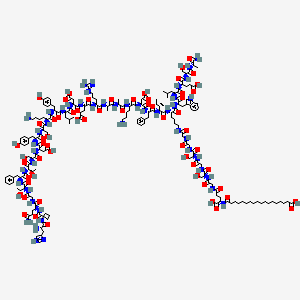
Survodutide, also known by its code BI 456906, is an experimental once-weekly injectable drug developed by Boehringer Ingelheim in partnership with the Danish company Zealand Pharma. It activates two hormone receptors: GLP-1, the target of semaglutide, and glucagon. That combination sets it apart from tirzepatide, which pairs GLP-1 with GIP instead of glucagon.
Survodutide is being studied for obesity and, most prominently, for metabolic dysfunction-associated steatohepatitis (MASH), the inflammatory form of fatty liver disease that can lead to scarring, cirrhosis and liver cancer5. It has completed phase 2 trials in both areas and moved into phase 36. It is not approved anywhere, and outside clinical trials it is available only through unregulated research-chemical sellers.
- Anecdotal only
- In vitro only
- Animal models only
- Preliminary human
- Clinical trials
- Regulator approved
How survodutide works
GLP-1 is a gut hormone that reduces appetite, slows stomach emptying and helps control blood sugar. Glucagon is better known for raising blood sugar between meals, but it also tells the liver to burn fat and increases the energy the body uses. Survodutide combines both signals in one molecule. The GLP-1 side drives people to eat less and keeps blood sugar in check, while the glucagon side is meant to clear fat from the liver directly and add to weight loss. That liver effect is why its developers have focused heavily on fatty liver disease.
In precise terms, survodutide is a lipidated peptide agonist of the glucagon receptor (GCGR) and the GLP-1 receptor, with a half-life of around a week. Glucagon receptor activation in hepatocytes increases fatty acid oxidation and reduces lipogenesis, lowering liver fat beyond what weight loss alone would explain. Survodutide and retatrutide are the leading examples of drugs that pair glucagon and GLP-1 receptor activation3. Reviews of MASH drug development group these dual agonists with GLP-1 and GIP/GLP-1 drugs as incretin-based therapies with growing evidence in liver disease8.
GLP-1 drugs copy a gut hormone that the body breaks down within minutes; the drugs are modified to last hours or days. Dual and triple agonists add GIP and glucagon receptors.
What the research shows on survodutide
The strongest evidence is in MASH. In a 48-week phase 2 trial of 293 adults with biopsy-confirmed MASH and fibrosis stages F1 to F3, improvement in MASH without worsening fibrosis occurred in 47%, 62% and 43% of those on 2.4, 4.8 and 6.0 mg, compared with 14% on placebo1. Fibrosis improved by at least one stage in about 34% to 36% on survodutide versus 22% on placebo, a secondary endpoint1. Liver fat fell by at least 30% in 57% to 67% of those on survodutide, compared with 14% on placebo1. The middle dose performed best on the main endpoint, so the highest dose was not automatically better. A 2025 network meta-analysis of MASH drugs ranked survodutide among the most effective agents for MASH resolution7.
In obesity, a 46-week phase 2 dose-finding trial in 387 adults without diabetes found mean weight changes of -6.2% to -14.9% across doses, compared with -2.8% on placebo4. A Bayesian network meta-analysis estimated that dual agonists as a group, pairing GLP-1 with either GIP or glucagon, produce mean weight loss similar to retatrutide and greater than GLP-1 drugs alone, with a more favorable balance of efficacy and side effects than retatrutide2.
These results have important limits. Both main trials were phase 2, funded by Boehringer Ingelheim, and relatively short. In the obesity trial, only about 60% of participants completed the 46-week treatment period4. Cross-trial comparisons in network meta-analyses are not the same as head-to-head trials. Phase 3 outcomes in obesity and MASH, including longer-term liver outcomes, will determine whether survodutide reaches the market.
Studied for: Investigational MASH treatment, Obesity research.
Survodutide reference data
| FDA status | Not approved for any indication. |
|---|---|
| Prohibited in sport | Not listed |
Survodutide dosage in published research
Once weekly (trial protocols). A reference pattern, not a prescription.
How survodutide is used in practice
Legitimately, survodutide is used only in clinical trials, where it is started at a low dose and escalated over weeks to reduce gastrointestinal side effects. In the phase 2 trials, escalation took 20 to 24 weeks41.
It is not available through doctors, telehealth services or compounding pharmacies. Some research-peptide websites sell products labeled as survodutide. These are unregulated, and their identity, purity, dose and sterility are unverified. Because the drug is long-acting, a mislabeled or contaminated product can cause problems lasting a week or more, and self-escalating without monitoring raises the risk of severe nausea, vomiting and dehydration.
Survodutide risks and side effects
Gastrointestinal side effects are common and appear more frequent than with GLP-1 drugs alone. In the MASH trial, nausea occurred in 66% of survodutide recipients versus 23% on placebo, diarrhea in 49% versus 23%, and vomiting in 41% versus 4%1. In the obesity trial, gastrointestinal adverse events affected 75% of those on survodutide versus 42% on placebo4. Reviews identify tolerability as a major concern for this class in MASH8.
Glucagon receptor agonism can raise heart rate, and increases were seen in trials. As with other GLP-1-based drugs, potential risks include pancreatitis, gallbladder problems, dehydration-related kidney injury and slowed stomach emptying that affects oral medicines and anesthesia. People with a history of medullary thyroid cancer were excluded from trials. It should not be used in pregnancy. Like other drugs that produce large weight loss, it is likely to reduce muscle as well as fat, so protein intake and resistance exercise matter. Long-term safety, including effects of years of glucagon receptor activation, is unknown.
Reported side effects
Alternatives to survodutide
For MASH with moderate to advanced fibrosis, two drugs are FDA approved: resmetirom (Rezdiffra), a liver-directed thyroid hormone receptor agonist, and semaglutide (Wegovy). Network meta-analyses also show strong results for tirzepatide and several drugs still in development, such as pegozafermin7. Weight loss of around 10% through any means, along with limiting alcohol and managing diabetes, remains central to MASH care.
For obesity, approved options with far more data include semaglutide, tirzepatide and liraglutide, oral medicines such as phentermine-topiramate and naltrexone-bupropion, and metabolic and bariatric surgery.
The bottom line on survodutide
Survodutide is one of the most promising drugs in development for fatty liver disease, with strong phase 2 liver results and solid weight loss. It also has high rates of gastrointestinal side effects, and phase 3 data are still needed. Approved alternatives exist for both MASH and obesity, and gray-market products carry unknown risks.
Questions for a clinician
- What evidence applies to my situation, and at what level?
- What established alternatives should I consider first?
- What monitoring would be necessary, and how often?
- Can this be prescribed at all where I live, or only sold for research?
Survodutide FAQ
What is Survodutide?
An investigational dual glucagon and GLP-1 receptor agonist, studied heavily in metabolic liver disease. It is classed as GLP-1 & incretins.
Is Survodutide FDA approved?
No. Survodutide is not approved by the FDA for any indication. Material sold online is labelled for research use only.
Is Survodutide legal in the US?
Survodutide is in clinical trials and is not FDA approved for any use. It cannot be legally prescribed or compounded outside a clinical trial. Products sold online under this name are unapproved and unverified.
What dose of Survodutide is used in research?
Published research and practitioner protocols report 800 mcg - 6 mg, once weekly (trial protocols). This is a reference range, not a recommendation; dosing should be set by a licensed clinician.
What are the side effects of Survodutide?
Reported side effects include nausea, vomiting, diarrhoea, increased heart rate. Contraindications: pregnancy, medullary thyroid carcinoma history.
What is the half-life of Survodutide?
The reported half-life of Survodutide is ~6-7 days.
Is Survodutide banned in sport?
Survodutide is not specifically named on the WADA prohibited list, but athletes should check the current list and their federation's rules.
References
Regulatory and primary sources
- FDA: Bulk drug substances that may present significant safety risks (Category 2 and withdrawn nominations) ↗ · content current as of April 22, 2026; checked October 18, 2026
- FDA: Bulk drug substances used in compounding under section 503A ↗ · how the 503A categories work
- PubChem compound record (CID 171378821) ↗ · structure, identifiers, synonyms
- FDA: Unapproved drugs and "research use only" products ↗ · regulatory status of non-approved products
Published literature
- A Phase 2 Randomized Trial of Survodutide in MASH and Fibrosis.N Engl J Med 2024.PubMed 38847460 · doi:10.1056/NEJMoa2401755
- Efficacy and Safety of GLP-1 Receptor Agonists, Dual Agonists, and Retatrutide for Weight Loss in Adults With Overweight or Obesity: A Bayesian NMA.Obesity (Silver Spring) 2025.PubMed 40685589 · doi:10.1002/oby.24360
- Efficacy and Safety of GLP-1 Medicines for Type 2 Diabetes and Obesity.Diabetes Care 2024.PubMed 38843460 · doi:10.2337/dci24-0003
- Glucagon and GLP-1 receptor dual agonist survodutide for obesity: a randomised, double-blind, placebo-controlled, dose-finding phase 2 trial.Lancet Diabetes Endocrinol 2024.PubMed 38330987 · doi:10.1016/S2213-8587(23)00356-X
- Therapeutic horizons in metabolic dysfunction-associated steatohepatitis.J Clin Invest 2025.PubMed 40590228 · doi:10.1172/JCI186425
- Emerging pharmacotherapies for obesity: A systematic review.Pharmacol Rev 2025.PubMed 39952695 · doi:10.1124/pharmrev.123.001045
- Comparison of pharmacological therapies in metabolic dysfunction-associated steatohepatitis for fibrosis regression and MASH resolution: Systematic review and network meta-analysis.Hepatology 2025.PubMed 39903735 · doi:10.1097/HEP.0000000000001254
- GLP-1, GIP/GLP-1, and GCGR/GLP-1 receptor agonists: Novel therapeutic agents for metabolic dysfunction-associated steatohepatitis.World J Gastroenterol 2024.PubMed 39735270 · doi:10.3748/wjg.v30.i48.5205
Literature retrieved from PubMed on October 16, 2026, favouring human studies and reviews. Numbered markers in the text show which paper supports which statement; uncited entries are background reading.